
(210) 496-3325
Stamped concrete delivers the visual character of natural stone, slate, brick, or wood at a fraction of the material and installation cost — and as a single continuous slab rather than individual pieces that can shift, settle, or develop weed-filled gaps over time. Paradise Decks & Spas installs stamped concrete patios, pool decks, walkways, and outdoor surfaces across San Antonio and surrounding communities, integrated with deck and outdoor living projects for a cohesive backyard design.
By Rick Hogue, Founder & Lead Deck Specialist · Last Updated June 2026
Plain broom-finished concrete is functional. Stamped concrete is functional and finished — a surface that looks intentional rather than utilitarian, that complements the deck, the home’s exterior, and the landscaping rather than simply filling in the space between them.
Stamped concrete achieves this through two simultaneous processes: pattern stamping, which imprints a texture and joint pattern into the wet concrete surface, and color application, which gives the surface the warmth and variation of natural materials. The combination produces a surface that from a distance reads as flagstone, slate, cobblestone, or brick — and up close reads as exactly what it is, which most homeowners prefer over the imitation-that-almost-convinces aesthetic of some alternative products.
As a full-service outdoor living company with 19+ years of completed projects in San Antonio, Paradise Decks & Spas installs stamped concrete as part of integrated outdoor living projects — pool deck surround, patio adjacent to a deck, walkway from the back door to the outdoor living area — designed as a cohesive surface package rather than a disconnected add-on.
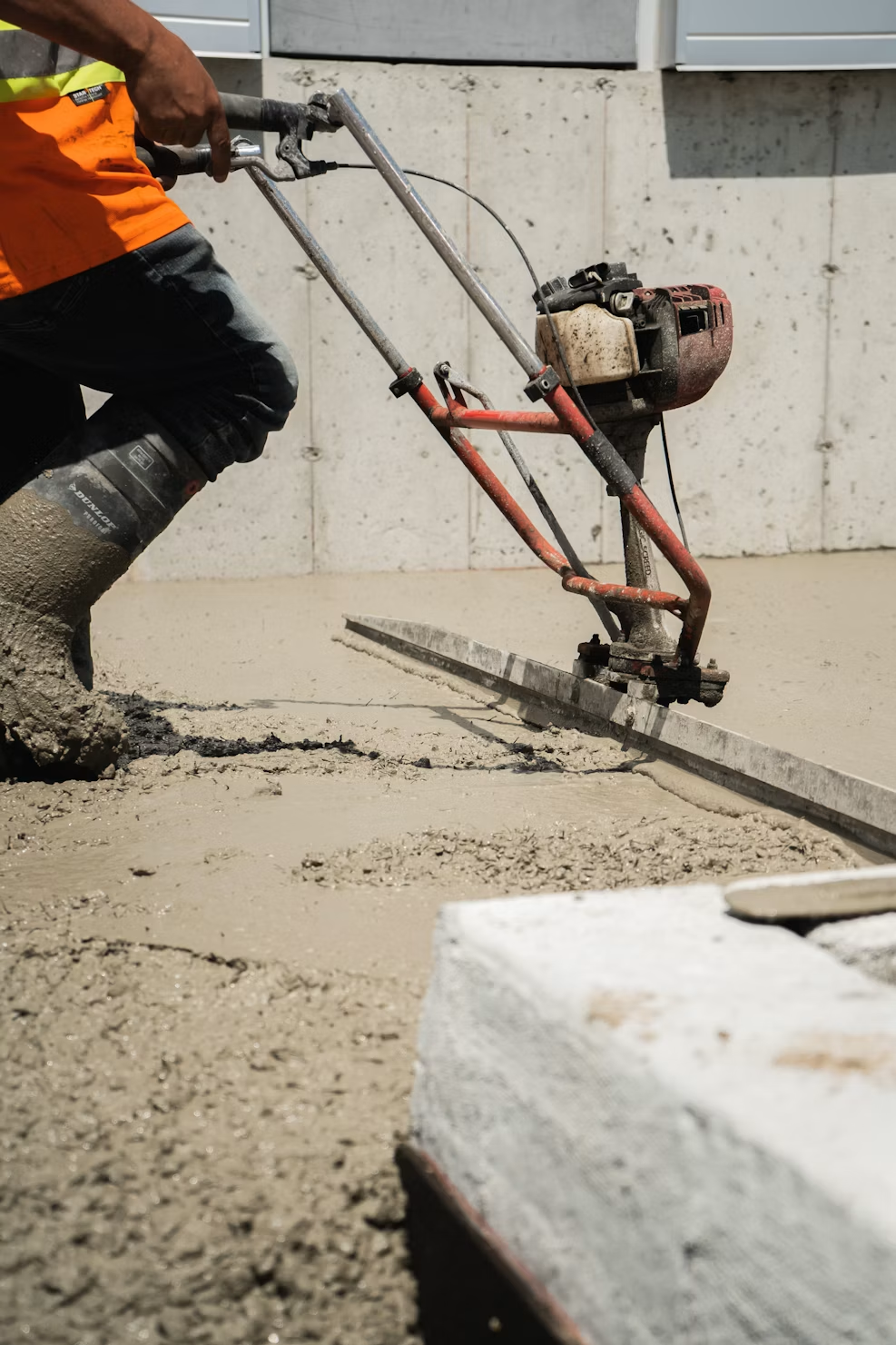
Both start with the same material — poured concrete on a prepared subgrade. The difference is what happens during and immediately after the pour:
Plain concrete is screeded, floated, and finished with a broom drag for texture. The result is a uniform grey surface with consistent texture — functional, durable, and low cost. Plain concrete is the right choice for utility applications: carport pads, structural hot tub slabs, back-of-garage work areas, and surfaces that will be primarily concealed under a structure.
Stamped concrete adds two elements during finishing: color hardener or integral pigment to create base color and variation, and rubber stamp mats pressed into the surface to create the joint pattern and texture. A release agent applied before stamping creates color contrast in the recessed joints that mimics the natural color variation of stone or brick. After curing, a penetrating sealer is applied to protect the surface and enhance color depth.
Stamped concrete makes the most sense when the surface is a primary visual element of the outdoor space — the patio people will sit and entertain on, the pool deck that frames the entire backyard, the walkway that connects the home to the outdoor living area. When the surface is front and center, the upgrade from plain to stamped consistently delivers a better outdoor environment for a relatively modest additional investment.
For purely functional slabs and structural pads, see our Concrete Installation page.
Pattern selection is the first and most important design decision in a stamped concrete project — it sets the visual character of the surface and should complement the home’s architectural style and the adjacent outdoor elements. Here are the patterns we install most frequently in San Antonio:
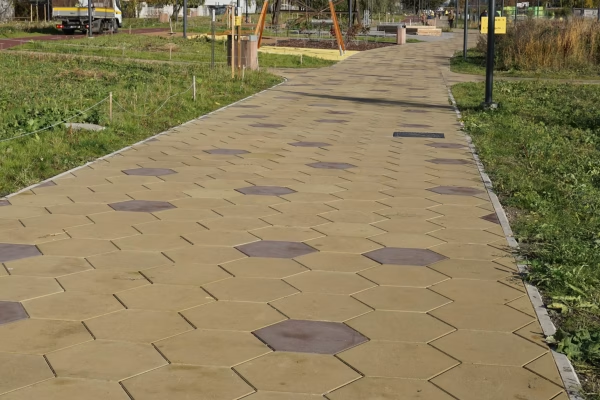
Flagstone is the most popular stamped concrete pattern in San Antonio — irregular-shaped slabs with natural-looking joints that closely mimic the real flagstone common in Hill Country landscaping. Flagstone stamped concrete pairs naturally with the limestone-and-stucco architecture prevalent throughout San Antonio and surrounding communities. It reads as organic and settled — like the surface has been there for a long time — which makes it a strong choice for traditional and craftsman home styles.
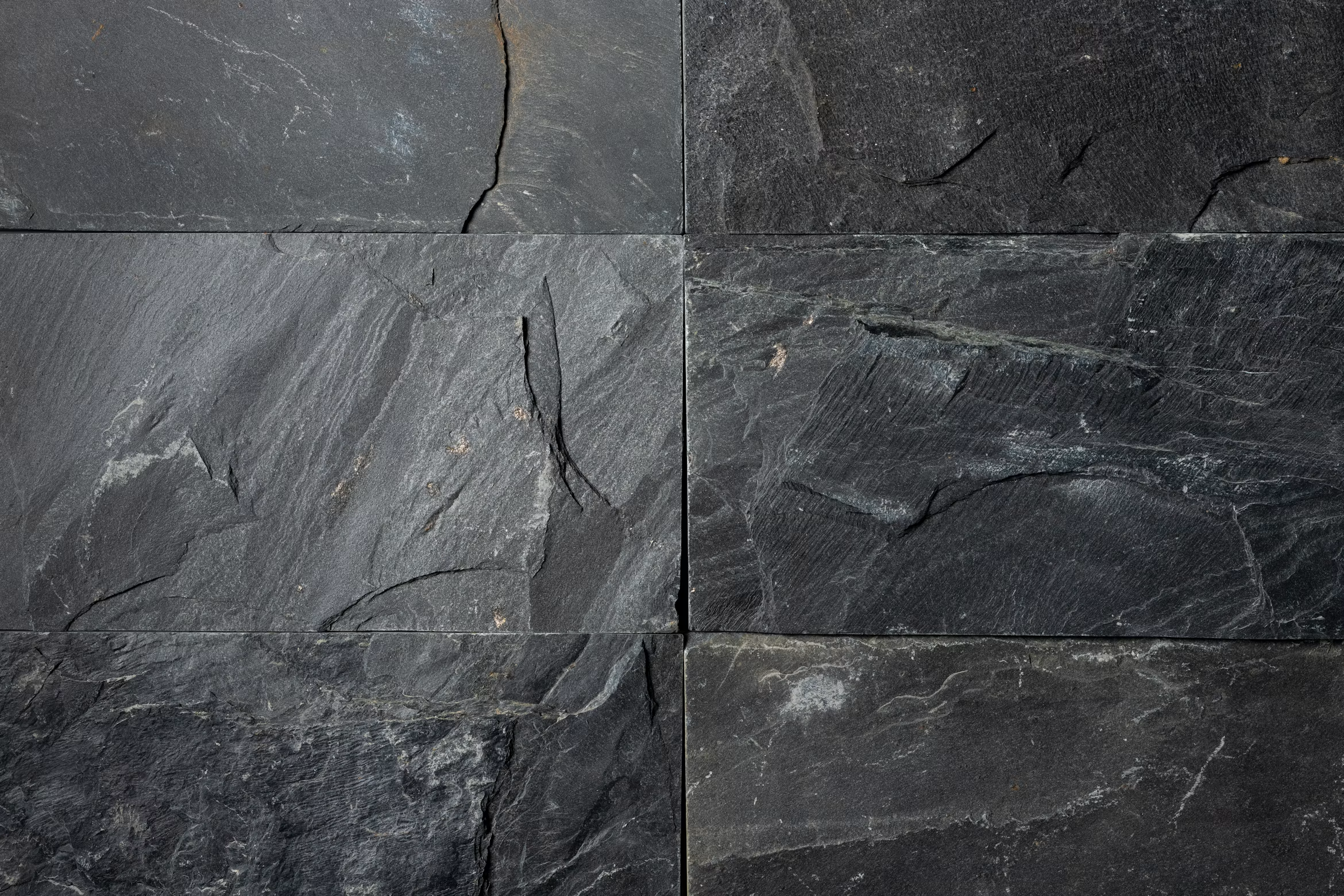
Ashlar slate uses a geometric cut-stone pattern — rectangular and square sections in a staggered layout with consistent joint lines. It reads more formal and contemporary than flagstone and pairs well with modern and transitional home styles increasingly common in San Antonio’s newer developments. The clean geometry of ashlar slate works particularly well on pool decks where the surface needs to feel both contemporary and safe.
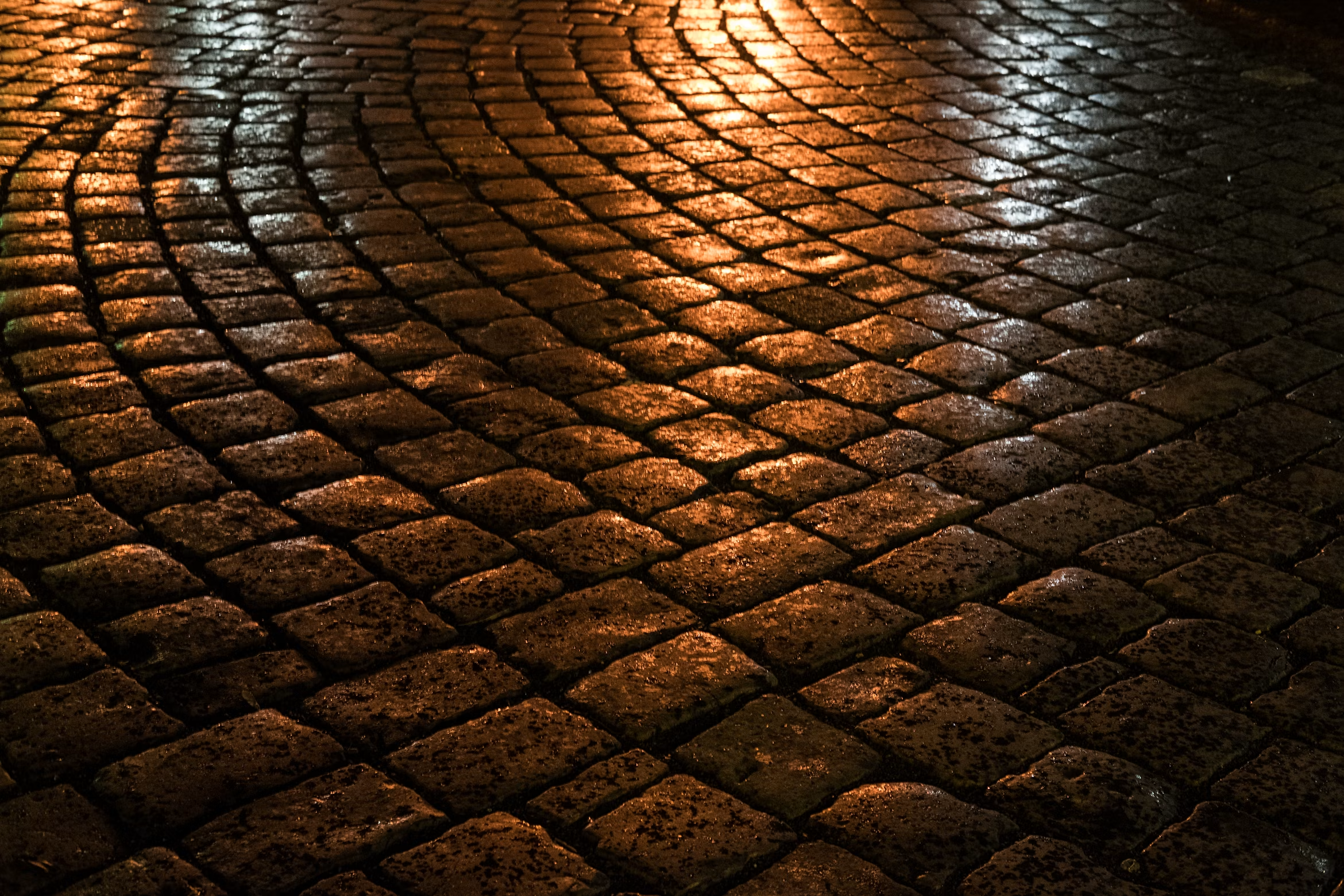
Cobblestone stamped concrete mimics the rounded, irregular pattern of historic cobblestones — warm, textural, and historically resonant. It’s a strong choice for driveways, front walkways, and courtyard-style patios where a European or historic aesthetic is the design goal. San Antonio’s rich architectural heritage makes cobblestone a natural fit in Alamo Heights, King William, and other historically influenced neighborhoods.
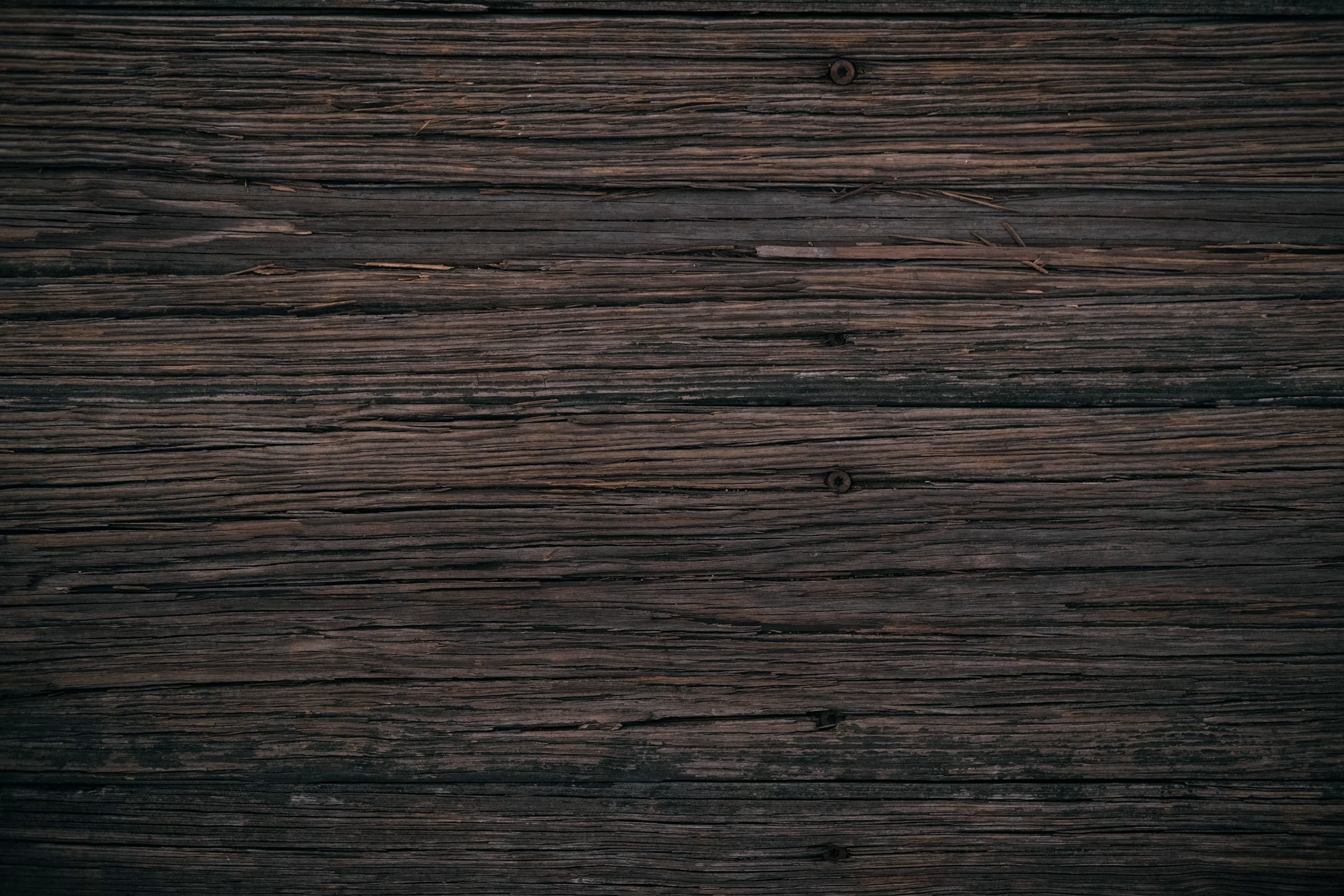
Stamped concrete wood plank patterns mimic the look of deck boards — parallel plank lines with wood grain texture. This pattern creates visual continuity between a deck and an adjacent concrete surface, making it an excellent choice for the concrete patio area at the base of deck stairs where the surface transition should feel seamless rather than abrupt. Wood plank stamped concrete reads warmer and more casual than stone patterns.
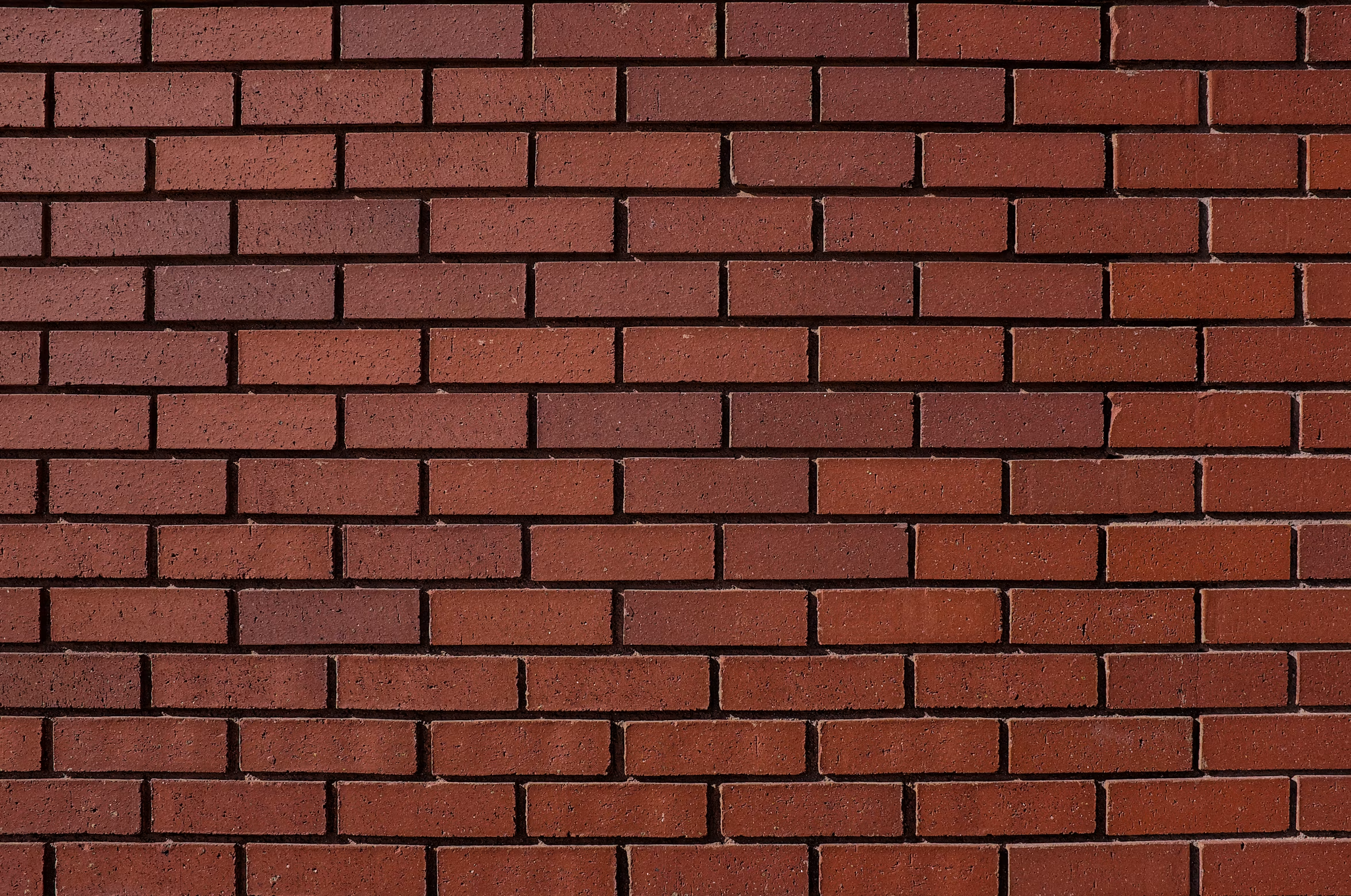
Brick-pattern stamped concrete mimics traditional running bond or herringbone brick patterns — a classic, timeless look that works across virtually every home style. Brick pattern is particularly popular for driveways, walkways, and pool deck borders where a traditional aesthetic is the goal. In San Antonio’s market, brick-pattern stamped concrete pairs naturally with the brick and stone exterior materials common on established homes throughout the city.
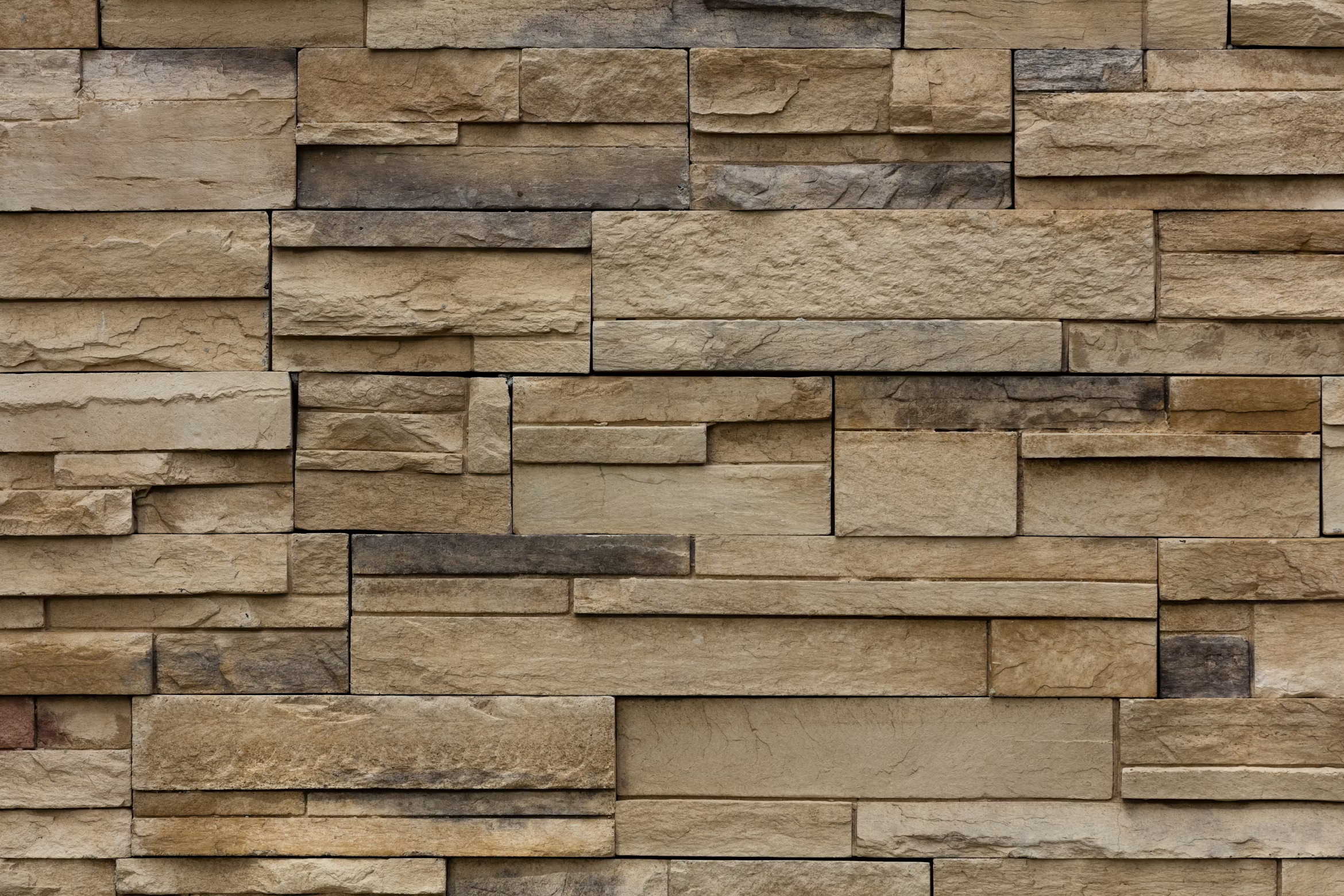
Random stone patterns use irregular, naturally-shaped stone forms — similar to fieldstone or river rock — to create an organic, naturalistic surface. This pattern works well in landscape-integrated settings where the concrete surface is meant to transition visually into garden beds and natural plantings. It’s a strong choice for Boerne, Bulverde, and Hill Country properties where the landscape setting is the design driver.
Both are popular decorative outdoor surface options in San Antonio. Here’s an honest comparison:
|
Factor |
Stamped Concrete |
Concrete or Stone Pavers |
|
Initial cost |
Lower — single continuous pour |
Higher — individual unit installation |
|
Joint maintenance |
None — no joints to weed or re-sand |
Annual joint sand replenishment; periodic weed management |
|
Crack behavior |
Cracks as single slab; controlled with joints |
Individual units shift independently; cracks at joints |
|
Repair complexity |
Difficult to match color/texture on partial repairs |
Individual pavers can be replaced |
|
San Antonio clay soil |
Requires proper prep; heaves as one unit |
Individual units shift with soil movement; easier to re-level |
|
Visual range |
Wide pattern and color options |
Wide pattern and color options |
|
Drainage |
Impervious surface; requires designed slope |
Permeable option available with open-joint systems |
|
Lifespan with proper install |
25–30+ years |
25–30+ years |
Bottom line for San Antonio: Stamped concrete is the more economical choice with lower ongoing maintenance. Pavers offer easier partial repair and some tolerance to individual settling in clay soil environments. The right choice depends on budget, maintenance preference, and aesthetic goals. We install both and give you an honest recommendation during the consultation.
Color is the second major design decision — and the one that determines how realistic the finished surface looks. Stamped concrete achieves its natural material appearance through a combination of base color and accent color that creates the depth and variation of real stone or brick.
Base color is applied as integral pigment mixed into the concrete before pouring, or as color hardener broadcast onto the surface during finishing. Color hardener produces stronger, harder surface concrete in addition to color, which is why we prefer it over integral pigment alone for exterior applications. Base colors for San Antonio typically pull from warm earth tones — tans, buffs, terracottas, warm greys — that complement the region’s limestone, stucco, and brick building materials.
Accent color is applied via release agent before stamping — the release agent sticks in the recessed joint areas and is partially removed from the high points during stamp pressing, creating natural color variation and shadow in the joints. The accent color provides the contrast that makes the pattern readable as stone or brick rather than solid color.
Popular color combinations in San Antonio:
We bring color sample boards and pattern samples to every consultation so color decisions are made with real samples against your home’s exterior — not a webs
Step 1 — Free On-Site Consultation & Design We visit your property, evaluate the area, and discuss pattern options, color combinations, and how the stamped concrete will integrate with adjacent deck, pool, or landscape elements. We bring physical pattern samples and color boards so decisions are made with real materials in your outdoor environment.
Step 2 — Fixed-Price Written Quote You receive a written scope of work specifying the pattern, color system, sealer type, and all subgrade and reinforcement work. The number you approve is the number you pay.
Step 3 — Permits (Where Required) We handle all permit requirements for your specific jurisdiction and project type.
Step 4 — Subgrade Preparation Excavation, grading for drainage slope, and subgrade compaction — the same structural foundation we bring to all concrete work. Decorative work on a compromised subgrade fails just as fast as plain concrete on one.
Step 5 — Pour, Color & Stamp Concrete is poured and screeded. Color hardener is broadcast and floated in. Release agent is applied. Stamp mats are pressed into the surface in the selected pattern. The timing of each step is critical — stamping must happen in the correct window of concrete set. Experienced crews read the concrete and work efficiently to achieve consistent pattern impression across the full surface.
Step 6 — Cure & Seal The stamped surface cures for the required period before sealer application. We apply the specified sealer product uniformly and allow it to cure before foot traffic is permitted.
Primary Service Area: San Antonio, TX
Surrounding Communities: Stone Oak · Alamo Heights · Helotes · Schertz · Cibolo · Universal City · Converse · Boerne · Bulverde · New Braunfels · Canyon Lake · Lake Medina · Bandera
Flagstone is consistently our most requested pattern — its irregular organic shape pairs naturally with the limestone, stucco, and Hill Country landscaping aesthetic prevalent throughout San Antonio and surrounding communities. Ashlar slate is the second most popular, particularly for contemporary and transitional home styles in newer developments. We bring samples of both — and every other pattern we install — to your consultation so the decision is visual rather than descriptive.
A properly installed and regularly sealed stamped concrete surface will last 25–30+ years in San Antonio’s climate. The structural concrete itself is indefinitely durable — what degrades over time without maintenance is the sealer and, eventually, the surface color if left unsealed. Re-sealing every 2–3 years in San Antonio’s high-UV environment keeps the surface protected and the color vibrant for decades.
Standard stamped concrete with an appropriate texture profile provides good traction when wet — comparable to broom-finished plain concrete. The slip risk comes from over-application of film-forming sealer, which creates a smooth, slick surface when wet if applied too heavily. We apply sealer to the manufacturer’s recommended coverage rate and use texture-enhancing additives in the sealer for pool deck applications where wet barefoot traffic is a consistent condition.
Hairline cracks — the normal result of concrete shrinkage — can be filled with color-matched caulk or crack filler and are virtually invisible after re-sealing. Structural cracks with vertical displacement require more significant repair. The challenge with stamped concrete repair is color and texture matching — getting a repair section to match the original surface exactly is difficult, which is why proper subgrade preparation and control joint placement to manage cracking is so important on the front end. We discuss crack repair honestly during the consultation for projects on existing slabs.
Stamped concrete is a continuous poured slab with a decorative surface applied during installation — no joints to maintain, no individual pieces to shift. Pavers are individual units placed on a prepared base — joints require periodic maintenance but individual pavers can be replaced if damaged. Stamped concrete is generally less expensive and lower maintenance. Pavers offer easier partial repair and some individual unit tolerance to soil movement. We build both and recommend based on your specific project, soil conditions, and maintenance preferences.
Light foot traffic is typically safe 24–48 hours after installation for weather-appropriate curing conditions. Full load and heavy furniture should wait 7 days. The sealer needs 24 hours to cure after application before foot traffic. We give you specific timeline guidance with your project based on the pour date and weather forecast.
Whether you want a stamped concrete patio to complete an outdoor living space, a decorative pool deck surround, or a walkway that ties your backyard together visually — Paradise Decks & Spas will design it, install it on a proper foundation, and seal it for San Antonio’s climate.
Call (210) 496-3325 or email info@paradisedecksandspas.com to schedule your free on-site consultation. Or visit our showroom at 10615 Perrin Beitel, Suite 604, San Antonio, TX 78217 — open Monday–Friday 9 AM to 5 PM, Saturday 9 AM to 4 PM.