
(210) 496-3325
Aluminum patio covers have become the most requested cover material in San Antonio — and it’s not hard to understand why. No painting. No staining. No rot. No termites. No warping in triple-digit heat. Just a clean, durable covered outdoor space that looks as good in year 15 as it did on installation day. Paradise Decks & Spas designs and installs custom aluminum patio covers across San Antonio and surrounding communities.
By Rick Hogue, Founder & Lead Deck Specialist · Last Updated June 2026
Wood patio covers are beautiful — and they require painting or staining every few years, periodic inspection for rot and insect damage, and the kind of ongoing attention that most homeowners eventually stop giving them. In San Antonio’s high-UV, high-heat environment, that maintenance cycle is accelerated compared to milder climates. A wood cover that needs attention every 3–5 years elsewhere may need it every 2–3 years here.
Aluminum patio covers eliminate that maintenance cycle entirely. Powder-coated aluminum framing and panel systems don’t rot, don’t attract termites, don’t warp in heat, and never need painting or staining. The powder-coat finish holds its color through years of South Texas UV exposure, and the structural components are engineered for the wind loads San Antonio’s storm season demands.
As a full-service outdoor living company with 19+ years of completed projects across Bexar, Comal, Kendall, and Bandera counties, Paradise Decks & Spas installs aluminum patio cover systems — insulated panel, solid non-insulated, and louvered — matched to your home’s architecture and finished to HOA specifications where required.
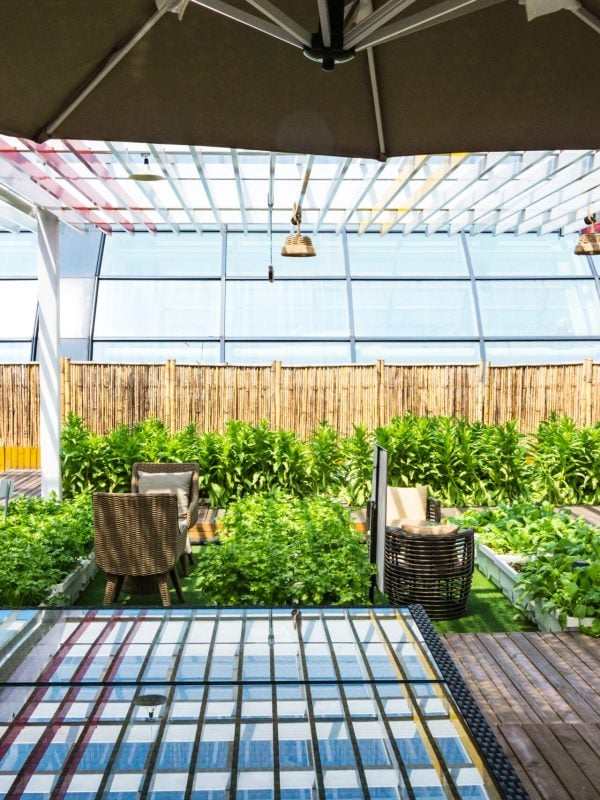
San Antonio’s combination of climate factors creates a uniquely demanding environment for outdoor structures:
Triple-digit summer heat. Aluminum has a much lower thermal mass than wood — it heats up quickly in direct sun but cools down equally fast when shade or airflow arrives. Insulated aluminum panel systems add a foam core that reduces radiant heat transfer into the space below, keeping covered patios measurably cooler than wood-framed covers.
High UV exposure. San Antonio averages over 220 sunny days per year. That UV load degrades wood finishes, fades paint, and accelerates the breakdown of organic materials. Powder-coated aluminum is UV-stable — the finish doesn’t fade, chalk, or peel under extended sun exposure the way paint on wood does.
Termite pressure. San Antonio and surrounding Hill Country communities sit in one of Texas’s most active termite zones. Subterranean termites attack wood structural members — a well-built wood cover can be compromised from below without visible exterior signs. Aluminum is not a food source and is completely immune to termite damage.
Storm wind loads. San Antonio’s storm season produces wind gusts that regularly exceed 60 mph. Aluminum patio cover panel systems are engineered with interlocking panel connections and rated for specific wind load values — we specify systems rated for San Antonio’s design wind speed requirements.
Not all aluminum patio cover projects are the same. Here are the most popular aluminum patio cover styles our San Antonio clients choose — and how we design each one for shade, durability, and low maintenance.
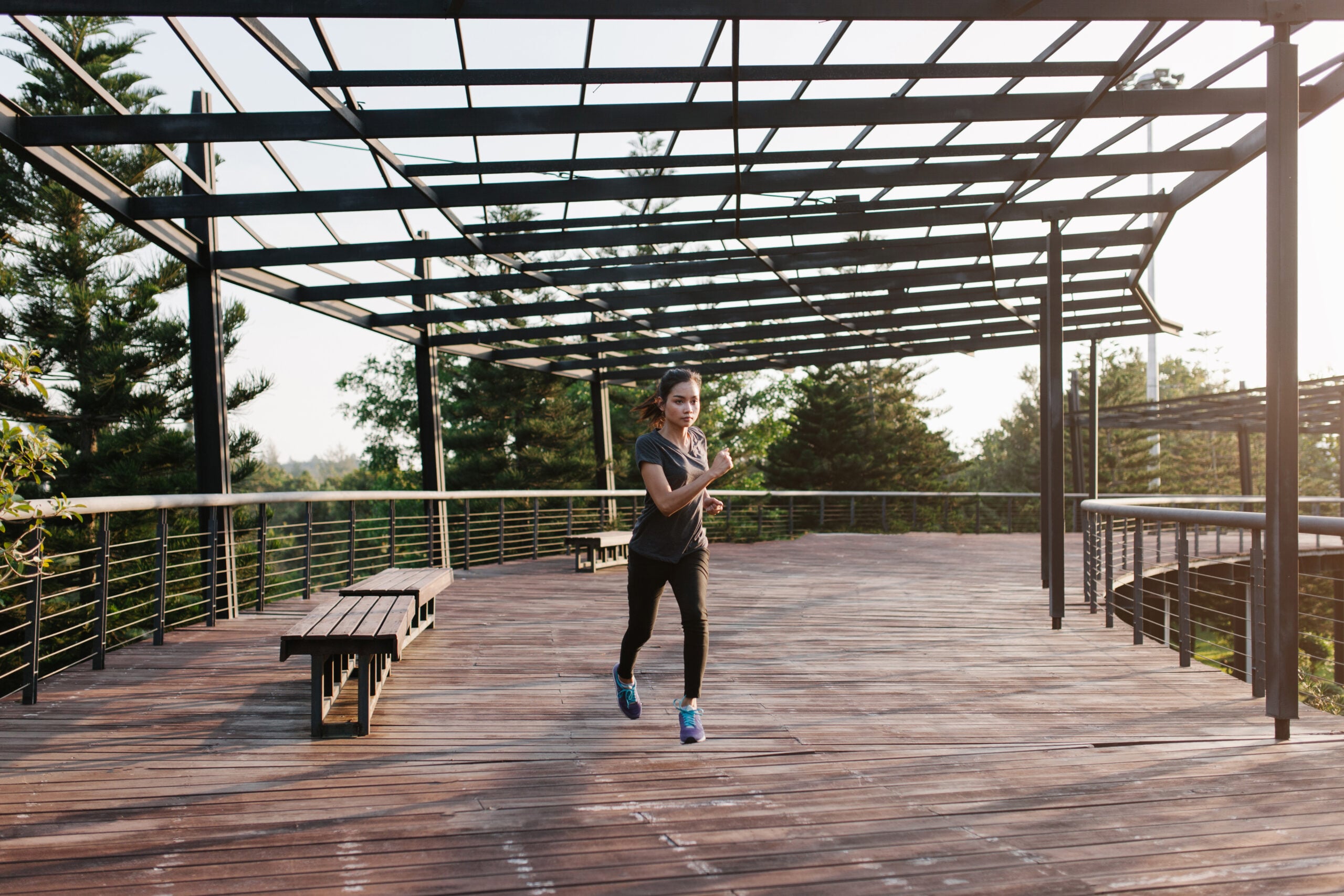
An insulated aluminum patio cover uses foam-core sandwich panels — aluminum facing on top and bottom with a rigid foam insulation core in between — for both the roof panels and often the post and beam system. The foam core provides meaningful thermal resistance that a standard aluminum panel system doesn’t offer, keeping the space underneath noticeably cooler during San Antonio’s direct afternoon sun.
Insulated aluminum covers produce a finished ceiling appearance on the underside — no exposed framing, no visible fasteners — and are available in white, tan, and bronze finishes that coordinate with most San Antonio home exteriors. They’re the most popular premium aluminum cover option we install because the combination of zero maintenance, finished appearance, and improved thermal performance is difficult to beat in this climate.
A standard aluminum patio cover uses solid aluminum panels without a foam core — lighter and less expensive than insulated systems while still providing full weather protection and complete maintenance-free performance. Standard aluminum covers are the right choice for covered patios where budget is the primary consideration and the thermal performance of an insulated panel system isn’t a priority — shaded areas on north-facing patios, for example, where direct sun exposure is minimal.
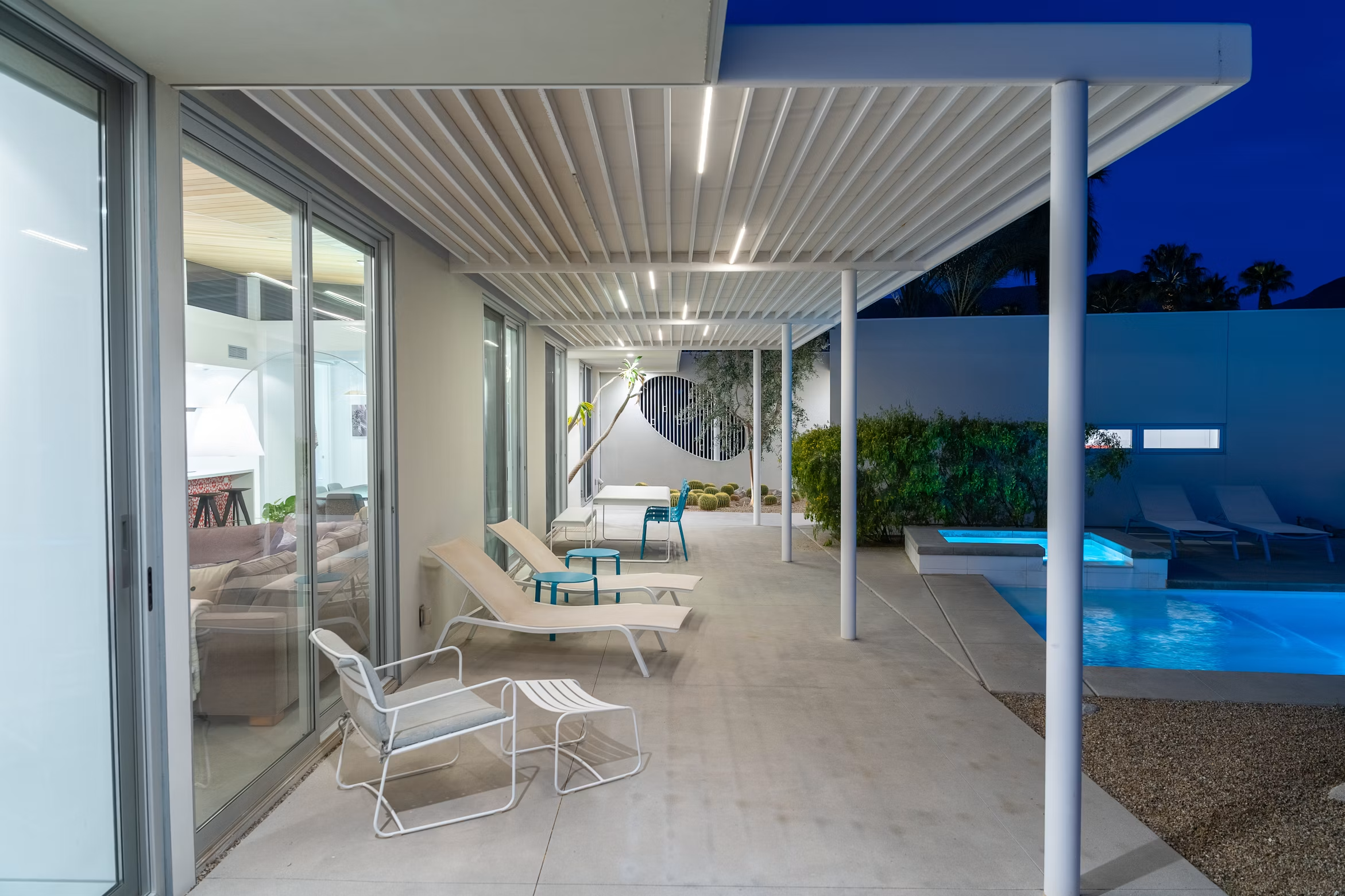
A louvered aluminum patio cover uses adjustable aluminum slat blades — motorized or manual — that open and close to control shade, airflow, and weather protection. Open louvers allow full sunlight and ventilation. Closed louvers provide complete rain protection. Partially open louvers let filtered light and air through while blocking direct sun and light rain.
Louvered aluminum systems are the most flexible cover option available — the space transitions between open-air and fully protected with the turn of a handle or press of a button. They’re a premium option best suited for homeowners who want both the open-patio experience and the covered-patio experience from the same structure depending on the day and weather.
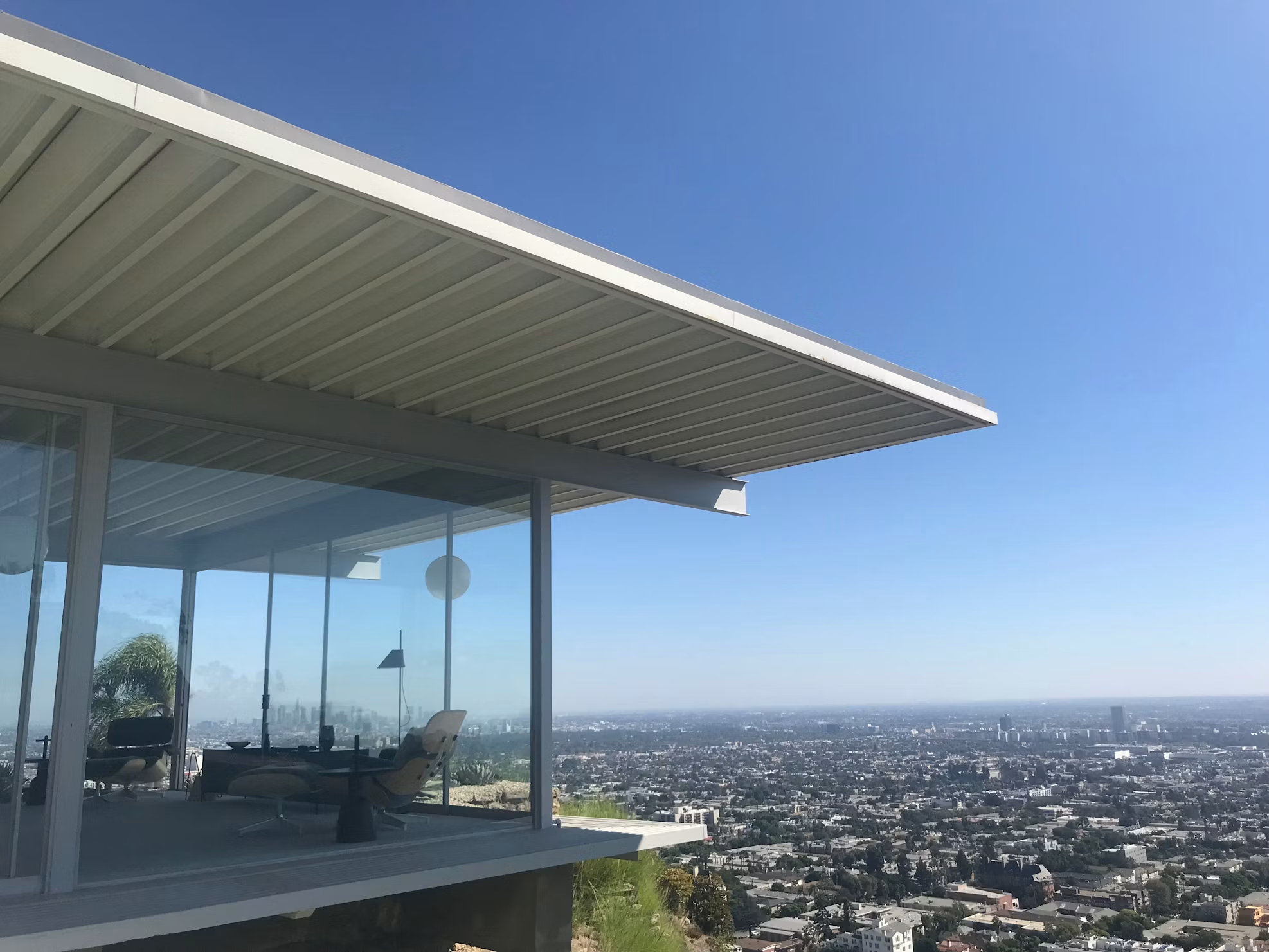
An attached aluminum patio cover connects to the home’s exterior wall via a mounting channel and fascia connection, using the home as one support point and extending outward over the patio. Attached aluminum systems integrate cleanly with the home’s exterior — the post and beam profiles are designed to sit flush against fascia and soffit without the visible ledger board that wood-framed attached covers require. Proper flashing and weatherproofing at the attachment point is critical to prevent moisture infiltration; we detail every attachment point to the same standard as a wood-framed cover.
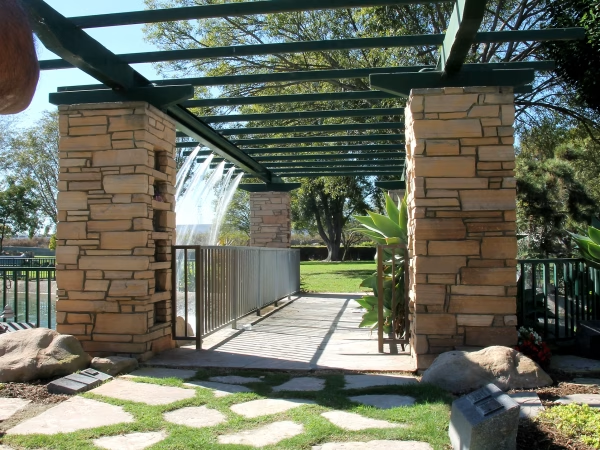
A freestanding aluminum patio cover is entirely self-supported on its own posts and footings — no attachment to the home required. Freestanding aluminum covers are the right choice when the covered area is positioned away from the home, when attachment to the home’s wall isn’t structurally feasible, or when a pavilion-style structure is preferred. We set freestanding aluminum cover posts in properly sized concrete footings for San Antonio’s clay soil — the same footing standards we apply to all freestanding outdoor structures.
This is the most common decision point for San Antonio homeowners considering a patio cover. Here’s an honest side-by-side:
Factor | Aluminum Cover | Wood Cover |
Maintenance | None — no painting, staining, or sealing ever | Paint or stain every 2–3 years in San Antonio’s climate |
Lifespan | 30–50+ years with no structural degradation | 20–30 years with consistent maintenance |
Termite resistance | Fully resistant — aluminum is not a food source | Requires treatment; pressure-treated lumber helps but isn’t immune |
Heat performance | Insulated panels keep space up to 20°F cooler | Standard framing provides shade but limited thermal resistance |
Aesthetic flexibility | Clean contemporary profiles; limited decorative detail | Full architectural customization — corbels, rafter tails, beam profiles |
HOA compatibility | Clean profiles approved in most San Antonio HOAs | More architectural variation; may require specific design documentation |
Wind resistance | Engineered panel systems rated for high wind loads | Dependent on connection hardware and maintenance condition |
Initial investment | Moderate to premium depending on system | Moderate for standard; premium for custom architectural wood |
Bottom line: If low maintenance and long-term durability are your primary criteria — aluminum wins clearly in San Antonio’s climate. If architectural character and customization matter more than maintenance convenience — a wood cover may be the better fit. We build both and will give you an honest recommendation based on your specific priorities during the consultation.
Step 1 — Free On-Site Consultation We visit your property, evaluate the patio location, and discuss your goals — insulated vs. standard vs. louvered, attached vs. freestanding, finish color, electrical for fans and lighting, and budget. We assess your home’s exterior, existing roofline, and HOA requirements during this visit.
Step 2 — System Selection & Design We recommend the aluminum cover system that fits your goals and produce a design showing panel layout, post placement, finish color, and how the cover integrates with your home’s exterior. For HOA-governed properties, we prepare the documentation their architectural committee requires.
Step 3 — Fixed-Price Written Quote You receive a written scope of work and a fixed-price quote. The number you approve is the number you pay — no hourly billing, no surprises.
Step 4 — Permits (Where Required) Most aluminum patio covers in San Antonio require a building permit. We prepare drawings, submit to the City of San Antonio Development Services or your local jurisdiction, and handle all inspection scheduling.
Step 5 — Installation We set post footings for freestanding covers or install the attachment channel for attached covers, assemble the beam and post system, install roof panels, and complete all weatherproofing details. Electrical for ceiling fans and lighting is run during installation. Built-in gutters are installed where drainage requires them.
Step 6 — Final Walkthrough We walk the completed cover with you, confirm fan and lighting operation, and confirm all panel connections and seals are complete before we call the job done.
Primary Service Area: San Antonio, TX
Surrounding Communities: Stone Oak · Alamo Heights · Helotes · Schertz · Cibolo · Universal City · Converse · Boerne · Bulverde · New Braunfels · Canyon Lake · Lake Medina · Bandera
Three reasons specific to this market: termite pressure, maintenance burden, and heat performance. San Antonio sits in one of Texas’s most active termite zones — aluminum is immune. The high UV and heat environment accelerates wood finish degradation faster than most other Texas cities — aluminum never needs repainting. And insulated aluminum panel systems keep covered patios measurably cooler than wood-framed covers under direct afternoon sun. The combination of zero maintenance and better thermal performance makes aluminum the most practical cover material for most San Antonio homeowners.
An insulated aluminum cover uses foam-core sandwich panels — aluminum facing on both sides with rigid foam insulation in the core. This reduces radiant heat transfer into the space below, keeps the underside cooler on hot afternoons, and produces a finished ceiling appearance. A non-insulated aluminum cover uses solid aluminum panels without insulation — lighter, less expensive, and still fully weather-protective and maintenance-free, but without the thermal performance benefit. For south and west-facing patios with significant afternoon sun exposure, insulated is consistently the better choice in San Antonio.
An attached pergola connects to your home’s exterior wall via a ledger board, using the home as one support point and requiring fewer freestanding posts. It creates a seamless visual connection between your home and outdoor space. A freestanding pergola is entirely self-supported on its own posts and footings — more flexible in placement and orientation but requiring properly sized footings, especially in San Antonio’s expansive clay soil. Both require permits in most San Antonio-area jurisdictions.
Most aluminum cover systems are available in white, tan/beige, and bronze/dark brown powder-coat finishes. Bronze has become the most popular finish in San Antonio in recent years — it coordinates well with the stucco, brick, and stone exteriors common in the market and reads as a more contemporary, intentional design choice than standard white. We bring finish samples to the consultation so the decision is based on real color against your home’s exterior.
Yes, in most cases. Aluminum patio covers are treated the same as any other permanent patio cover by the City of San Antonio — a building permit is required for attached covers and for freestanding covers exceeding certain square footage thresholds. We verify requirements for your specific address, prepare all permit drawings, and handle the complete submittal and inspection process.
A standard attached or freestanding aluminum patio cover installation typically takes 2–4 working days once construction starts — aluminum systems install faster than wood-framed covers because the panel components are pre-manufactured to specification. Larger covers with full electrical, fans, lighting, and gutter systems run 4–6 days. Permitting adds 1–3 weeks on the front end. We provide a written timeline with your quote.
Yes. We attach aluminum covers to brick, stucco, Hardie board, and stone homes using appropriate anchoring hardware and sealants for each substrate. The attachment method and weatherproofing detail varies by exterior material — we specify the right approach for your home during the design phase.
Quality aluminum panel cover systems are engineered with interlocking panel connections and post-to-beam hardware rated for specific wind load values. We specify systems with wind ratings appropriate for San Antonio’s design wind speed requirements — not the minimum values that technically pass code, but values that provide meaningful safety margin in severe weather.
Whether you want an insulated aluminum cover for maximum heat performance, a louvered system for adjustable shade and weather control, or a straightforward solid aluminum cover that requires nothing from you year after year — Paradise Decks & Spas will design and install it to last in San Antonio’s climate.
Call (210) 496-3325 or email info@paradisedecksandspas.com to schedule your free on-site consultation. Or visit our showroom at 10615 Perrin Beitel, Suite 604, San Antonio, TX 78217 — open Monday–Friday 9 AM to 5 PM, Saturday 9 AM to 4 PM.