
(210) 496-3325
Concrete is the foundation of most San Antonio outdoor living spaces — under the deck, around the pool, connecting the back door to the yard. When it’s done right, it’s invisible infrastructure that lasts 30–50 years. When it’s done wrong, it cracks, heaves, and drains poorly within a few seasons. Paradise Decks & Spas installs concrete patios, slabs, pool decks, walkways, and hardscape across San Antonio and surrounding communities — built specifically for the clay soil and heat cycles that make concrete work in this market technically demanding.
By Rick Hogue, Founder & Lead Deck Specialist · Last Updated June 2026
Concrete installation in San Antonio is more technically demanding than in most other Texas markets — and the reason is the soil. San Antonio sits on some of the most active expansive clay soil in the state. That soil swells when wet and shrinks when dry — a seasonal cycle that exerts enormous upward and lateral pressure on any concrete slab that isn’t properly prepared, reinforced, and drained.
The consequences of ignoring clay soil in concrete work are visible throughout San Antonio neighborhoods: cracked patios, heaved pool decks, sunken walkways, and driveways that look like they settled in three different directions. These aren’t random failures — they’re predictable outcomes of concrete installation that didn’t account for the soil it’s sitting on.
As a full-service outdoor living company with 19+ years of completed projects in San Antonio, Paradise Decks & Spas builds concrete work that lasts — proper subgrade preparation, appropriate slab thickness and reinforcement, control joint placement to manage cracking predictably, and drainage design that moves water away from the slab and home foundation rather than pooling against them.
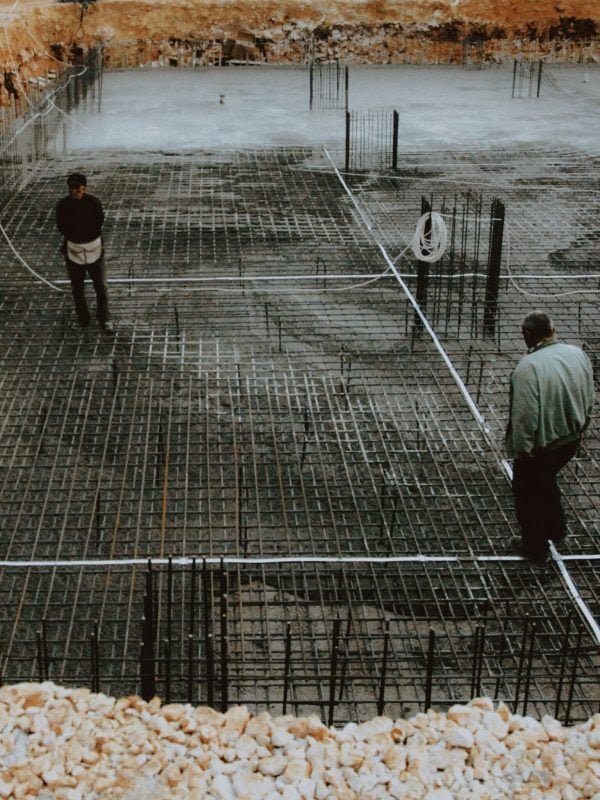
Understanding the failure modes helps homeowners evaluate concrete bids and avoid the contractors whose low prices reflect skipped steps rather than efficiency. Here are the most common reasons concrete fails prematurely in San Antonio’s specific conditions:
Inadequate subgrade preparation. Clay soil must be properly graded, compacted, and in some cases treated or replaced with a more stable base material before concrete is poured. Concrete poured directly onto uncompacted or improperly graded clay will follow the soil’s movement — heaving in wet periods and settling in dry ones.
Insufficient slab thickness. A 4-inch slab is adequate for pedestrian patio applications. Pool decks and driveways that carry vehicle loads need 5–6 inches minimum. Undersized slabs crack under loads they weren’t designed for.
Missing or inadequate reinforcement. Rebar or wire mesh reinforcement distributes load across the slab and holds crack sections together when the inevitable concrete shrinkage cracks occur. Unreinforced concrete in San Antonio’s expansive soil environment cracks and separates — reinforced concrete cracks (as all concrete eventually does) but holds together as a structural unit.
Control joints not placed correctly. Control joints are intentional weak lines in the slab that guide where shrinkage cracks occur — keeping them straight, predictable, and manageable rather than random and unsightly. Incorrect control joint spacing or placement results in random cracking across the slab face.
Poor drainage design. Concrete patios and pool decks need positive slope away from the home foundation and adequate drain provisions to move water off the surface quickly. Standing water on a concrete slab in San Antonio’s clay environment accelerates soil movement beneath the slab and contributes to surface scaling and freeze-thaw damage in the occasional winter freeze events.
Not all concrete projects are the same. Here are the most common concrete installation ideas our San Antonio clients request — and how we build each one for durability, drainage, and Texas soil conditions.
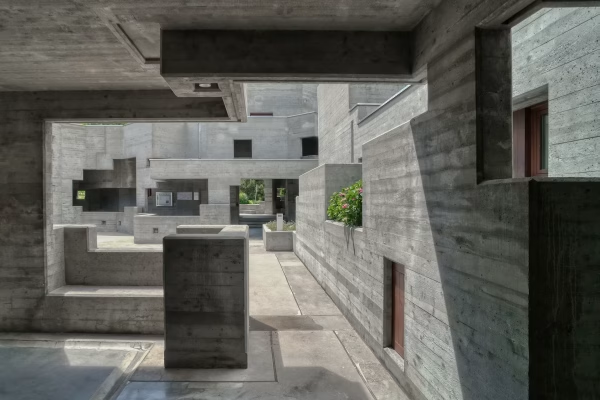
A concrete patio is the most common outdoor hardscape project we install — a flat, finished slab adjacent to the home that creates a ground-level outdoor living surface. Concrete patios in San Antonio are typically 4 inches thick for pedestrian use, reinforced with wire mesh or rebar on a properly prepared subgrade, sloped away from the home at a minimum 1/8 inch per foot, and finished with a texture appropriate for outdoor use — broom finish for slip resistance being the standard.
Concrete patios can be left as plain broom-finished concrete, colored with integral pigment or surface-applied color hardener, or upgraded to stamped concrete patterns for a decorative finish. For decorative stamped concrete applications, see our dedicated Stamped Concrete Installation page.
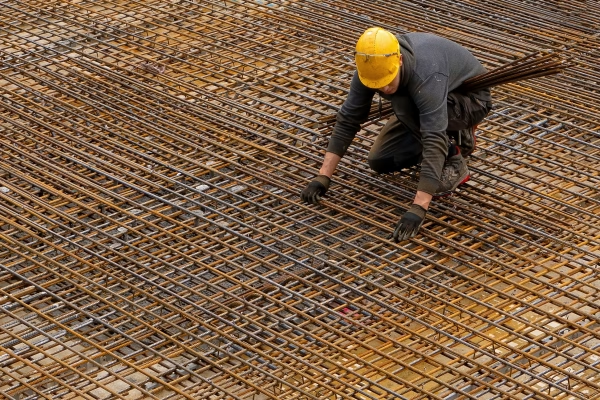
A concrete slab serves as the foundation for outdoor structures — the base for a carport, the pad for a hot tub or spa, the floor for a screen room or patio enclosure, or the structural platform for any covered outdoor structure that needs a permanent foundation. Hot tub and spa pads require specific slab thickness and reinforcement to carry the filled weight load — typically 5–6 inches of reinforced concrete sized for the spa’s filled weight at the installation location. We size and reinforce every structural slab for its specific application.
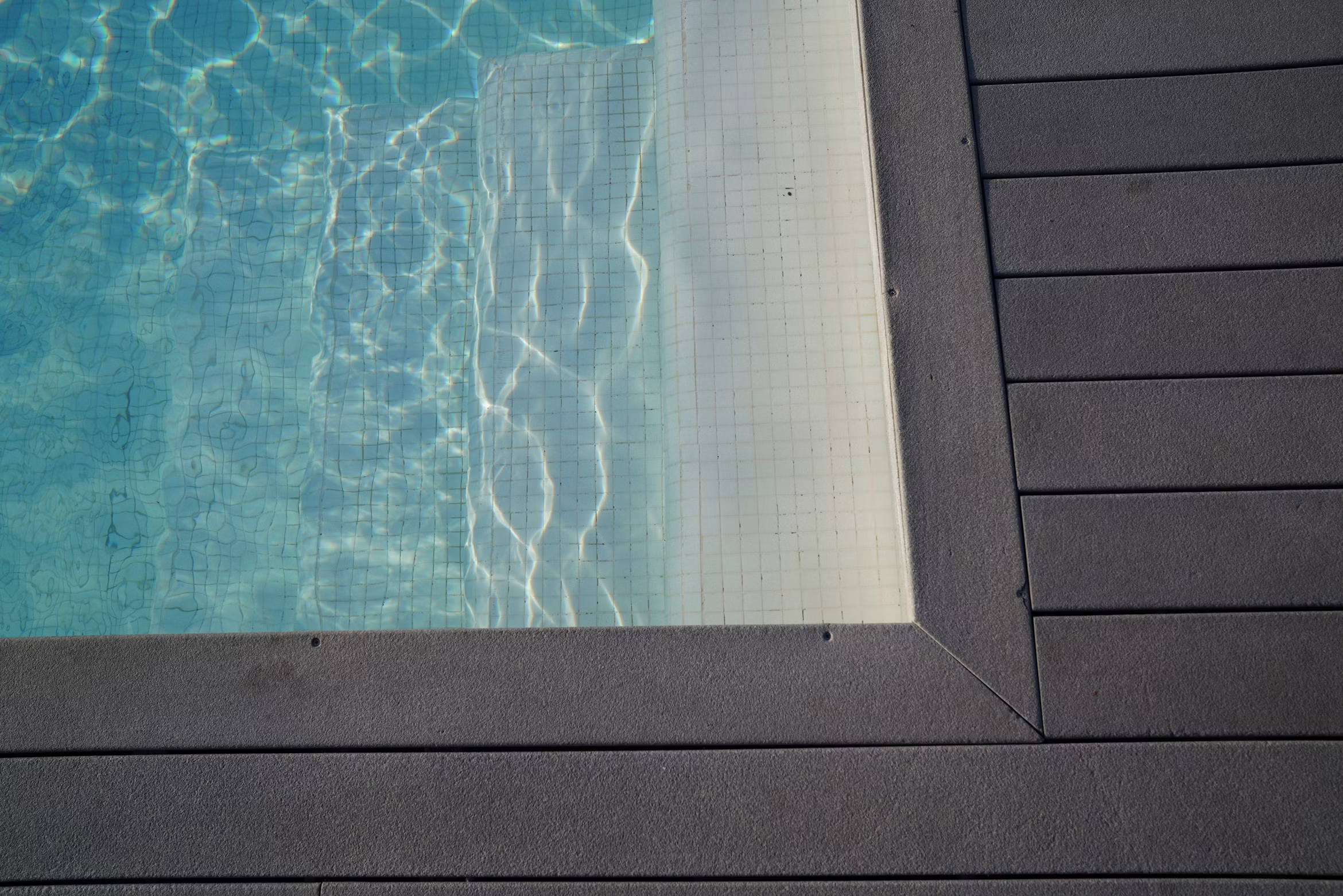
Pool deck concrete installation is among the most technically demanding concrete work we do — the surface faces constant moisture, UV exposure, chemical exposure from pool water, and the thermal cycling of a surface that goes from wet to dry to hot repeatedly throughout the day. We cover concrete pool deck installation in detail on our dedicated Pool Deck page, but the core requirements include slip-resistant texture, positive drainage slope away from the pool and toward perimeter drains, properly placed control joints to manage cracking, and appropriate sealing to resist pool chemical and UV damage
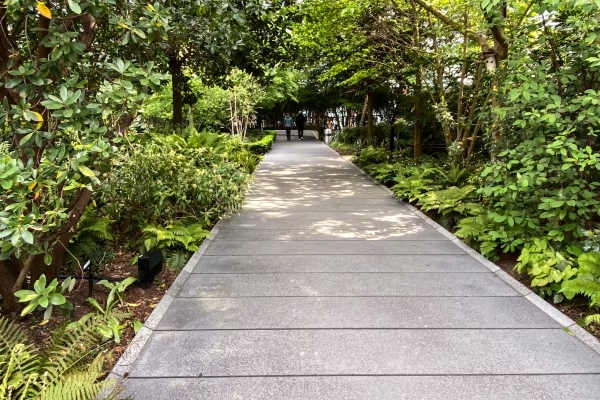
Concrete walkways connect outdoor spaces — from the driveway to the back gate, from the deck stairs to the pool area, from the front door to the detached garage. Walkways need to be level enough for comfortable walking, wide enough for their intended traffic (36 inches minimum for single-file pedestrian, 48–60 inches for two-person passage), and properly jointed to prevent tripping hazards as the slab ages. In San Antonio’s clay soil environment, walkway sections that span between two fixed points — like a house wall and a pool deck — need to be designed with the soil movement cycle in mind so differential settlement doesn’t create step-down tripping hazards at the joints.
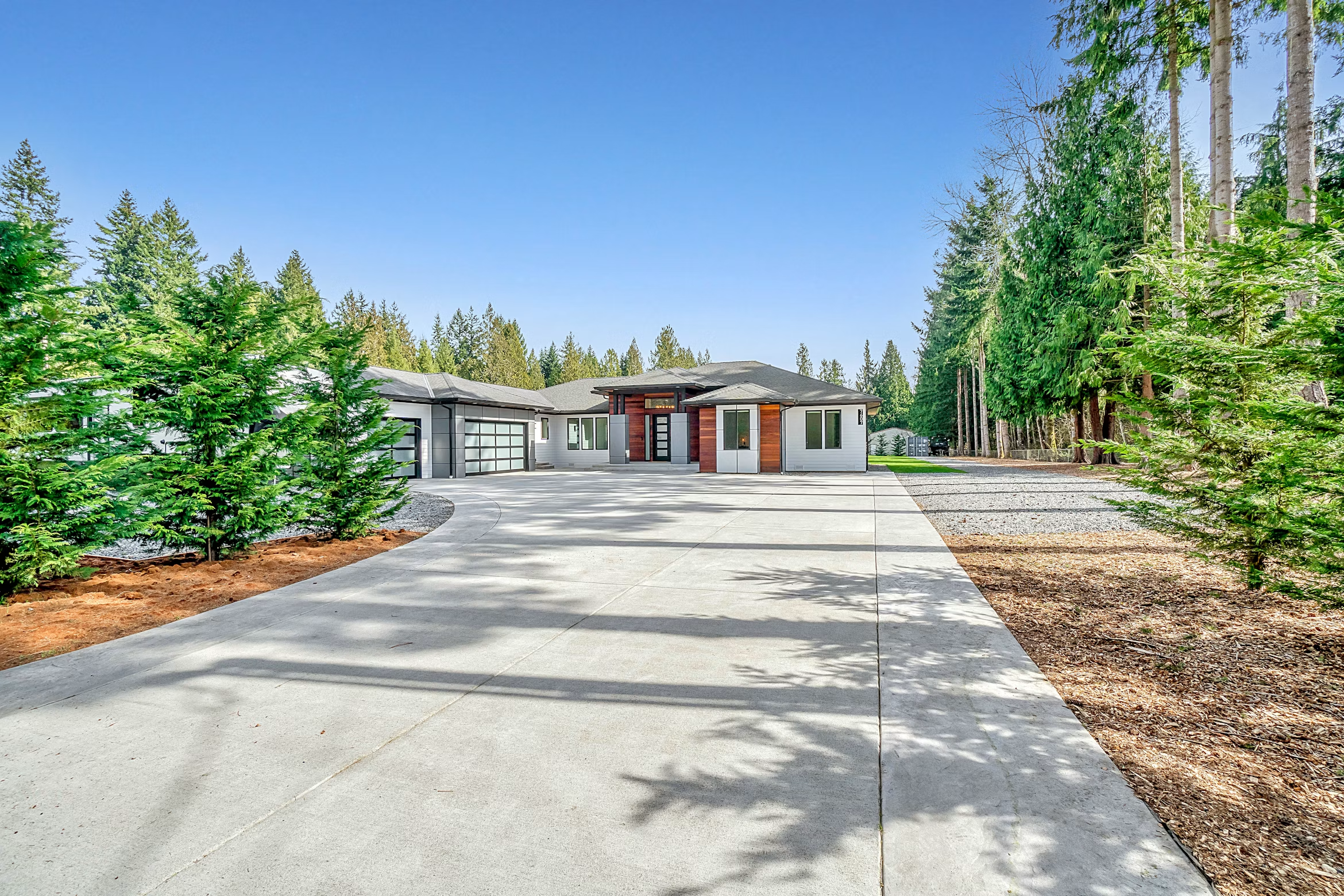
Driveway aprons — the concrete section from the street to where the driveway surface begins — and concrete driveway approaches require 5–6 inch slab thickness to handle vehicle loads, rebar reinforcement, and expansion joint placement at the property line and at transitions to asphalt or pavers. We install driveway aprons and concrete approach sections as part of larger outdoor living projects where the driveway connection to the home’s outdoor environment is part of the overall design.
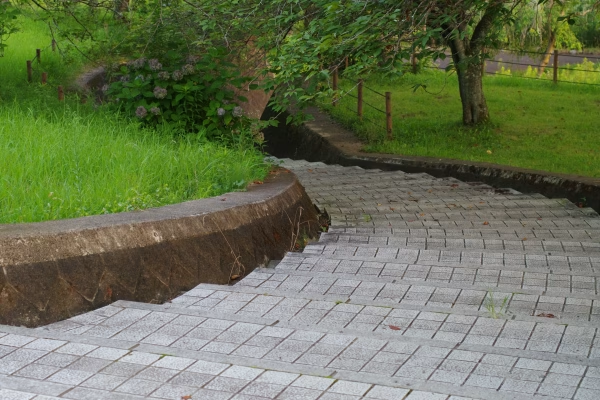
When a deck project includes a concrete patio at the base of the stairs, a concrete landing at the back door, or a concrete pad for outdoor furniture or a grill station, we design and install the concrete work as part of the overall outdoor living project — ensuring the concrete integrates visually and functionally with the deck, not as a separate disconnected surface. This integrated approach produces the most cohesive outdoor environment and avoids the level and drainage transition problems that occur when concrete and deck work are handled by separate contractors.
When you receive a concrete bid in San Antonio, here’s what the work should include — and what to ask about if it’s not specified:
Subgrade preparation. Existing vegetation, topsoil, and unstable material removed. Subgrade graded to the correct slope for drainage. Compaction verified before forming begins.
Forms set to grade. Concrete forms set to achieve the finished slope and elevation required for drainage and transitions to adjacent surfaces.
Reinforcement installed. Wire mesh or rebar placed at the correct height within the slab thickness — in the lower third of the slab for patios, mid-slab for structural applications. Reinforcement chairs or supports used to maintain position during the pour.
Concrete mix appropriate for the application. Minimum 3,000 PSI concrete for residential patios; 3,500–4,000 PSI for pool decks and structural slabs. Fiber reinforcement additive for pool decks and surfaces subject to frequent wet-dry cycling.
Control joints cut or formed at appropriate spacing. Generally no more than 10–12 feet on center in either direction for a 4-inch slab. Joints should be 1/4 of the slab thickness in depth.
Proper finishing for the application. Broom finish for outdoor pedestrian surfaces — drag pattern perpendicular to primary foot traffic direction for maximum traction. Trowel finish only for covered applications where slip resistance from the texture isn’t required.
Curing compound applied. Proper curing — maintaining moisture in the slab for the first 7 days — dramatically improves concrete strength and reduces surface dusting and scaling. Curing compound applied immediately after finishing is the standard method for outdoor slabs.
Sealer applied after curing. An appropriate concrete sealer applied after the slab has cured provides UV resistance, surface hardening, and moisture resistance that extends slab life significantly in San Antonio’s climate.
Step 1 — Free On-Site Consultation We visit your property, evaluate the proposed concrete area, discuss your goals — patio size, surface finish, drainage requirements, integration with adjacent structures — and identify any subgrade conditions that need addressing before forming begins.
Step 2 — Fixed-Price Written Quote You receive a written scope of work covering subgrade preparation, reinforcement, concrete mix specification, finishing, and sealing. The number you approve is the number you pay.
Step 3 — Permits (Where Required) Most concrete patio and slab installations in San Antonio require a building permit. We prepare drawings, submit to the City of San Antonio Development Services or your local jurisdiction, and handle all inspection scheduling.
Step 4 — Subgrade Preparation We excavate to the required depth, remove unstable material, grade for drainage slope, and compact the subgrade to the specified density.
Step 5 — Forming & Reinforcement Concrete forms are set to achieve the finished grade and slope. Reinforcement is placed at the correct height and position within the slab section.
Step 6 — Pour, Finish & Cure Concrete is poured, consolidated, and finished to the specified texture. Curing compound is applied immediately after finishing.
Step 7 — Control Joints & Sealing Control joints are cut at the specified spacing after the concrete has achieved initial set. Sealer is applied after the slab has cured to the appropriate strength.
Primary Service Area: San Antonio, TX
Surrounding Communities: Stone Oak · Alamo Heights · Helotes · Schertz · Cibolo · Universal City · Converse · Boerne · Bulverde · New Braunfels · Canyon Lake · Lake Medina · Bandera
Two primary reasons: expansive clay soil and thermal cycling. San Antonio’s clay soil swells when wet and shrinks when dry — this seasonal movement exerts upward and lateral pressure on concrete slabs that aren’t properly prepared and reinforced. San Antonio’s wide temperature range between winter and summer causes the concrete itself to expand and contract, concentrating stress at the weakest points. Proper subgrade preparation, adequate reinforcement, and correctly placed control joints manage both — they don’t prevent cracking entirely (no concrete installation does) but they control where and how cracks occur and prevent structural separation.
Four inches is the standard for residential pedestrian patio applications. Five to six inches for pool decks, hot tub pads, and any surface subject to vehicle loads or heavy point loads. We specify slab thickness based on the application and the specific load requirements at your site.
In most cases, yes. San Antonio requires a building permit for concrete patio slabs attached to or immediately adjacent to the home and for slabs exceeding certain square footage thresholds. Surrounding jurisdictions have their own requirements. We verify permit requirements for your specific address and handle the complete permit and inspection process.
A standard residential concrete patio — site preparation, forming, pour, and finishing — is typically a 1–2 day process for the concrete work itself. Curing requires 7 days before foot traffic and 28 days before full load. Sealing is applied after the initial cure period. Total project timeline from consultation to usable surface is typically 2–3 weeks including any permit requirements.
It depends on the condition and failure mode. Hairline shrinkage cracks — the normal result of concrete curing — can often be sealed and left alone if they haven’t caused differential movement. Cracks with vertical displacement (one side higher than the other) indicate soil movement beneath the slab and typically require either mudjacking to level the section or full slab replacement if the section has deteriorated significantly. We evaluate existing concrete honestly during the site visit and recommend repair vs. replacement based on the actual condition.
Yes. Standard concrete can be colored with integral pigment added to the mix before pouring, or with surface-applied color hardener applied during finishing. For decorative stamped patterns — slate, flagstone, cobblestone, wood plank — see our dedicated Stamped Concrete Installation page where we cover decorative applications in full detail.
Whether you need a concrete patio to complete an outdoor living space, a hot tub pad engineered for load, a pool deck, or hardscape integration with a new or existing deck — Paradise Decks & Spas will design it, build it to last in San Antonio’s clay soil environment, and handle permits from start to finish.
Call (210) 496-3325 or email info@paradisedecksandspas.com to schedule your free consultation. Or visit our showroom at 10615 Perrin Beitel, Suite 604, San Antonio, TX 78217 — open Monday–Friday 9 AM to 5 PM, Saturday 9 AM to 4 PM.