
(210) 496-3325
San Antonio evenings are genuinely beautiful — except for the mosquitoes. A well-built screen room gives you back every one of those evenings without sacrificing airflow, natural light, or the feeling of being outside. Paradise Decks & Spas designs and installs custom screen rooms across San Antonio and surrounding communities, built for South Texas insects, weather, and the way families actually use outdoor space.
By Rick Hogue, Founder & Lead Deck Specialist · Last Updated June 2026
There’s a specific kind of frustration San Antonio homeowners know well: you’ve built a beautiful deck, the evenings are cooling down, and within ten minutes everyone’s back inside because the mosquitoes have arrived. Or the oak pollen is making everyone miserable. Or the gnats have found the food.
A screen room solves this problem permanently — not with candles, sprays, or fans pointed at guests, but with a properly built screened enclosure that keeps insects and debris out while keeping airflow, natural light, and outdoor views fully intact. It’s one of the highest-use outdoor additions San Antonio homeowners make, because unlike a patio cover or pergola that adds shade and structure, a screen room actively changes how many hours per day you can realistically spend outside in this climate.
As a full-service outdoor living company with 19+ years of completed projects in San Antonio and surrounding communities, Paradise Decks & Spas builds custom screen rooms on existing decks, existing slabs, and as part of new outdoor living projects — engineered for South Texas wind loads, matched to your home’s architecture, and built with screen materials chosen for your specific situation.

Both structures keep insects out, but they serve different needs. Here’s the honest breakdown:
A screen room uses aluminum framing with insect screening — standard fiberglass mesh, solar screen, or pet-resistant material. It provides full insect and debris protection with maximum airflow and natural light. Screen rooms do not block rain, wind, or significant heat — they’re the outdoor-first solution for homeowners who want the open-air feel without the bugs.
A patio enclosure uses glass, vinyl, or motorized panels that can be closed against rain and wind. It provides weather protection in addition to insect protection but reduces airflow when panels are closed. Patio enclosures are the right choice when weather protection and year-round usability matter as much as insect control.
Choose a screen room if: Your primary goal is bug-free outdoor living with maximum airflow and you want the space to feel genuinely outside — not like an interior room that happens to have a view.
Choose a patio enclosure if: You want weather protection in addition to insect control and the ability to use the space during rain or cooler weather with panels closed.
Not sure which fits your goals? We’ll help you decide during the free consultation — we build both and have no preference toward either.
Not all screen room projects are the same. Here are the most popular screen room designs our San Antonio clients choose — and how we build each one for comfort, airflow, and year-round enjoyment.
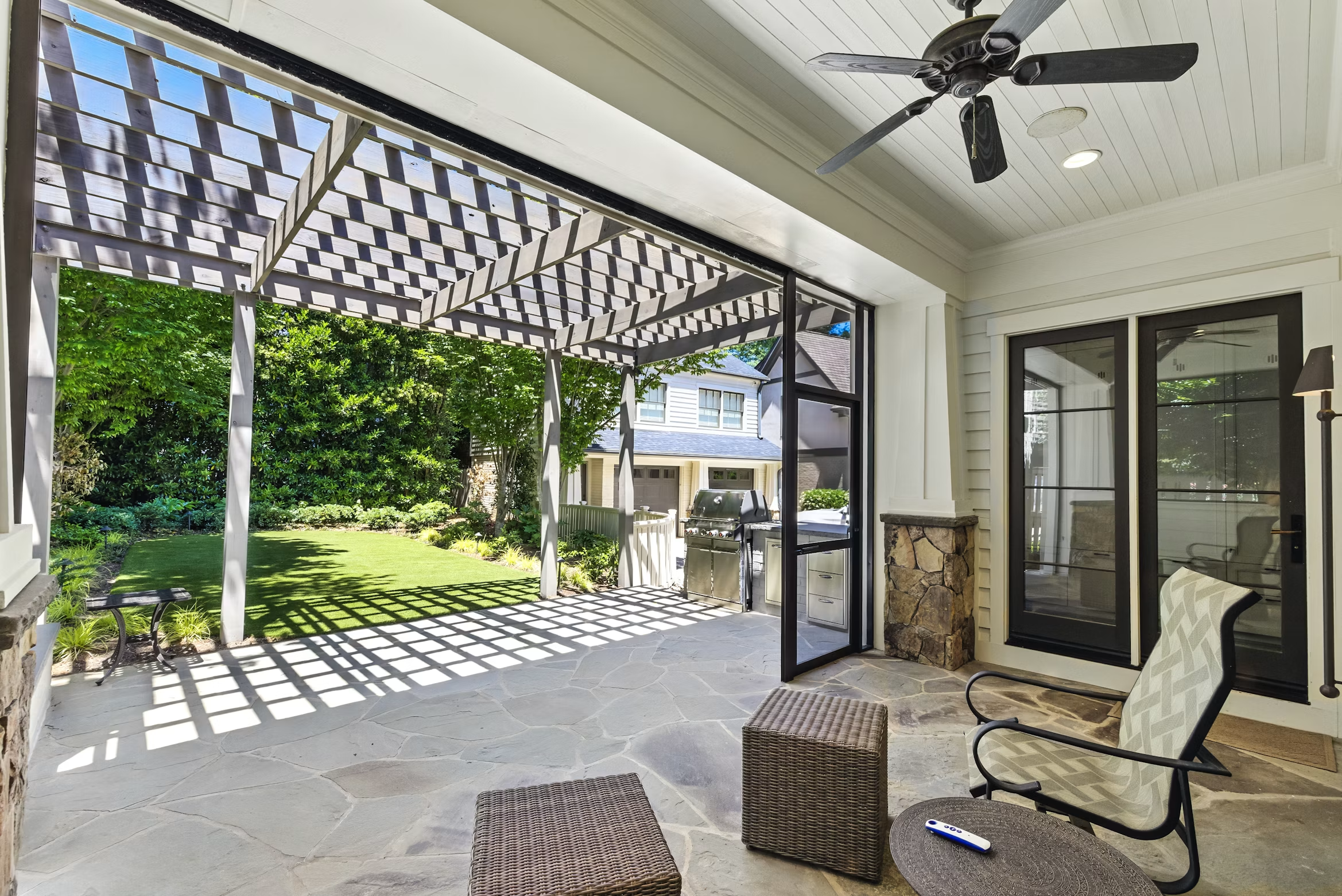
A screened-in patio is the most common screen room configuration in San Antonio — aluminum framing installed around the perimeter of an existing or new patio slab, with screen panels filling each bay and a solid or screened roof overhead. The result is a fully enclosed outdoor space that maintains the patio’s original feel while eliminating every flying insect that was making it unusable. Screened-in patios work on any concrete slab and can be designed with one or more door openings in whatever configuration best serves the space’s traffic flow.
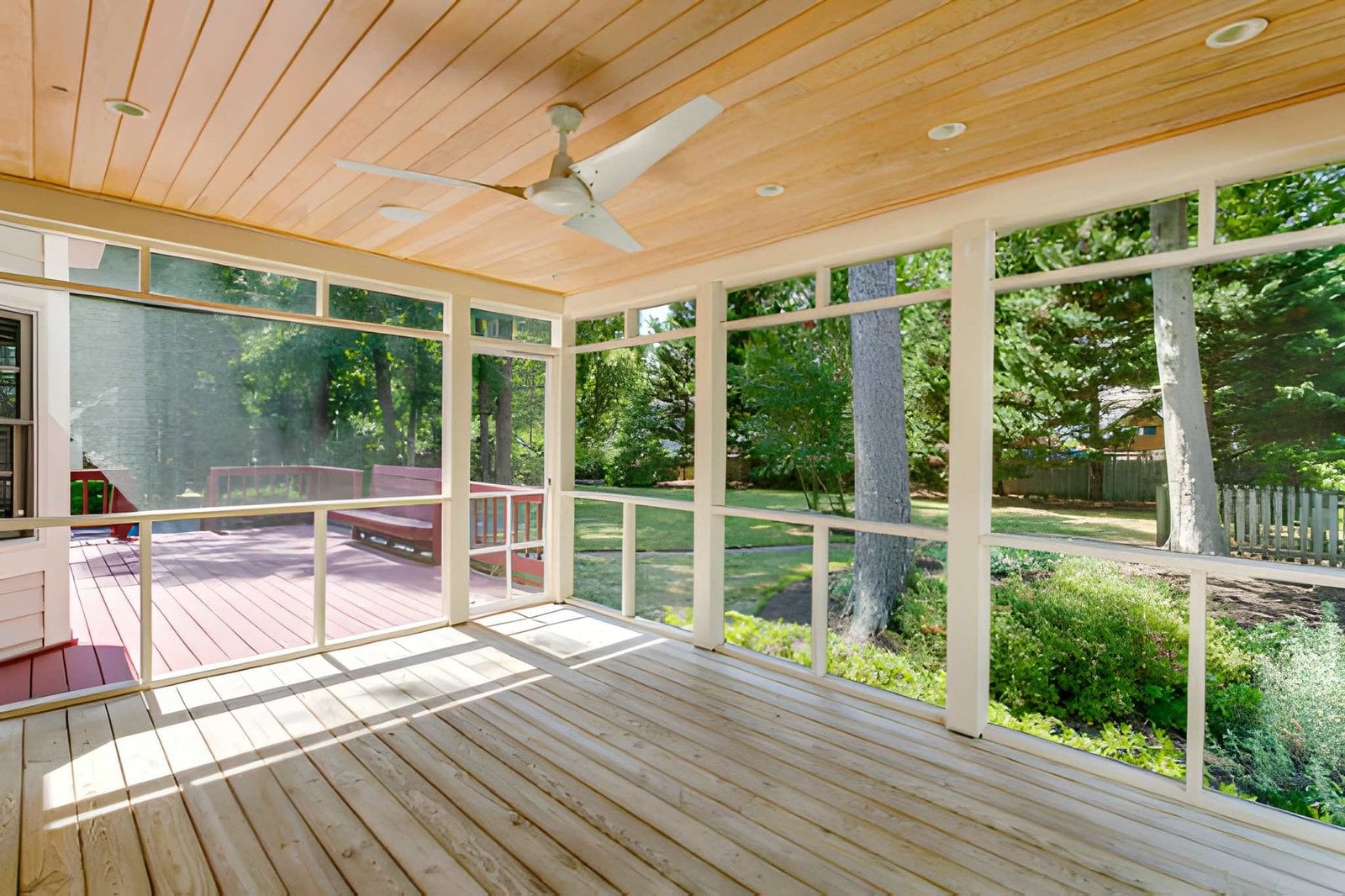
A screened porch attaches directly to the home — typically off the back door — and creates a transition zone between the interior and the yard. Screened porches are among the most consistently used outdoor spaces in San Antonio homes because of their direct connection to the interior, their protection from insects and debris, and the airflow they provide on evenings when the temperature drops below the threshold that makes an open porch comfortable. We build screened porches with framing that ties into the home’s existing roofline, matching pitch and fascia profile so the addition reads as a designed part of the home.
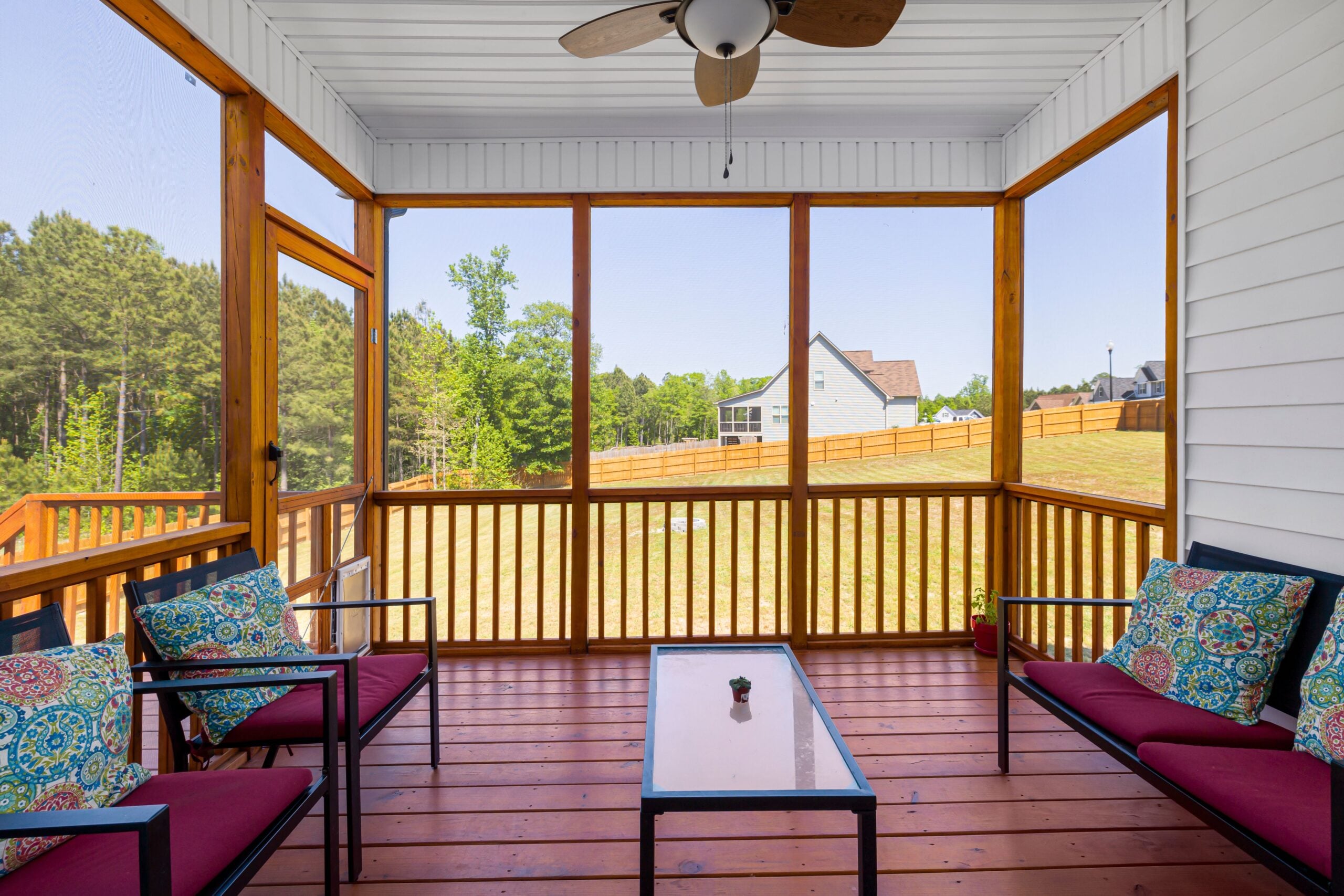
One of our most requested projects is converting an existing deck into a screen room — adding perimeter framing and screen panels to a deck that’s already built and structurally sound. This is almost always the most cost-effective path to a screened outdoor space because the deck platform, footings, and framing already exist. We evaluate the existing deck’s structural condition and post layout, design the screen room framing to work with what’s already there, and deliver a result that looks like the screen room was always part of the original design.
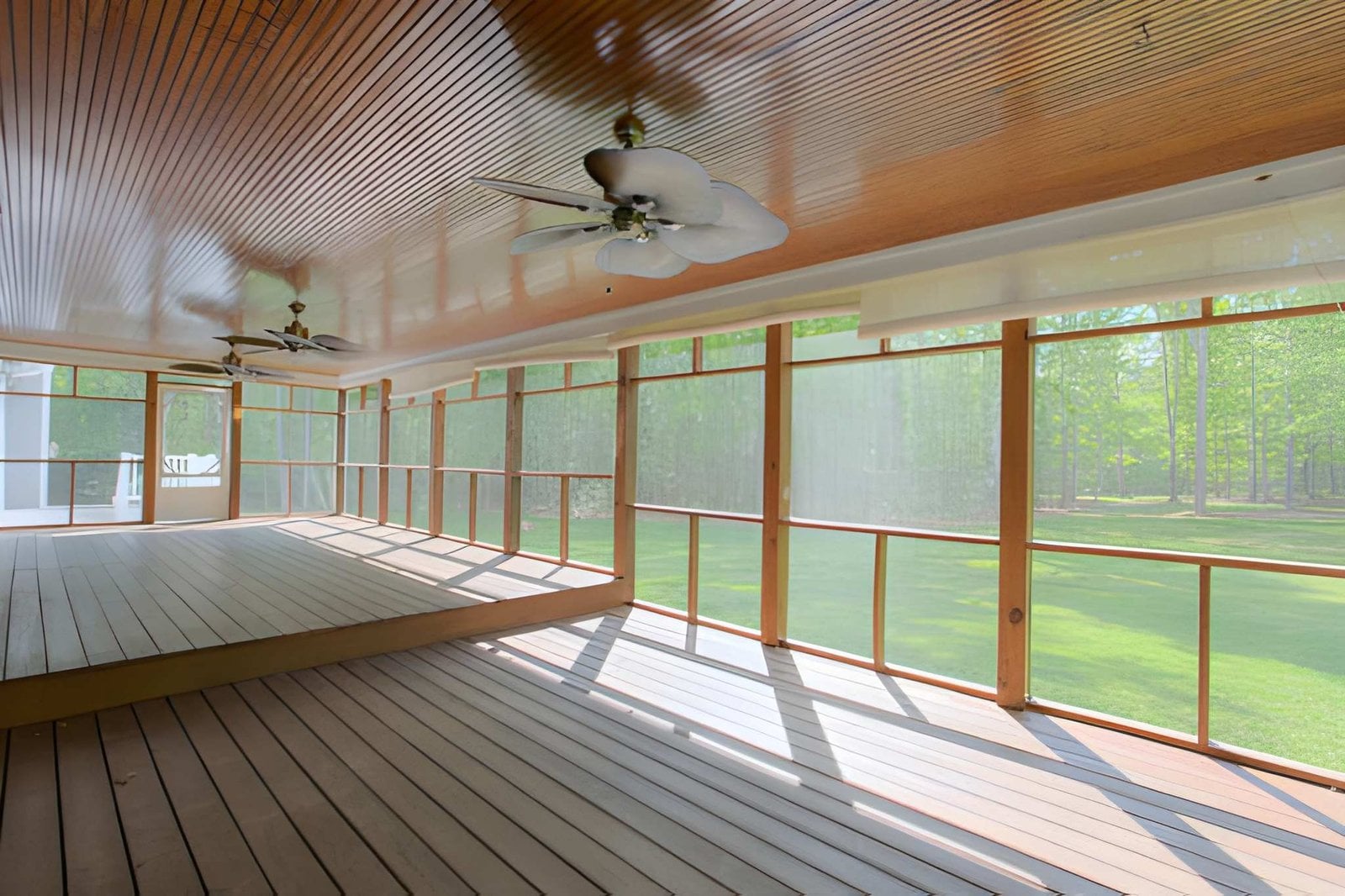
A screen room with a solid insulated roof provides full overhead weather protection while maintaining screened sides for airflow and insect exclusion. This configuration is the most comfortable option for San Antonio’s climate — the insulated roof keeps the space underneath significantly cooler than a screened roof during direct afternoon sun, while the screened walls maintain the breeze that makes the space enjoyable. It’s the closest thing to a true outdoor room without the full commitment of a patio enclosure.
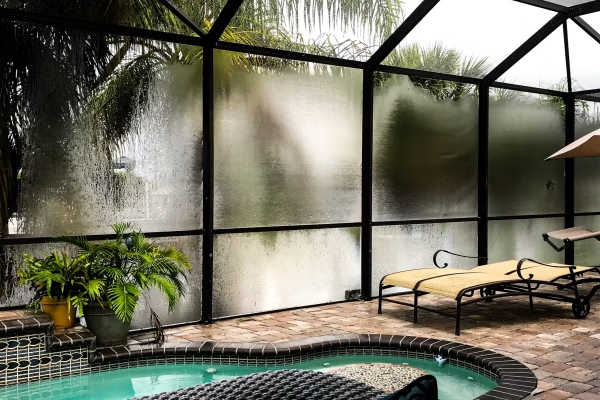
A pool screen enclosure surrounds the pool area with aluminum framing and insect screen, reducing pool maintenance by keeping leaves, debris, insects, and birds out of the water. Pool enclosures also create a safer perimeter barrier for families with young children and pets. We build pool screen enclosures in San Antonio in standard mesh, solar screen for heat reduction, and pet-resistant materials for homes where the pool deck is shared with dogs.
The screen material is one of the most important decisions in a screen room project. Here’s what we offer and when each is the right choice:
Standard Fiberglass Screen The most common and affordable screen material — good insect exclusion, reasonable airflow, and neutral visibility. Works well for most San Antonio screen rooms in sheltered locations. Not recommended for high-wind exposures or homes with pets that scratch at screens.
Solar Screen Solar screen uses a denser weave that blocks 80–90% of solar heat gain in addition to excluding insects — a significant benefit in San Antonio’s high-UV environment. It reduces visibility slightly compared to standard fiberglass but keeps the screened space noticeably cooler during afternoon sun. Our most recommended upgrade for south and west-facing screen rooms in San Antonio.
Pet-Resistant Screen Heavy-duty vinyl-coated polyester screening rated to withstand the scratching and pushing of cats and dogs. Standard fiberglass screen fails quickly under pet contact — pet-resistant screen is the right choice for any home where animals will regularly be in the screen room. It’s heavier than standard mesh, so framing is engineered accordingly.
No-See-Um Screen A finer mesh than standard fiberglass, designed to exclude the tiny gnats — locally called no-see-ums — that pass through standard insect screening. San Antonio’s creek and river corridors see higher no-see-um activity; homeowners near the Salado Creek greenway, Medina River, or Helotes Creek areas often benefit from this upgrade.
High-Visibility “Invisible” Screen Ultra-fine monofilament screen that nearly disappears visually — maximizing the view of your yard and landscape while still providing full insect exclusion. The premium aesthetic option for homeowners where the view from the screen room is a primary consideration.
Step 1 — Free On-Site Consultation We visit your property, evaluate the existing deck or slab, and discuss your goals — insect protection priority, airflow preferences, roof type, screen material, and how the screen room will connect to your home. We check HOA requirements and permit needs for your address.
Step 2 — Design & Screen Material Selection We produce a design showing framing layout, door placement, roof configuration, and screen material options. You review the design and select your screen material based on your specific exposure, pet situation, and view priorities.
Step 3 — Fixed-Price Written Quote You receive a written scope of work and a fixed-price quote covering all framing, screen material, doors, hardware, and labor. No surprises.
Step 4 — Permits (Where Required) Most screen rooms in San Antonio require a building permit. We prepare drawings, submit to the City of San Antonio Development Services or your local jurisdiction, and handle all inspection scheduling.
Step 5 — Construction & Screen Installation We install aluminum framing, set all screen panels with proper tension, and hang screen doors with self-closing hardware. For screen rooms on existing decks, we anchor the framing to the deck’s structural members — not just the surface boards.
Step 6 — Final Walkthrough We walk the completed screen room with you, confirm all panels are properly tensioned and all door closers are adjusted, and review screen care and repair instructions.
Primary Service Area: San Antonio, TX
Surrounding Communities: Stone Oak · Alamo Heights · Helotes · Schertz · Cibolo · Universal City · Converse · Boerne · Bulverde · New Braunfels · Canyon Lake · Lake Medina · Bandera
For most San Antonio screen rooms, solar screen is our most recommended upgrade over standard fiberglass — it blocks 80–90% of solar heat gain in addition to insects, which makes a meaningful difference in comfort during San Antonio’s long summers. For homes with pets, pet-resistant vinyl-coated polyester is non-negotiable — standard fiberglass fails quickly under pet contact. For properties near creeks or the river greenway where no-see-ums are active, the finer no-see-um mesh is worth the upgrade. We help you choose based on your specific exposure and lifestyle during the consultation.
In most cases, yes. Screen rooms attached to the home or built on an existing deck typically require a building permit in San Antonio and most surrounding jurisdictions. Freestanding screen structures may or may not require permits depending on size. We verify requirements for your specific address, prepare all drawings, and handle the complete permit and inspection process.
Yes — and this is one of our most common projects. We evaluate the existing deck’s structural condition, confirm the framing can support the screen room’s perimeter posts, and design the enclosure to anchor to structural members below the decking surface. The result looks like the screen room was designed with the deck from the start.
A screen room uses insect screening — it keeps bugs and debris out while maintaining full airflow. It does not provide rain or wind protection. A patio enclosure uses glass, vinyl, or motorized panels that close against weather while maintaining views. If your primary goal is bug-free outdoor living with maximum airflow, a screen room is the right choice. If you want weather protection in addition to insect control, a patio enclosure is more appropriate. We build both.
Yes — and this is one of our most common projects. We evaluate your existing deck’s structural condition and framing layout during the site visit, confirm it can support the pergola’s post loads, and design the post placement to align with structural members below the decking surface. If the existing deck needs reinforcement at the post locations, we include that work in the quote.
Standard fiberglass screen typically lasts 7–12 years in San Antonio before UV degradation makes it brittle and prone to tearing. Solar screen and pet-resistant materials generally last longer — 10–15 years — due to their heavier construction. Individual panels can be replaced without rebuilding the entire screen room when they eventually need replacement, which is one of the advantages of aluminum framing over wood-framed screen systems.
A standard screened-in patio or screen room on an existing slab or deck takes approximately 3–6 working days once construction starts. Larger screen rooms with solid insulated roofs or pool enclosures run 1–2 weeks. Permitting adds 1–3 weeks on the front end. We provide a written timeline with your quote.
Yes. A permitted, professionally built screen room consistently improves buyer appeal in San Antonio — buyers who have experienced mosquito-season evenings understand the value immediately. Unpermitted structures create disclosure issues at resale. Every screen room we build is properly permitted.
Yes. We repair and re-screen existing screen rooms regardless of who originally built them — replacing individual panels, re-tensioning loose screens, repairing or replacing damaged framing sections, and upgrading standard mesh to solar or pet-resistant material. Call us with a description of what needs attention and we’ll assess whether it warrants a repair visit or a full rebuild.
Whether you want a simple screened-in patio for bug-free family dinners, a screened porch attached to your home’s back door, or a full pool screen enclosure — Paradise Decks & Spas will design and build it to last in San Antonio’s climate.
Call (210) 496-3325 or email info@paradisedecksandspas.com to schedule your free on-site consultation. Or visit our showroom at 10615 Perrin Beitel, Suite 604, San Antonio, TX 78217 — open Monday–Friday 9 AM to 5 PM, Saturday 9 AM to 4 PM.