
(210) 496-3325
Composite decking has become the most popular deck surface material in San Antonio — and the reasons are specific to this climate. No staining. No sealing. No UV graying. No splintering. Warranties that run 25–50 years. Paradise Decks & Spas installs composite decking from the industry’s leading brands across San Antonio and surrounding communities, with the structural foundation and installation precision that keeps your deck performing the way it’s designed to.
By Rick Hogue, Founder & Lead Deck Specialist · Last Updated June 2026
Most composite decking contractors in San Antonio are certified by one brand and sell that brand to every customer regardless of fit. We install multiple composite product lines — Trex, TimberTech, AZEK, and other leading brands — because the right composite product depends on your specific application, budget, and long-term goals, not which brand a contractor has a preferred pricing agreement with.
If you’re early in your research and know you want composite decking but haven’t settled on a specific brand or product tier — this page is the right starting point. We’ll explain how composite decking works, what separates quality products from budget options, how installation standards affect long-term performance, and how to choose the right product for a San Antonio deck.
If you’ve already narrowed to Trex or TimberTech specifically, we have dedicated pages for each with brand-specific detail. This page serves homeowners at the composite-first, brand-second stage of their research.
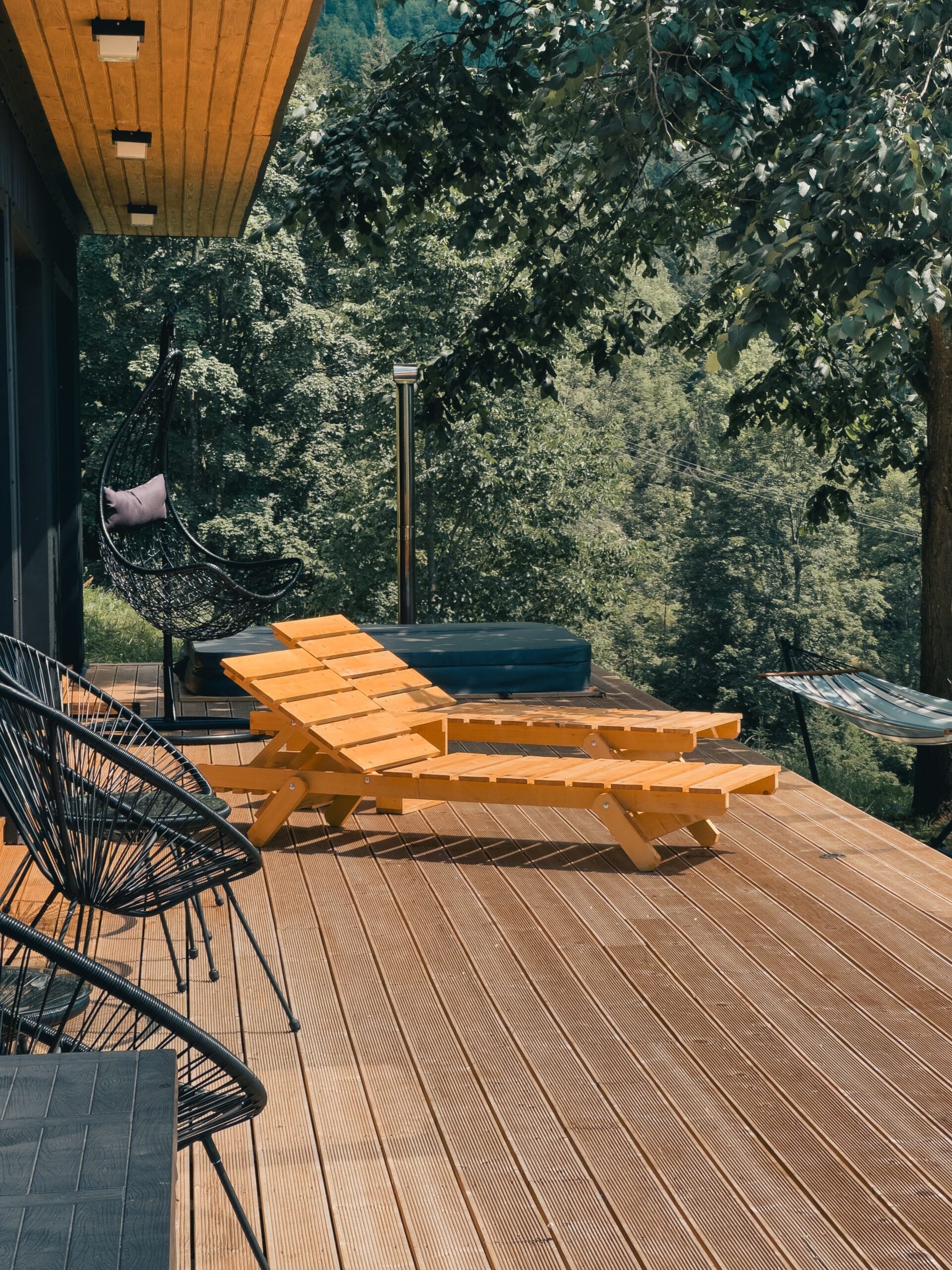
Composite decking is a manufactured decking board made from a blend of wood fiber and recycled plastic, encased in a protective polymer shell. The combination delivers the visual warmth of wood grain without the maintenance cycle wood requires — and in San Antonio’s specific climate, that maintenance difference is more significant than in most other Texas markets.
How composite decking is constructed:
The boards we install are all capped composite — meaning the wood-plastic core is fully encased in a protective polymer shell on all four sides. This is the critical quality distinction in the composite market. Uncapped or partially-capped composite boards — which still exist in budget product lines — allow moisture absorption at the sides and bottom of the board, leading to swelling, mold, and premature degradation. Every composite product we specify is fully capped.
Why capped composite outperforms wood in San Antonio specifically:
Wood decks in San Antonio face an accelerated degradation cycle — high UV exposure bleaches and cracks the surface finish, summer heat dries and checks the wood, and the occasional heavy rain event saturates boards that weren’t properly sealed. The result is a staining and sealing requirement every 2–3 years that most homeowners eventually fall behind on, leading to a deck that looks significantly worse by year 8–10 than it did at installation.
Capped composite’s polymer shell resists all three — UV degradation, thermal cycling, and moisture absorption — with no maintenance product required. The surface looks the same in year 20 as it did in year 2 with only cleaning.
Not all composite decking projects are the same. Here are the most common composite deck design ideas our San Antonio clients bring to us — and how we build each one for durability, low maintenance, and Texas heat.
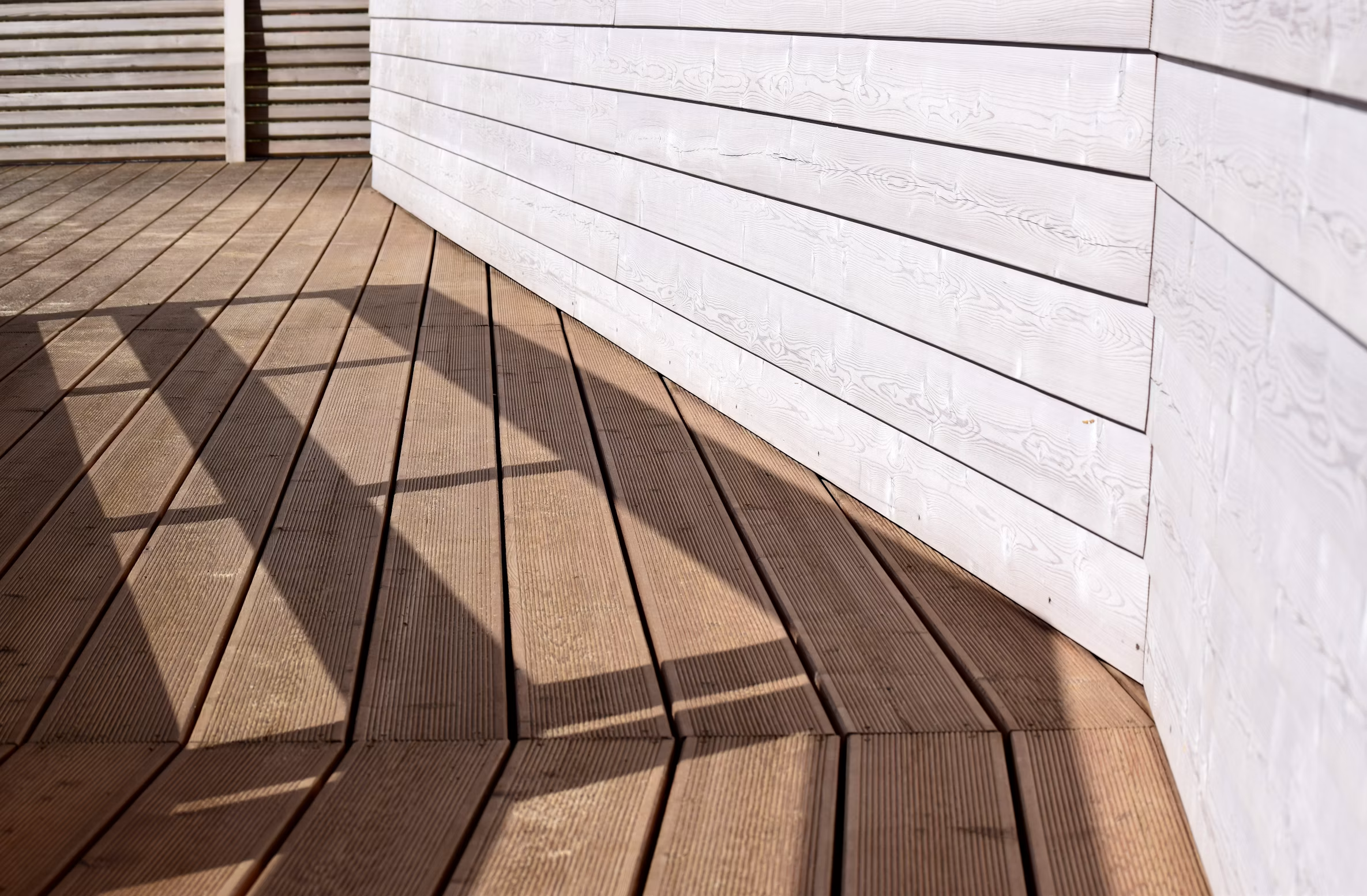
Every composite product we install is fully capped — a continuous polymer shell on all four board faces. This is non-negotiable in our material specifications because uncapped composite’s long-term performance in San Antonio’s heat and moisture environment is consistently inferior. Capped composite is available from Trex, TimberTech, and other quality brands at multiple price points.
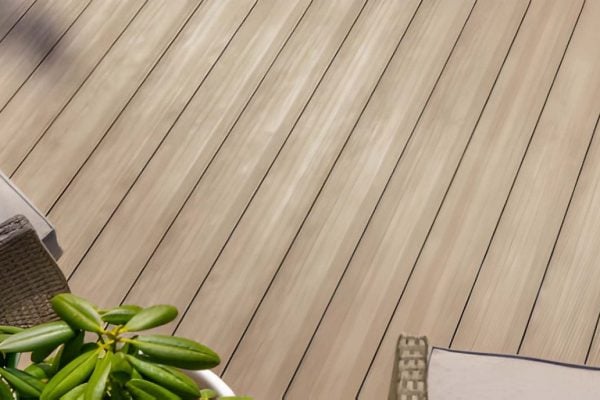
Trex offers three product tiers — Transcend (premium), Enhance (mid-range), and Select (entry) — with a 25-year fade and stain warranty across all lines. Transcend is our most recommended Trex tier for San Antonio due to its heat-mitigation technology and deepest wood-grain texture. For full detail on Trex product lines, see our dedicated Trex Deck Installation page.
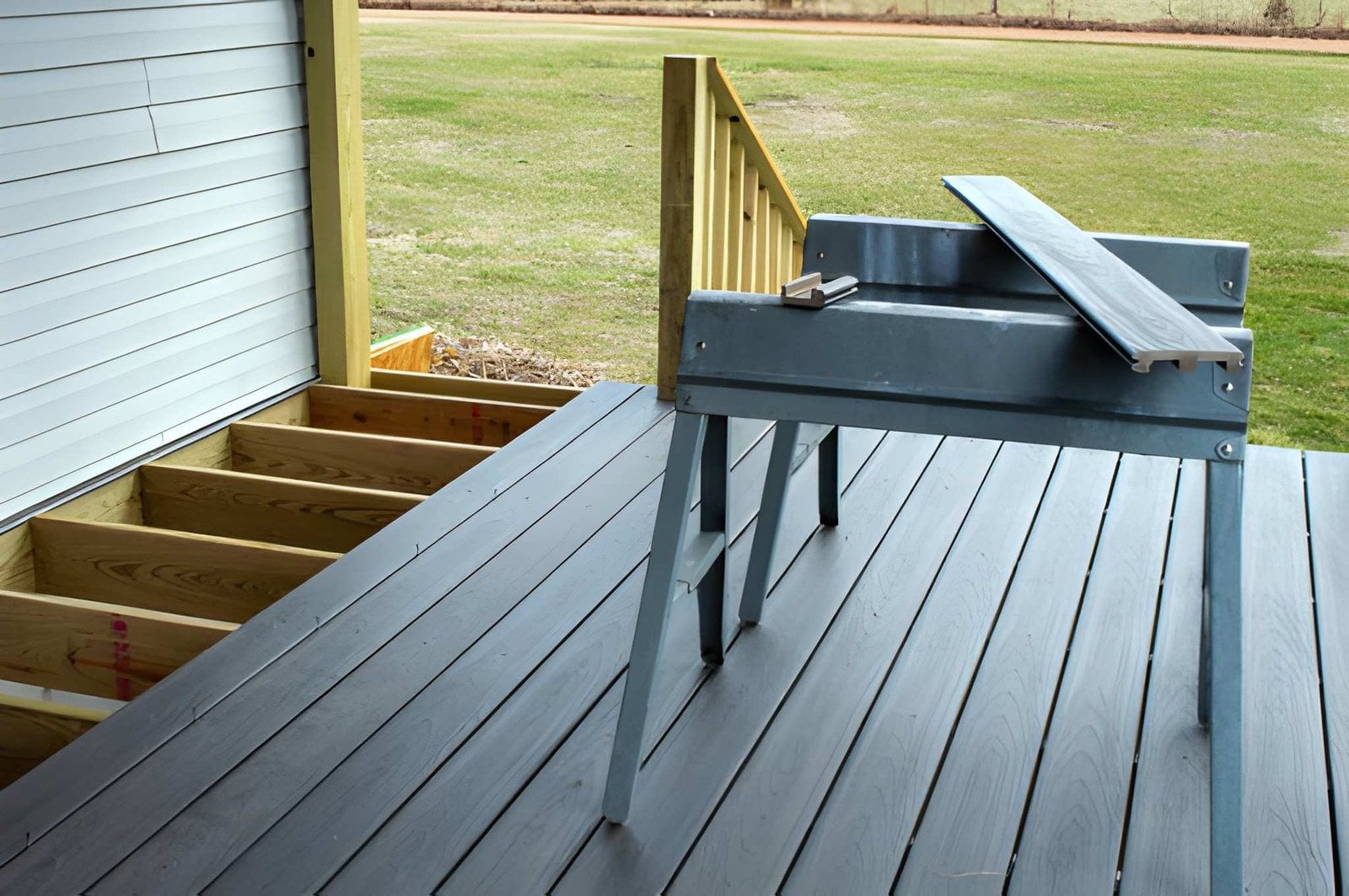
TimberTech’s composite lineup — PRO and EDGE collections — offers 30-year warranty coverage and sophisticated color palettes including weathered greys and driftwood tones increasingly popular in San Antonio’s newer developments. For full detail on TimberTech product lines and the AZEK full PVC option, see our dedicated TimberTech Deck Installation page.
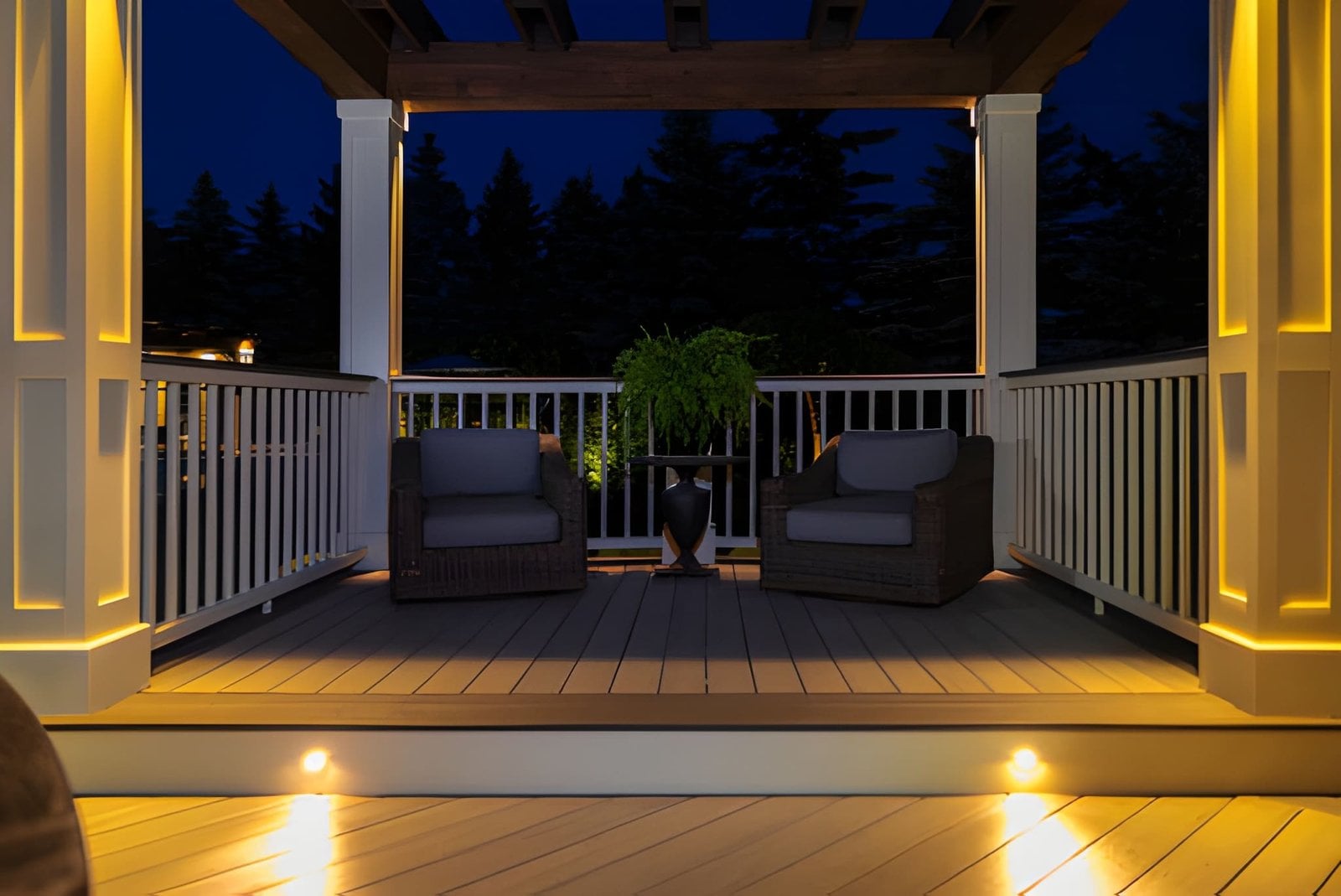
AZEK is technically not a composite — it’s a full cellular PVC product with no wood content and a 50-year warranty. We include it here because most homeowners searching for composite decking are evaluating AZEK as part of the same decision. AZEK is the strongest recommendation for pool decks, waterfront properties, and any high-moisture application in San Antonio. For full detail, see our TimberTech/AZEK page.
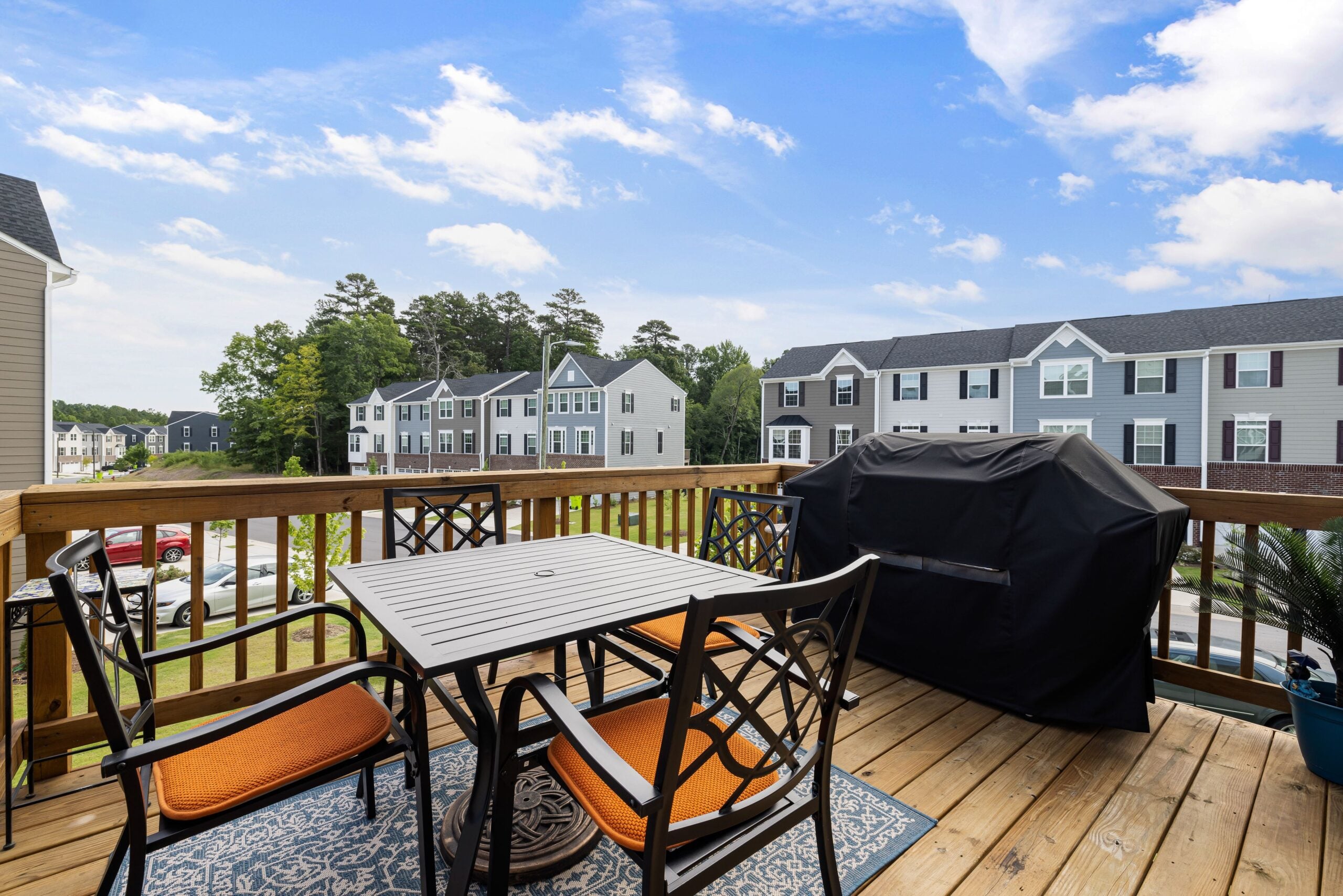
We evaluate and install other quality composite decking brands beyond Trex and TimberTech when the product meets our installation standards and the homeowner has a specific preference. If you’ve researched a brand not listed here — Deckorators, Fiberon, or others — bring it up during the consultation and we’ll give you an honest assessment.
Composite decking is not installed the same way as wood. The differences matter for long-term performance:
Joist spacing matters more than with wood. Composite boards have different stiffness characteristics than wood — most capped composite products require 12-inch on-center joist spacing for perpendicular board runs and 12-inch for diagonal or picture-frame installations. Wood deck framing built on 16-inch centers — standard for wood decking — is inadequate for most composite products and voids the manufacturer warranty. We verify and build to the specific joist spacing requirement for every composite product we install.
Board gap for thermal expansion. Composite boards expand and contract more than wood with temperature changes. San Antonio’s temperature range — from near-freezing winter nights to 100°F+ summer days — means proper end gap and side gap between boards is critical to prevent buckling as boards expand. We set gaps to manufacturer specifications for San Antonio’s temperature range.
Hidden fastener systems. Quality capped composite products are designed for hidden fastener installation — proprietary clip systems that hold boards from the side without surface fasteners. Surface screwing through the polymer shell creates entry points for moisture and creates a visually inconsistent appearance. We use the hidden fastener system specified by each manufacturer.
End-cut sealing. Cutting composite boards exposes the wood-fiber core at the cut end — even on fully capped products. Manufacturer-specified end-cut sealant must be applied to every field cut to prevent moisture entry at the exposed core. We seal every cut end as part of standard installation.
Ventilation below the deck. Most composite manufacturers require minimum clearance and ventilation below the deck to prevent heat buildup and moisture accumulation in the framing cavity. We design deck framing and fascia details to meet these requirements.
Step 1 — Free On-Site Consultation & Product Selection We visit your property, evaluate the site, and walk you through composite product options with physical samples. We help you choose the right brand, product tier, and color based on your application, budget, and home exterior.
Step 2 — 3D Design & Fixed-Price Quote You receive a 3D rendering of your composite deck, a written scope of work specifying the exact product and color, and a fixed-price quote. No surprises.
Step 3 — Permits (Where Required) We prepare permit drawings, submit to the City of San Antonio Development Services or your local jurisdiction, and handle all inspection scheduling.
Step 4 — Structural Framing to Manufacturer Specs We build the pressure-treated subframe with joist spacing set to the specific composite product’s requirements — not generic wood deck framing standards. Ledger flashing, footing depth, and hardware specs all follow both code and manufacturer requirements.
Step 5 — Composite Decking Installation Boards are installed with the correct hidden fastener system, proper thermal expansion gaps, and end-cut sealing on every field cut. Board direction and picture-frame details are executed to the design plan.
Step 6 — Railing, Stairs & Lighting Coordinated composite railing systems, stair construction, and deck lighting complete the project as a unified outdoor space.
Step 7 — Final Inspection & Warranty Registration We meet the city inspector on site, walk the finished deck with you, and handle warranty registration with the manufacturer so your long-term coverage is on file from day one.
Primary Service Area: San Antonio, TX
Surrounding Communities: Stone Oak · Alamo Heights · Helotes · Schertz · Cibolo · Universal City · Converse · Boerne · Bulverde · New Braunfels · Canyon Lake · Lake Medina · Bandera
Composite decking uses a blend of wood fiber and recycled plastic, encased in a protective polymer shell. PVC decking — like AZEK — uses full cellular PVC with no wood content. Composite is the right choice for most standard deck applications in San Antonio. Full PVC is the right choice for pool-adjacent surfaces, waterfront properties, and any high-moisture application where zero wood fiber content matters for long-term performance. We install both and help you choose based on your specific project.
No — significantly not. The most important quality distinction is whether the product is fully capped (polymer shell on all four board faces) or uncapped/partially capped (exposed wood fiber on sides or bottom). We only install fully capped composite products. Within fully capped products, differences in shell formulation, heat mitigation technology, warranty terms, and color/texture quality vary meaningfully between brands and tiers. We walk you through these differences with real samples during the consultation.
For maximum heat mitigation, Trex Transcend and TimberTech PRO with heat-mitigation technology are the top recommendations — both have engineered polymer shells that reduce surface temperatures compared to standard composite formulations. Lighter board colors across any brand also run cooler than darker tones in direct afternoon sun. We discuss the heat performance of every product we’re considering during the consultation.
Sometimes — but it requires careful evaluation. The existing wood subframe must be structurally sound, the joist spacing must meet the composite product’s requirements (typically 12 inches on center, not the 16 inches common in older wood deck framing), and the existing deck must be level and properly supported. We evaluate existing deck structures during the site visit and give you an honest assessment of whether overlay installation is appropriate or whether rebuilding the subframe is necessary.
Most capped composite products require only warm water, mild dish soap, and a soft-bristle brush for routine cleaning. For stubborn stains — tree sap, bird droppings, mildew — manufacturer-approved composite deck cleaners are available. San Antonio’s oak pollen season deposits significant pollen on deck surfaces from February through April; a spring cleaning after pollen season is the most important annual maintenance task for composite decks in this market. Power washing is acceptable at low pressure (under 3,100 PSI) with a wide fan nozzle — never a concentrated stream directly on the board surface.
A standard composite deck build follows the same timeline as any quality deck project: 5–7 working days for a simple platform deck, 2–3 weeks for a multi-level build with composite railing, stairs, and lighting. Permitting adds 1–3 weeks on the front end. We provide a written timeline with your fixed-price quote.
Whether you’re still comparing brands, ready to move forward with a specific product, or want to see samples in person before deciding — Paradise Decks & Spas will bring options to your property, design your deck in 3D, and give you a fixed price before any work starts.
Call (210) 496-3325 or email info@paradisedecksandspas.com to schedule your free on-site consultation. Or visit our showroom at 10615 Perrin Beitel, Suite 604, San Antonio, TX 78217 — open Monday–Friday 9 AM to 5 PM, Saturday 9 AM to 4 PM.