
(210) 496-3325
An arbor turns an ordinary garden path, gate, or backyard corner into something that stops you when you walk past it. Paradise Decks & Spas designs and installs custom arbors across San Antonio and surrounding communities — wood, cedar, and composite — built to anchor your landscape and hold up in South Texas conditions for years.
By Rick Hogue, Founder & Lead Deck Specialist · Last Updated June 2026
Most San Antonio backyards have good bones — mature trees, solid patios, an existing deck. What they often lack is a defined sense of arrival or transition between spaces. That’s exactly what a well-placed arbor delivers.
An arbor is a smaller-scale overhead structure — typically two to four posts with an open lattice or beam roof — positioned over a gate, walkway, garden entry, or backyard transition point. Unlike a pergola, which is primarily about shade and defining a living area, an arbor is primarily about architectural punctuation — marking a passage, framing a view, or giving climbing plants a structure to grow on.
As part of our full outdoor living services, Paradise Decks & Spas builds custom arbors that integrate naturally with your landscape and complement your home’s architecture. Every arbor installation starts with your yard’s specific layout, style, and how the structure will be used — not a catalog selection dropped into a generic space.
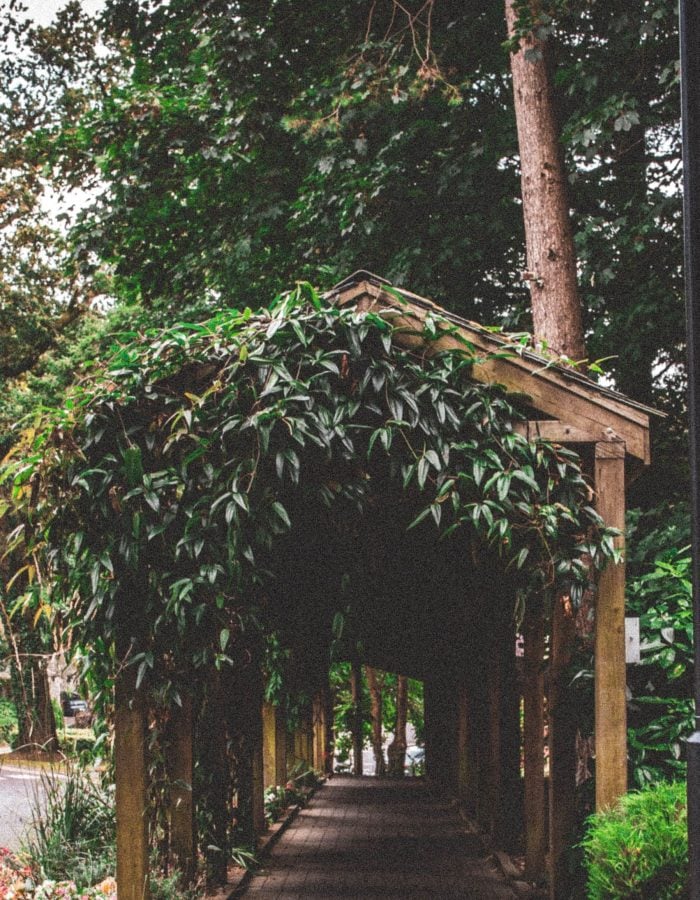
Not all arbor projects are the same. Here are the most common arbor design ideas our San Antonio clients bring to us — and how we approach each one to create a beautiful, durable structure that complements their landscape and stands up to Texas weather.
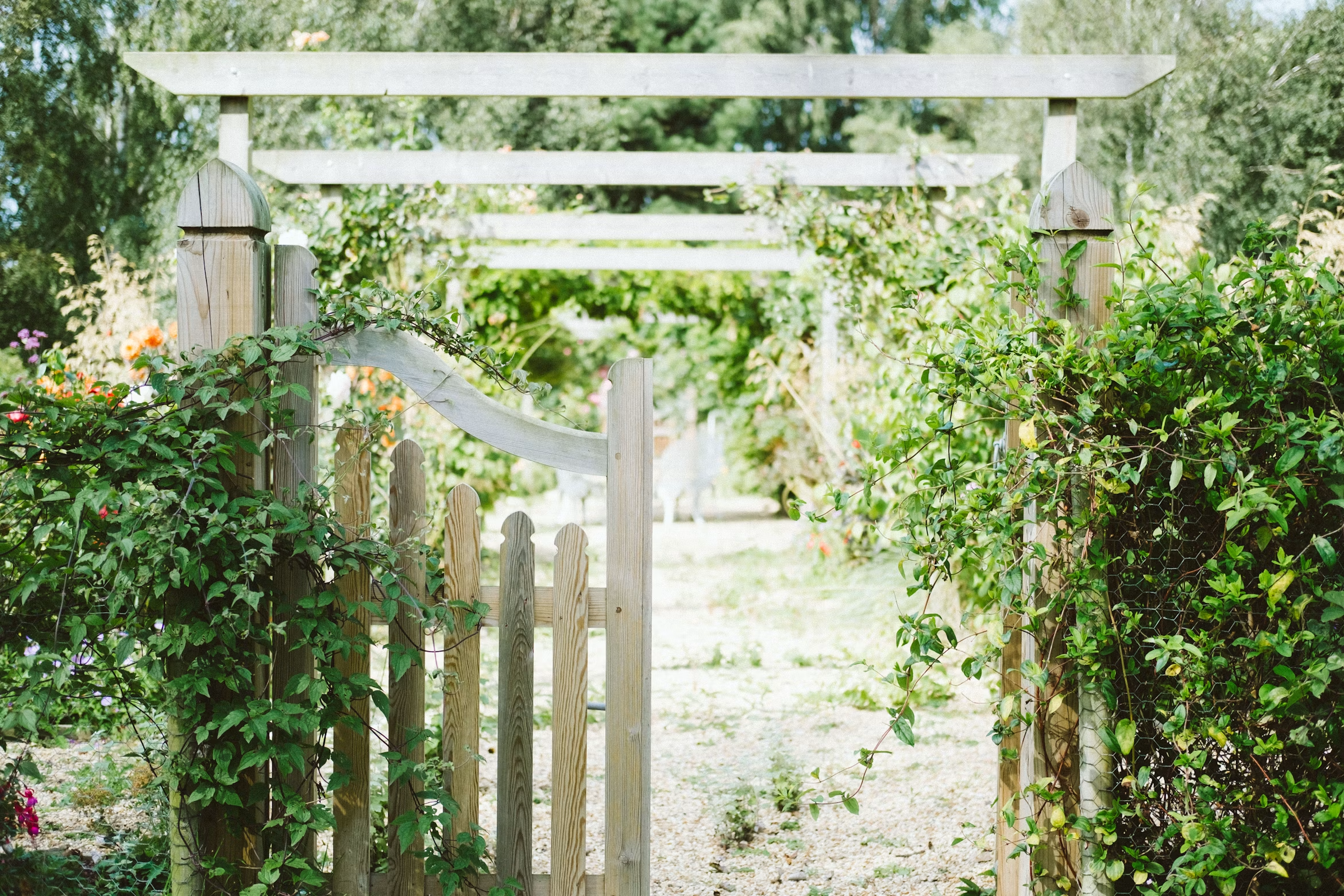
A garden arbor is typically a freestanding structure positioned within a planting bed, along a garden border, or as a standalone landscape feature in the yard. Garden arbors in San Antonio are most commonly used to support climbing plants — the structure gives the plant a framework to grow on while the plant softens and beautifies the arbor over time. We size garden arbors for the specific plant species planned, accounting for mature growth weight and the wind resistance required for exposed yard locations.
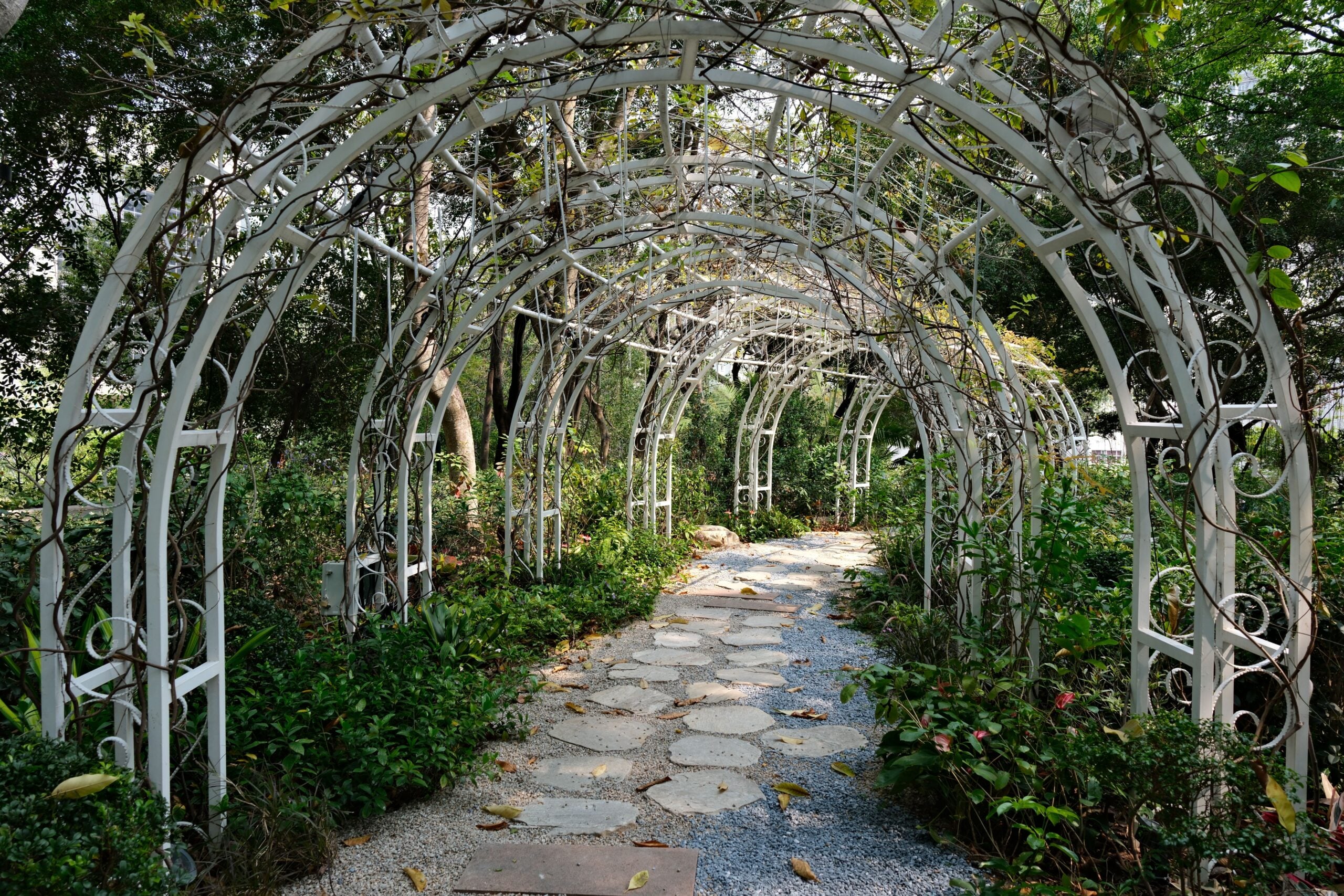
An arbor over a walkway or gate entry is one of the most impactful low-footprint improvements you can make to a San Antonio home’s exterior. It frames the pathway, creates a sense of passage, and sets the tone for the outdoor space beyond. Walkway arbors are typically 4–6 feet wide, 8 feet tall minimum for comfortable clearance, and designed to match the home’s architectural style — craftsman timber details for traditional homes, clean square posts for contemporary styles. We build walkway arbors as standalone structures or as a series of repeated arbors along longer pathways for a formal garden feel.
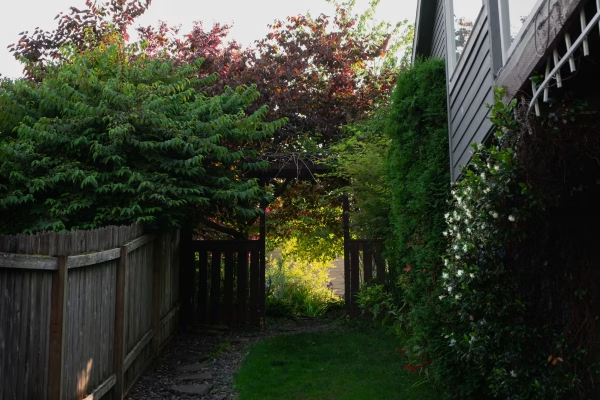
Backyard arbors serve as focal points and transition markers within the larger yard. A backyard arbor installation might anchor the far end of a deck, mark the transition from a paved patio to a lawn area, or create a destination seating nook within a garden. Backyard arbors are often larger in scale than walkway arbors — deeper in profile and with heavier beam and post sizing — to create a sense of shelter rather than just passage.
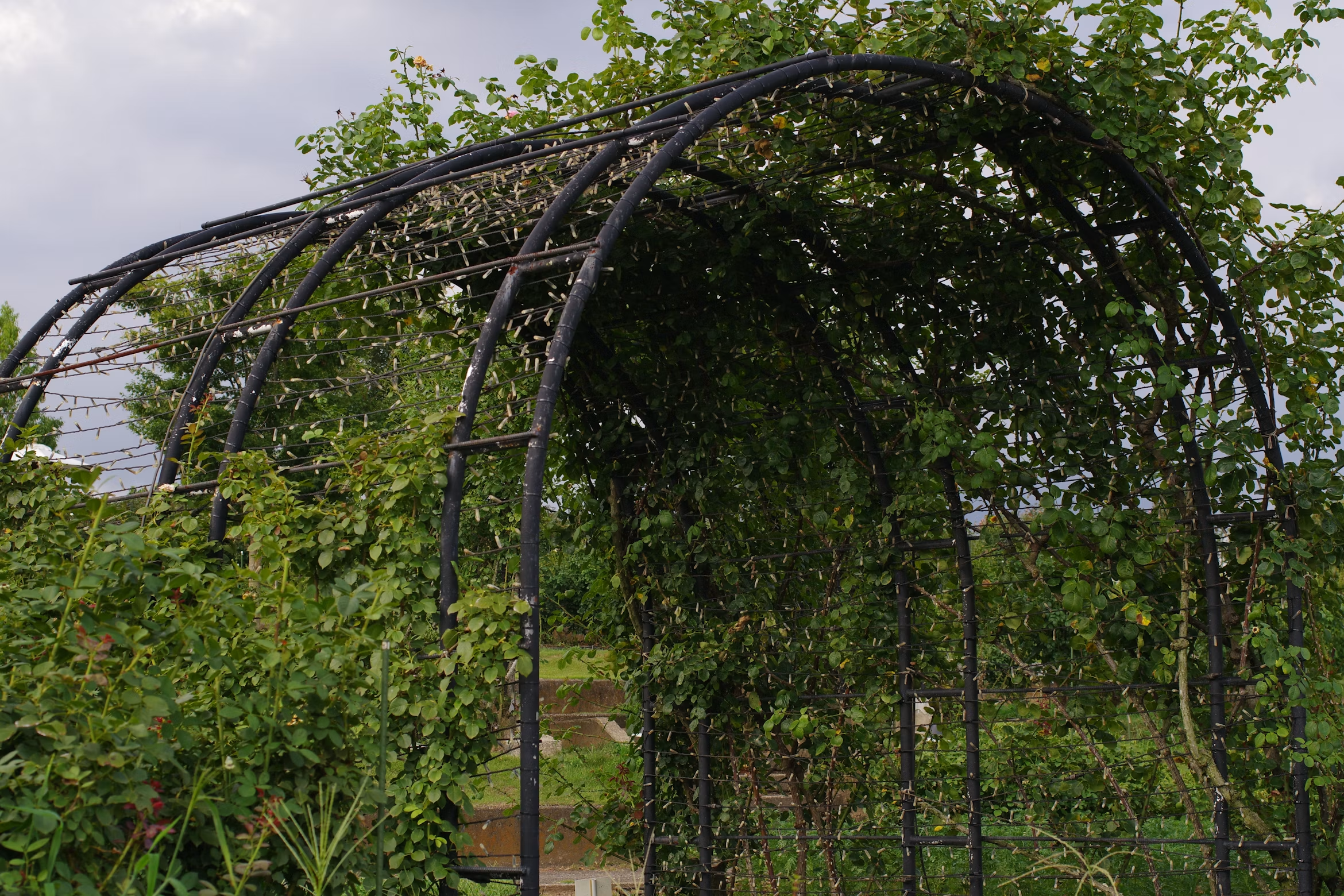
Building an arbor specifically to support climbing plants requires a different approach than a decorative-only structure. Mature climbing plants like wisteria can add hundreds of pounds of load to an arbor over time — a store-bought arbor will fail under that weight; a properly built wood or cedar arbor won’t. We design plant-supporting arbors with heavier post sections, closer rafter spacing to give plants more attachment points, and hardware that won’t corrode from the consistent moisture climbing plants create around the structure.
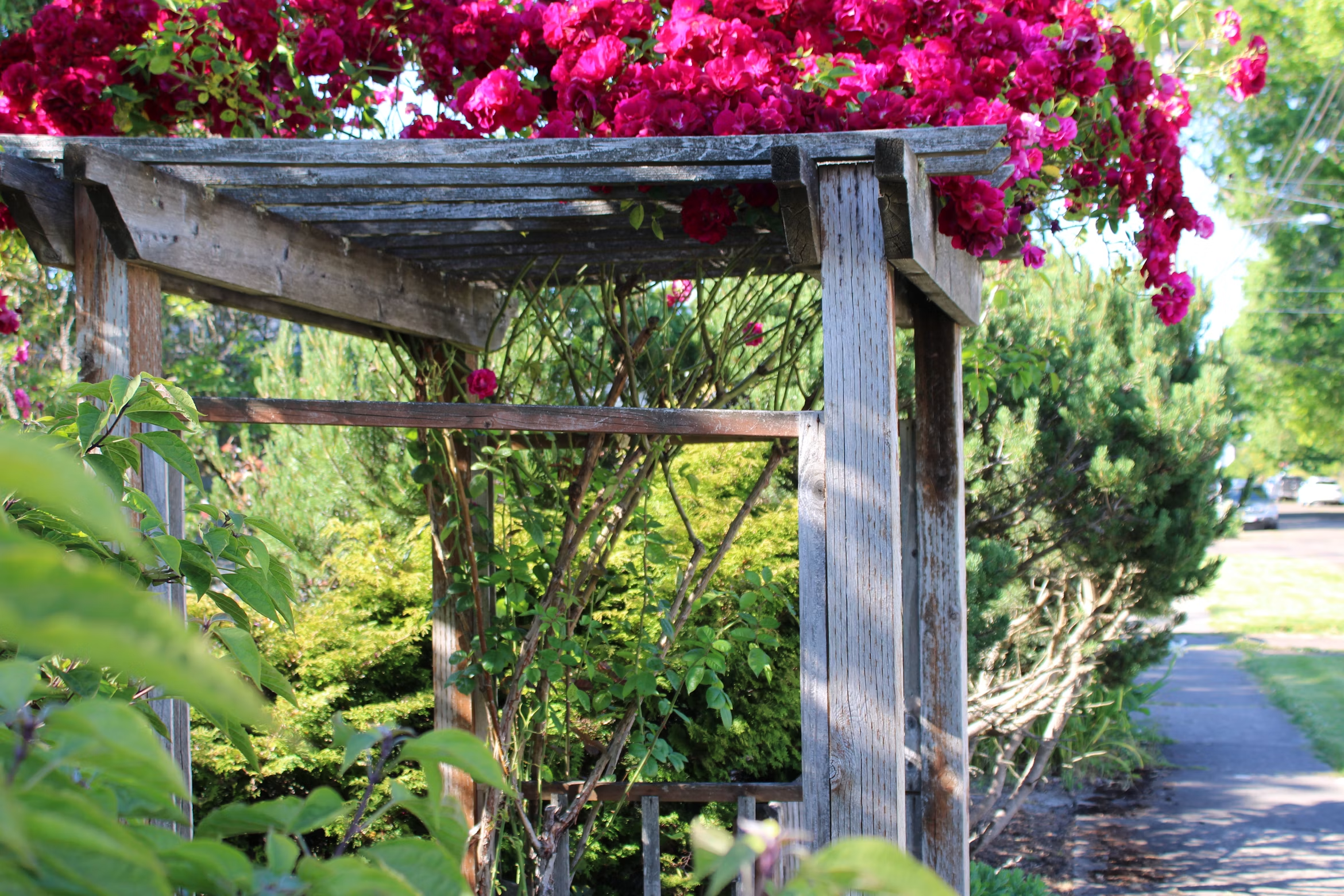
Wood is the traditional and most common material for custom arbor installation in San Antonio — and for good reason. Cedar in particular is a natural fit for the Texas climate: rot-resistant, dimensionally stable in heat, and visually warm in a way aluminum and vinyl can’t match. We build arbors in western red cedar for finish surfaces and pressure-treated lumber for any ground-contact structural members. A quality cedar arbor properly sealed at installation and re-stained every 2–3 years will hold up beautifully in San Antonio’s climate for decades.
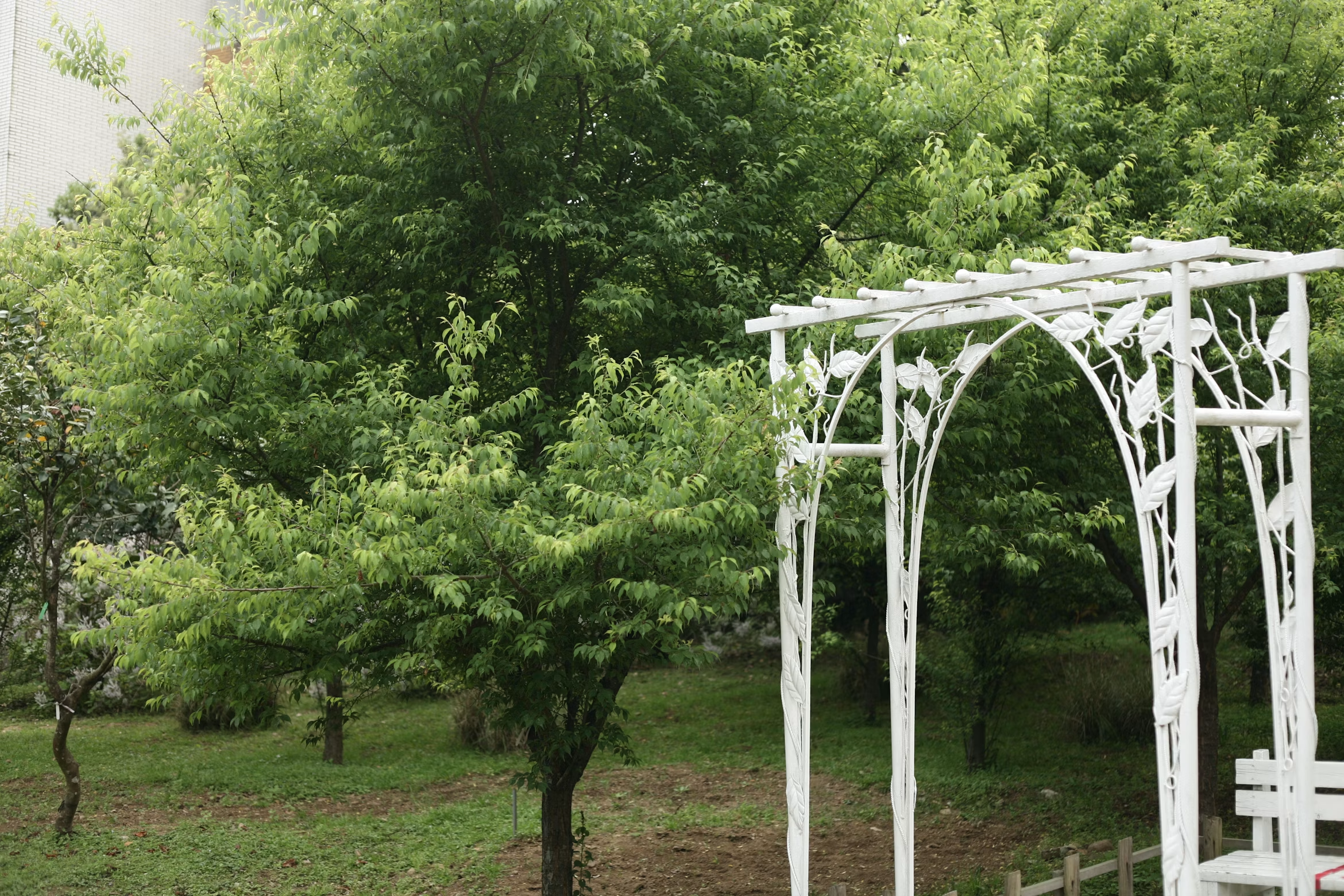
For homeowners who want the look of a wood arbor without the staining and maintenance cycle, composite materials offer a durable alternative. Composite arbors don’t rot, don’t require seasonal finishing, and hold their color well under San Antonio’s UV exposure. They’re a particularly good choice for arbors in locations that are difficult to access for maintenance — over an established garden bed, for example, where re-staining means working around mature plantings.
Step 1 — Free On-Site Consultation We visit your property, walk the yard with you, and evaluate the proposed arbor location. We discuss style, material, size, and how the arbor will relate to your existing landscaping, fencing, deck, or other structures. We identify any permit or HOA requirements for your address.
Step 2 — Custom Design We design your arbor to the specific dimensions, post profile, and roof detail that fits your yard and home style. For climbing plant arbors we account for mature plant load in the structural sizing. You see the design before we build it.
Step 3 — Fixed-Price Written Quote You receive a written scope of work and a fixed-price quote covering all materials, footings, hardware, and labor. No hourly billing, no surprises.
Step 4 — Installation We set post footings in concrete to the required depth for San Antonio’s clay soil, install posts, beams, and rafter or lattice members, and apply all finish hardware. For climbing plant arbors we install mounting hooks or wire guides at the appropriate spacing. Cedar arbors receive a sealer coat at installation.
Step 5 — Walkthrough We walk the completed arbor with you, confirm all connections are tight and level, and review any care instructions for the material you chose.
We design and install custom arbors throughout the greater San Antonio metro and surrounding Hill Country communities.
Primary Service Area: San Antonio, TX
Surrounding Communities: Stone Oak · Alamo Heights · Helotes · Schertz · Cibolo · Universal City · Converse · Boerne · Bulverde · New Braunfels · Canyon Lake · Lake Medina · Bandera
An arbor is a smaller passage or accent structure — typically over a gate, walkway, or garden entry — designed to mark a transition or support climbing plants. A pergola is a larger shade structure designed to define an outdoor living area over a deck, patio, or seating space. Both use posts and overhead beams but serve different primary purposes. Many backyard projects include both — a pergola over the living area and arbors marking garden transitions.
Western red cedar is our top recommendation for San Antonio arbors — it’s naturally rot-resistant, dimensionally stable in heat and humidity cycles, and holds a stain beautifully. It outperforms pressure-treated pine for exposed finish surfaces in high-UV climates. Any ground-contact structural members — post bases, buried sections — should still use pressure-treated lumber regardless of the finish material above.
Most standalone arbors used as garden accents or walkway features do not require a permit in San Antonio, particularly when they’re small in scale and freestanding. Larger arbors — especially those attached to the home or exceeding certain square footage thresholds — may require a permit. HOA-governed properties may require architectural review regardless of city permit requirements. We verify requirements for your specific address during the consultation.
The key factors are post size, rafter spacing, and hardware quality. Mature climbing plants like wisteria can add significant load — a 4×4 post that’s fine for a decorative arbor isn’t adequate for a plant-loaded one. We use 6×6 posts for climbing plant arbors, closer rafter spacing to give plants more attachment points, and stainless or hot-dipped galvanized hardware throughout to resist the consistent moisture climbing plants generate around a structure.
Yes. We design arbors to complement your home’s existing architecture — matching post profiles, trim details, and material finishes to what’s already on the property. If you have an existing deck built by us or anyone else, we can design an arbor that reads as part of the same outdoor environment rather than a separate addition.
Most custom arbor installations take 1–3 working days depending on size, footing requirements, and material. Larger backyard arbors with heavier structural members and multiple footing locations run toward the longer end of that range. We give you a written timeline with your quote.
Yes — and this is a very common project for us. Store-bought metal and vinyl arbors typically fail within 3–5 years in San Antonio’s climate — posts corrode at the base, lattice panels crack from UV exposure, and the whole structure loosens in the clay soil. We remove the existing structure and replace it with a properly built cedar or composite arbor on concrete footings that will hold up for decades.
Whether you want a simple cedar arbor over a garden gate, a climbing plant structure for your backyard, or a series of walkway arbors for a formal garden path — Paradise Decks & Spas will design and build it to last in San Antonio’s climate.
Call (210) 496-3325 or email info@paradisedecksandspas.com to schedule your free on-site consultation. Or visit our showroom at 10615 Perrin Beitel, Suite 604, San Antonio, TX 78217 — open Monday–Friday 9 AM to 5 PM, Saturday 9 AM to 4 PM.