
(210) 496-3325
San Antonio averages over 220 sunny days per year, hail storms that dent hoods and crack windshields, and summer temperatures that turn an unshaded car interior into an oven. A well-built carport solves all three without the cost and footprint of a full garage addition. Paradise Decks & Spas designs and installs custom carports across San Antonio and surrounding communities — wood frame, aluminum, attached, and freestanding — built to the same structural standards as every outdoor structure we build.
By Rick Hogue, Founder & Lead Deck Specialist · Last Updated June 2026
Most carports in San Antonio look like they were ordered from a catalog and dropped in the driveway — plain metal frames with corrugated roofing that have no relationship to the home’s architecture, the existing landscaping, or the rest of the outdoor living environment. They work, but they work at the expense of your home’s curb appeal.
Our approach is different. Every carport we build is designed to complement your home’s exterior — matching post profiles, fascia details, and roofing material to what’s already on the property. An attached carport that ties into the home’s existing roofline pitch looks like an intentional addition. A freestanding carport with post sizing and beam depth proportional to its span looks like a permanent structure, not a temporary solution.
As a full-service outdoor living company with 19+ years of completed projects in San Antonio and surrounding communities, Paradise Decks & Spas builds carports as standalone structures and as part of larger outdoor living projects — the same fixed-price process, the same permit handling, and the same in-house crew as every other structure we build.
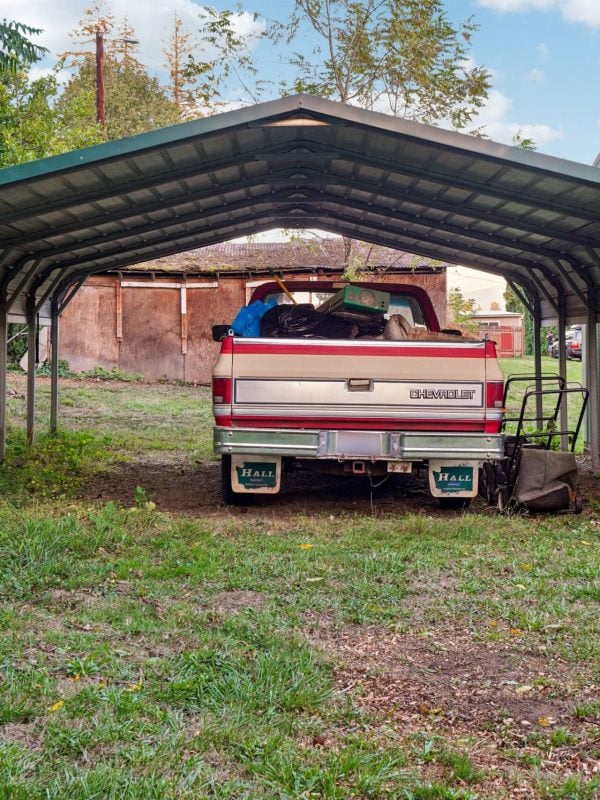
Not all carport projects are the same. Here are the most common carport design ideas our San Antonio clients bring to us — and how we approach each one.
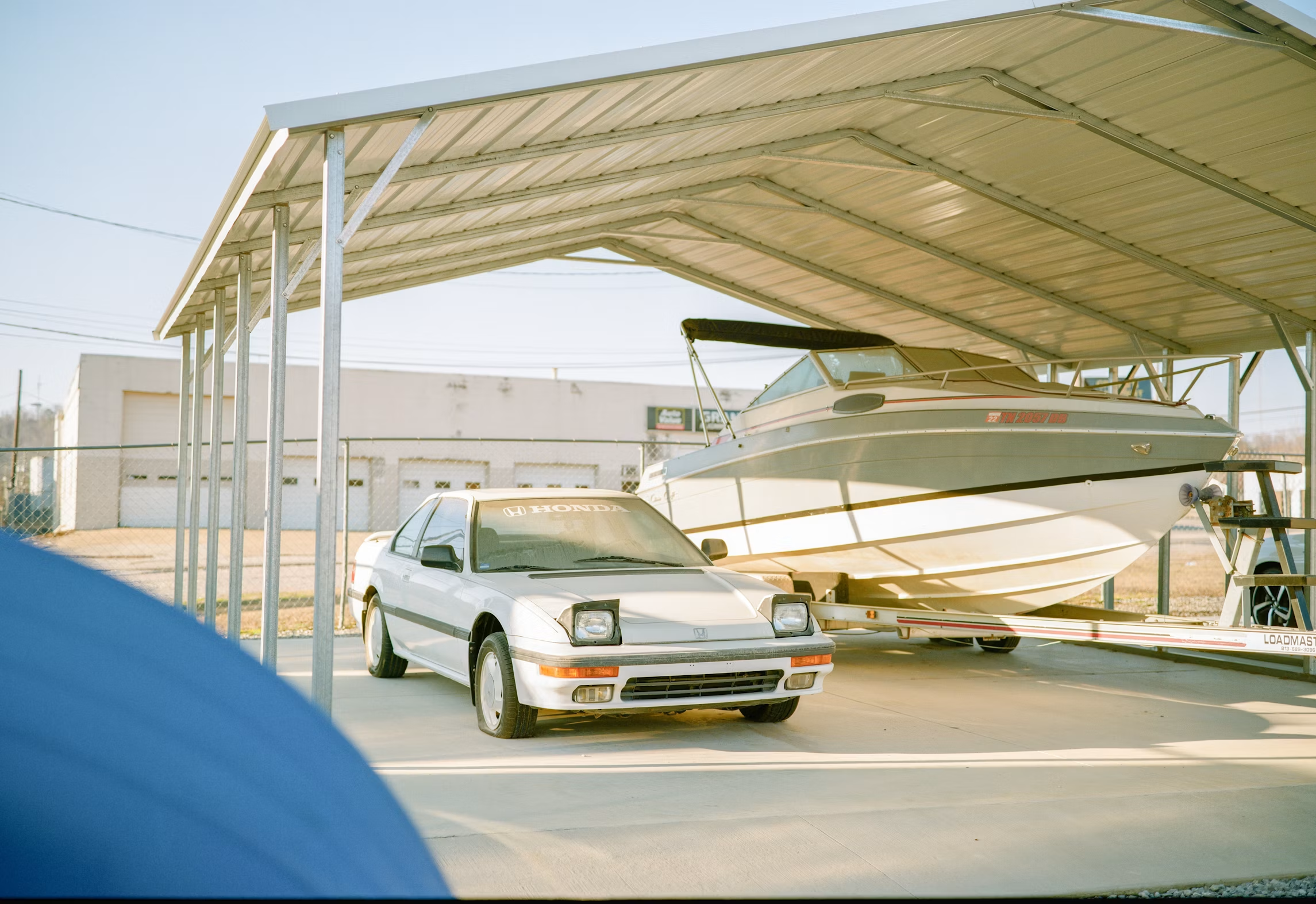
An attached carport connects to the home’s exterior wall — typically alongside the home adjacent to the driveway or as an extension off the garage where one exists. Attached carports share one support point with the home’s structure, reducing the number of freestanding posts required and creating a visual connection between the carport and the home’s architecture.
Properly built attached carports use a ledger board with through-wall flashing and a drainage gap — the same detail we use on attached decks and patio covers — to prevent moisture infiltration at the wall connection. Post sizing, beam depth, and roofing material are matched to the home’s existing exterior so the addition reads as part of the property.
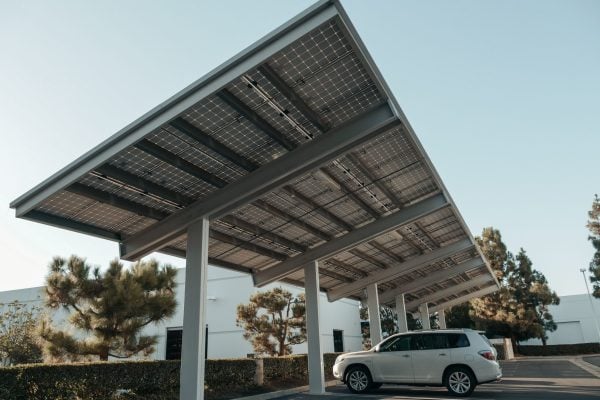
A freestanding carport is entirely self-supported on its own posts and footings — no attachment to the home required. Freestanding carports are the right choice when the vehicle parking area is away from the home’s exterior wall, when attachment to the home isn’t structurally feasible, or when the homeowner wants the flexibility to position the carport in the most useful location regardless of the home’s wall placement.
Freestanding carport installation requires properly sized concrete footings — particularly important in San Antonio’s expansive clay soil where shallow footings heave seasonally. We set every freestanding carport post in footings designed for the soil conditions at your specific property.
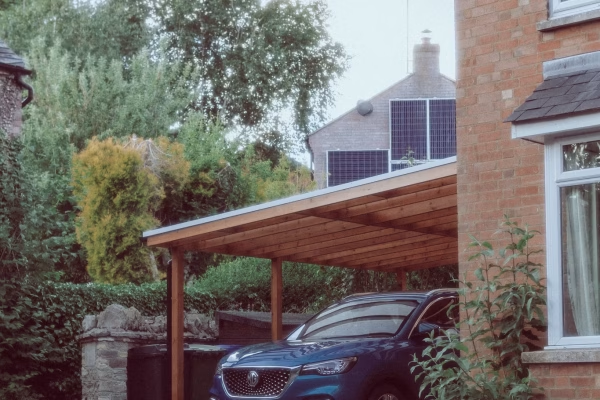
A wood frame carport uses pressure-treated lumber for structural framing — posts, beams, and rafters — with roofing material matched to the home’s existing roof. Wood frame carports offer the most architectural flexibility: rafter tail profiles, beam depths, post sizing, and roofing material can all be customized to match or complement any home style. They’re the right choice for homeowners where architectural character and visual integration matter as much as function.
Wood frame carports require the same maintenance cycle as other wood outdoor structures — periodic inspection, repainting or staining every few years, and fastener checks. In San Antonio’s climate, pressure-treated framing holds up well with appropriate maintenance attention.
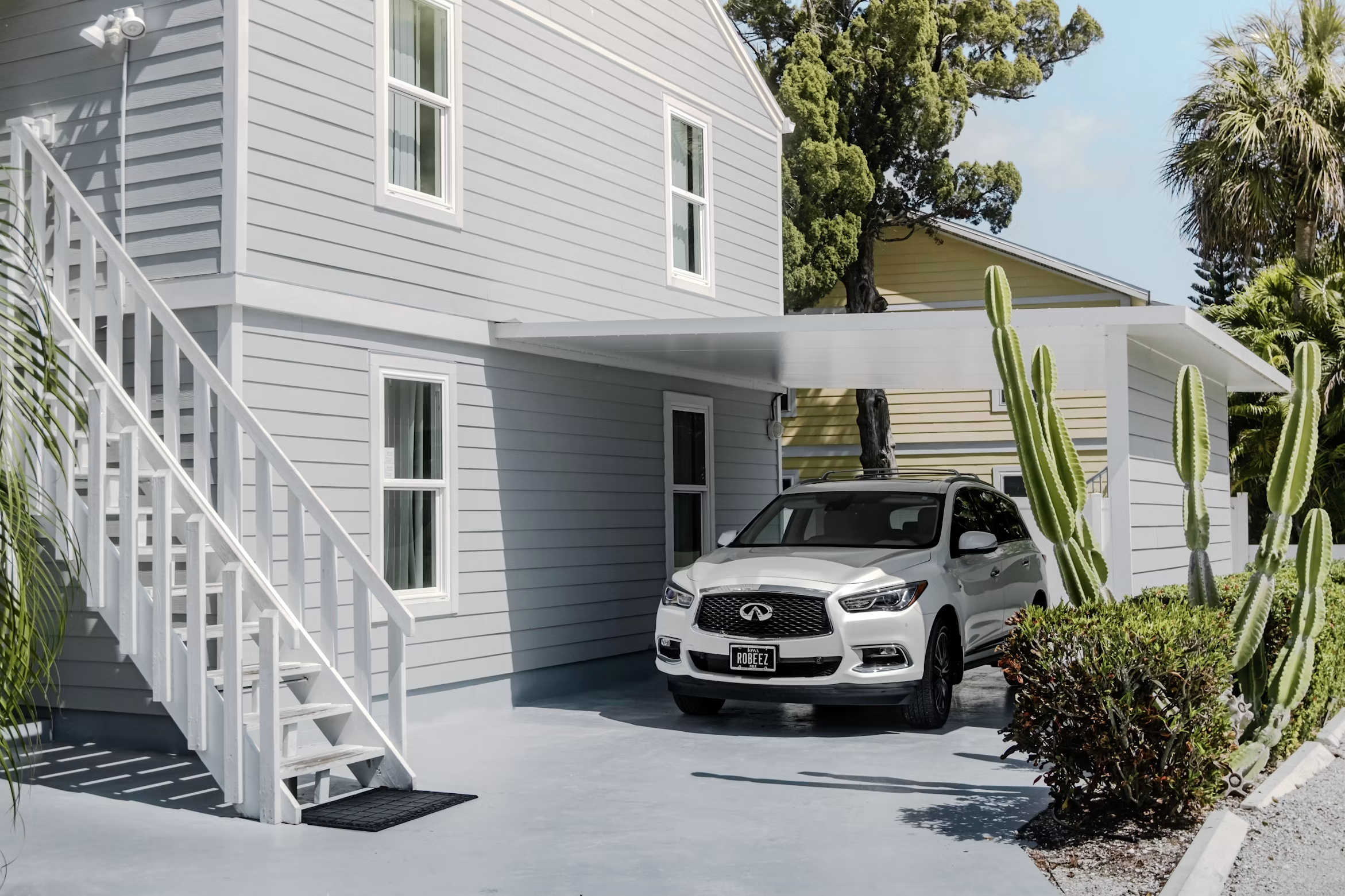
An aluminum carport uses powder-coated aluminum post and beam framing with aluminum panel or insulated panel roofing — the same material system as our aluminum patio covers. Aluminum carports offer zero maintenance, full resistance to San Antonio’s termite pressure, and long-term structural performance without the maintenance cycle wood framing requires. They’re available in white, tan, and bronze powder-coat finishes and can be paired with insulated roof panels for better thermal performance under direct afternoon sun.
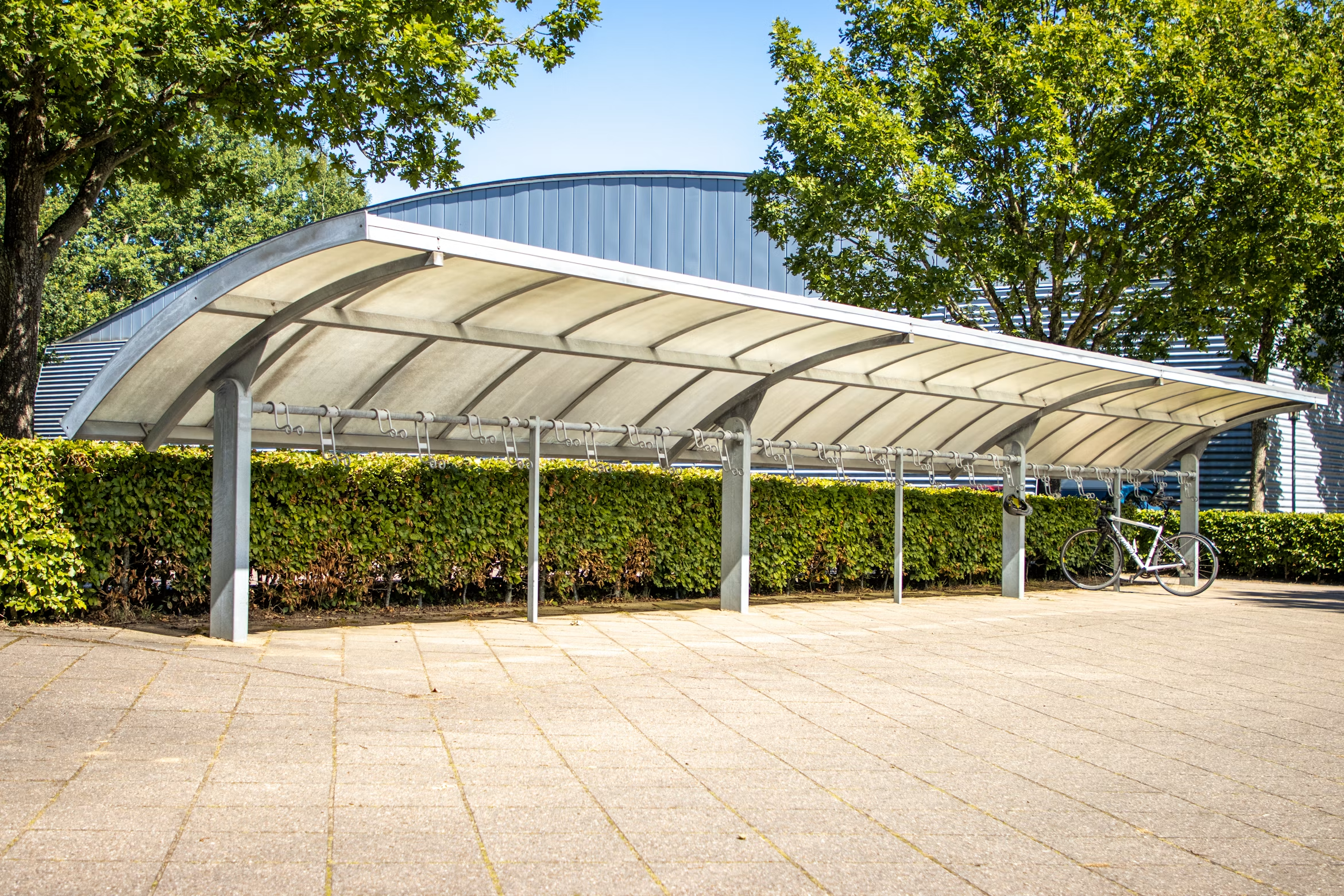
We build carports sized for one vehicle, two vehicles side by side, and larger multi-vehicle configurations for homes with boats, RVs, or multiple cars to cover. Sizing is based on the specific vehicles to be covered — a standard passenger car needs a different clearance than a lifted truck or an RV — and we verify dimensions during the site visit before finalizing the design.
This is a practical question worth answering honestly before investing in either.
A garage provides fully enclosed vehicle storage — protection from weather, security from theft, and usable enclosed space for workshops, storage, and living conversion. It also adds significantly more to property value than a carport. The tradeoffs are substantial: a garage addition costs $40,000–$100,000+ in San Antonio, requires significant structural work tied to the home, involves complex permitting, and takes months to complete.
A carport provides weather protection — sun, hail, rain, and tree debris — without enclosure. Vehicles are protected but not secured in the way an enclosed garage provides. The advantages are cost, speed, and simplicity: a well-built custom carport costs a fraction of a garage, installs in days, and delivers meaningful protection for the vehicles and equipment that matter most.
Choose a carport if: You want weather protection at a practical budget, you don’t have space for a full garage addition, or your primary concern is sun, hail, and heat damage rather than security.
Choose a garage if: Vehicle security, fully enclosed storage, or significant property value addition are the primary goals and the budget and timeline for a major addition are feasible.
Many San Antonio homeowners who can’t justify a garage addition find that a well-designed carport solves 80% of what they were looking for at 20% of the cost.
H2: Our Carport Installation Process in San Antonio
Step 1 — Free On-Site Consultation We visit your property, evaluate the proposed carport location, measure vehicle clearances, and discuss your goals — material preference, single or multi-vehicle, attached vs. freestanding, roofing type, and how the carport will relate to your home’s exterior and existing outdoor structures.
Step 2 — Design & Fixed-Price Quote We produce a design showing the carport’s exact dimensions, post placement, roof configuration, and finish details. You receive a fixed-price written quote covering all materials, footings, framing, roofing, and labor.
Step 3 — Permits (Where Required) Most carports in San Antonio require a building permit. We prepare drawings, submit to the City of San Antonio Development Services or your local jurisdiction, and handle all inspection scheduling.
Step 4 — Construction We set post footings in concrete to the required depth for San Antonio’s clay soil conditions, install posts, beams, and rafters, and complete the roofing. All connections use galvanized or stainless hardware rated for exterior exposure.
Step 5 — Final Walkthrough We walk the completed carport with you, confirm all structural connections are tight, and review any care instructions for the material chosen.
Primary Service Area: San Antonio, TX
Surrounding Communities: Stone Oak · Alamo Heights · Helotes · Schertz · Cibolo · Universal City · Converse · Boerne · Bulverde · New Braunfels · Canyon Lake · Lake Medina · Bandera
es, in most cases. The City of San Antonio requires a building permit for carports attached to the home and for freestanding carports exceeding certain square footage thresholds. HOA-governed properties may require architectural review approval regardless of city permit requirements. We verify requirements for your specific address, prepare all permit drawings, and handle the complete submittal and inspection process. Installing a carport without the required permit creates liability at resale and potential issues with homeowner’s insurance — every carport we build gets the permit it requires.
For zero maintenance and long-term durability, powder-coated aluminum is the top recommendation — it resists San Antonio’s termite pressure, doesn’t require painting or staining, and holds up under high UV exposure without degrading. For architectural character and customization — matching rafter tail profiles, beam depths, and roofing material to a specific home style — wood frame construction gives more design flexibility with a higher maintenance commitment. We discuss the tradeoffs honestly during the consultation and recommend based on your specific priorities.
Yes. We design attached carports to tie into the home’s existing roofline pitch, match fascia and soffit profiles, and use roofing material consistent with the home’s existing roof. The result looks like a designed extension of the home rather than a separate structure added to the driveway.
A standard single or double-vehicle carport installation takes approximately 3–5 working days once construction starts. Larger multi-vehicle carports or carports with more complex rooflines run 5–8 days. Permitting adds 1–3 weeks on the front end depending on your jurisdiction. We provide a written timeline with your quote.
A permitted, architecturally integrated carport adds meaningful value — particularly in San Antonio’s market where covered parking is a strong buyer preference given the climate. The value addition is meaningful though less than an enclosed garage. Unpermitted carports can create disclosure and insurance issues at resale. Every carport we build is properly permitted.
Yes — and this is often the most cost-effective approach. When a carport is designed alongside a deck, patio cover, or pergola as part of a single project, material ordering, permit preparation, and construction sequencing are all handled together. The result is a cohesive outdoor environment rather than multiple separate structures built at different times with mismatched materials and proportions.
Standard passenger cars need a minimum 7-foot clearance height. Full-size trucks and SUVs typically need 8–9 feet. Boats on trailers, RVs, and lifted trucks may need 10–14 feet. We measure your specific vehicles during the site visit and design the carport clearance around what you’re actually parking there — not a generic standard that may not fit your needs.
Whether you need a simple single-car attached carport, a double-wide freestanding structure for multiple vehicles, or a carport integrated with a larger outdoor living project — Paradise Decks & Spas will design and build it to last in San Antonio’s climate.
Call (210) 496-3325 or email info@paradisedecksandspas.com to schedule your free on-site consultation. Or visit our showroom at 10615 Perrin Beitel, Suite 604, San Antonio, TX 78217 — open Monday–Friday 9 AM to 5 PM, Saturday 9 AM to 4 PM.