
(210) 496-3325
Screen room installation Alamo Heights TX homeowners request most often adds livable outdoor space that genuinely works in South Texas — screened against mosquitoes and no-see-ums, shaded from the July heat, and functional through the comfortable months from October to May. Paradise Decks & Spas builds screened porches and screen rooms across Alamo Heights and Bexar County, backed by nearly 20 years of South Texas outdoor living projects.
By Rick Hogue, Founder & Lead Deck Specialist · Last updated June 2026
A screen room is a permanent outdoor structure enclosed on three or four sides with screen panels — typically aluminum or fiberglass mesh stretched across a metal or wood frame — with or without a solid roof overhead. The combination keeps insects out while allowing airflow, making outdoor space genuinely usable in South Texas from late spring through fall.
In practice, screen rooms fall into a few distinct configurations:
Attached screen room on an existing covered patio: The most common project we build in Alamo Heights. An existing covered patio already has the roof — we add screen panels between the existing columns or posts, finish the framing, and install a screen door. This is the fastest and most cost-effective path to a screened space.
Custom screened porch with new framing and roof: Built from scratch adjacent to the home. Includes a new roof structure, framing, screen panels, and a screen door. More involved, but creates a purpose-built space designed exactly for how you intend to use it.
Freestanding screen room or gazebo: A detached structure in the yard, useful when the home’s back side doesn’t offer a convenient attachment point or when the view from a deck or pool area is the goal.
A screen room is different from a patio enclosure — which typically uses glass or polycarbonate panels instead of screen and can be conditioned — and different from a sunroom, which is a fully enclosed addition with insulated glass. Screen rooms prioritize airflow and insect exclusion over climate control, and in South Texas, that’s often exactly the right tradeoff for 7–8 months of the year. Our Screen Room Installation service page covers the full build process and material options.
What is the best screen for mosquitoes in Texas depends on which insects you’re most concerned about — and in Bexar County, that answer may not be standard mosquitoes.
Standard fiberglass screen (18×14 mesh): The most common residential screen. The designation “18×14” means 18 horizontal and 14 vertical threads per linear inch. This is effective against mosquitoes, flies, and most flying insects, but will not block no-see-ums (biting midges), which are increasingly problematic in South Texas neighborhoods near creeks, drainage corridors, and irrigated landscapes.
No-see-um screen (20×20 mesh): The 20×20 weave is significantly finer — 400 openings per square inch versus 252 for standard screen. It blocks biting midges entirely while still allowing meaningful airflow. For Alamo Heights properties near Olmos Basin, Salado Creek drainage areas, or any yard with standing water after rain, 20×20 is the right spec. Airflow is modestly reduced, which is worth knowing, but not dramatically in most applications.
Pet screen / super screen: A heavy-duty fiberglass weave significantly thicker than standard screen — typically 3–4x the weight per square inch. It resists tearing, puncturing, and paw pressure from dogs and cats, and handles South Texas hail better than lighter mesh. The tradeoff is higher cost and slightly reduced visibility. For homes with large dogs and outdoor access to the screened space, it’s the right call.
Solar screen (privacy screen): Woven in a pattern that blocks significant UV radiation and provides partial privacy. Common in Alamo Heights and Stone Oak for spaces that face west and receive direct afternoon sun — the solar screen reduces interior heat gain while still allowing airflow. Not as fine as no-see-um mesh, but serves a different purpose.
Aluminum vs. fiberglass: Aluminum screen is rigid, resistant to UV degradation, and has a long lifespan — but it dents and kinks permanently if impacted. Fiberglass flexes on impact and returns to shape, which is one reason it dominates residential installs in hail-prone Bexar County. Which screen room material is best for Texas weather is usually fiberglass with a 20×20 weave for insect control and durability together.
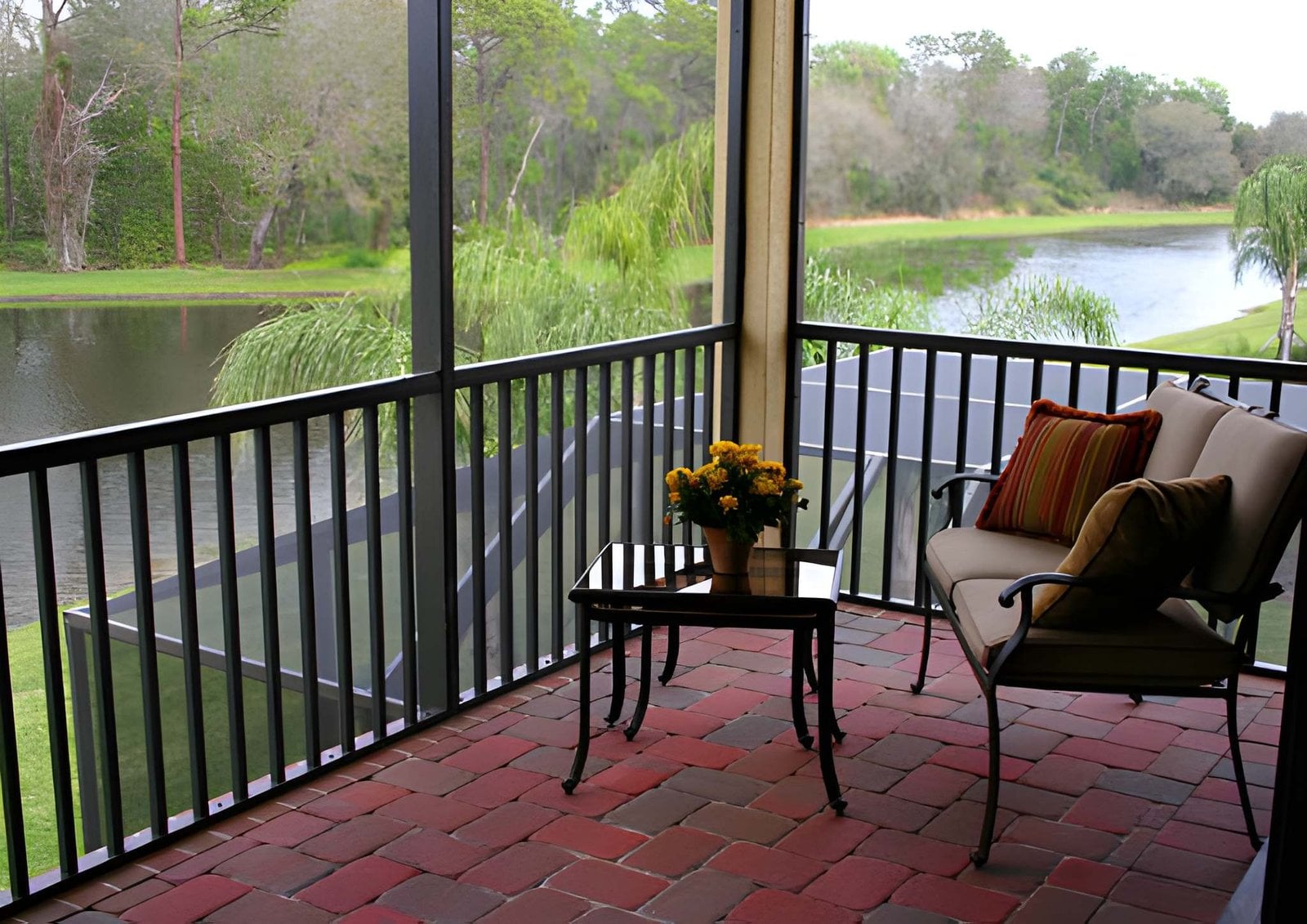
How much does a screen room cost depends heavily on whether you’re screening an existing structure or building from scratch. Here’s how costs break down for Alamo Heights properties:
Screening an existing covered patio (adding screen panels and door to an existing covered structure): $3,500–$8,000 for a standard 200–400 sq. ft. covered patio. This is the most efficient path — the roof and columns are already in place.
Custom screened porch with new framing (new structure, roof, framing, and screen panels): $12,000–$28,000 depending on size, roof type, and materials. A 400 sq. ft. custom screen room with a solid aluminum or steel roof, full framing, and no-see-um screen typically runs $14,000–$20,000.
Freestanding screen room or large-format project: $20,000–$45,000+, depending on square footage, foundation requirements, and design complexity.
What specifically affects cost in Alamo Heights:
Alamo Heights has its own permit process, separate from the City of San Antonio’s system. All permits are submitted through My Government Online via the Alamo Heights Building Department, and contractors must be separately registered with the city. Paradise Decks handles this on your behalf — we know both the Alamo Heights process and the San Antonio process, and we pull permits before any work begins.
HOA requirements in Alamo Heights can also add scope. Some homes in the city and surrounding neighborhoods (The Dominion, Stone Oak, Cibolo Canyons) require architectural committee submissions with material specs and drawings before construction is permitted. We’ve worked with most major San Antonio-area HOAs and prepare those documents as part of the project.
For a free, written fixed-price quote on your screen room project, contact us here.
How long does screen room installation take depends on scope, permitting, and whether we’re working on an existing structure or building from scratch:
Screening an existing covered patio: 1–3 days of installation once materials arrive. A straightforward screen panel installation on a standard-size covered patio is one of the fastest projects we complete.
Custom screened porch with framing and new roof: 1–2 weeks of construction. Includes framing, roofing, and screen installation. More complex configurations — multiple angles, cathedral rooflines, or larger footprints — run toward the longer end.
Alamo Heights permit timeline: Permit review for residential additions in Alamo Heights typically runs 2–4 weeks depending on submission completeness and scope. We submit complete permit packages with drawings the first time, which avoids the back-and-forth that extends timelines. Construction cannot legally begin before the permit is issued — which is why we start the permit process before ordering materials whenever possible.
Total project timeline from first call to completed screen room: Most Alamo Heights screen room projects close in 5–9 weeks, with the majority of that time in permitting, not construction. We schedule installation to start immediately once permits are in hand.
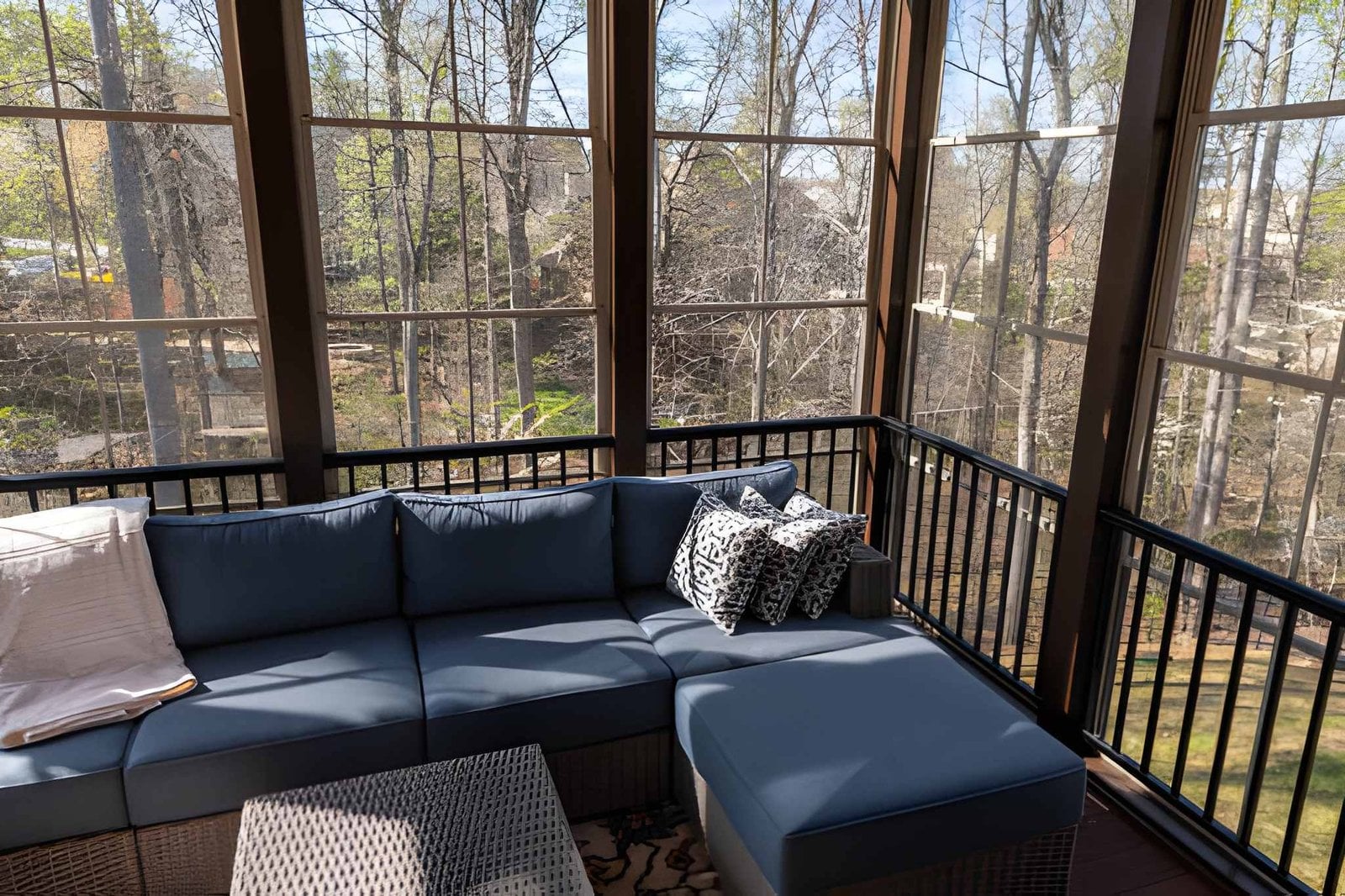
As the best screen room installers near Alamo Heights TX backed by nearly two decades of Bexar County projects, Paradise Decks & Spas dispatches from our San Antonio location to properties throughout the metro. Whether you need a screened porch San Antonio TX homeowners would recognize or a full screen room built from scratch in Alamo Heights, we build screen room contractors San Antonio TX projects under one team with one point of accountability.
Our Alamo Heights screened porch work covers the city’s distinctive property types: tree-canopied lot homes in Alamo Heights proper, contemporary builds with large back patios, and properties where the existing covered structure is ready to screen but hasn’t been converted. We also frequently build mosquito screen room Bexar County installations alongside other outdoor living work — a screen room combined with a deck addition, pool deck, or pergola in a single project.
We’re active across the full San Antonio metro, including:
For top rated screened porch contractors in the San Antonio area, our A+ BBB rating since 2006 and written fixed-price quotes are the benchmark. See our service area for Alamo Heights for project specifics in that market, and our Outdoor Living hub for how screen rooms fit into a broader outdoor living project.
Yes. A screen room that includes a solid roof, structural framing, or is attached to the home as a permanent addition requires a building permit from the City of Alamo Heights. Permits are processed through the city’s My Government Online system — separate from the City of San Antonio process. Paradise Decks & Spas handles permit submission, drawings, and inspector coordination on your behalf. You don’t need to navigate the Alamo Heights Building Department directly.
Practically speaking, yes — with the understanding that South Texas summers bring days over 100°F where even a screened, shaded space will be uncomfortable without a ceiling fan or misting system. From October through May, Alamo Heights weather is ideal for screened outdoor living. Winters are mild — temperatures rarely drop below freezing more than a few nights per year — so a screen room remains usable almost every month without any climate conditioning.
20×20 mesh (also called no-see-um screen) is the correct spec for blocking biting midges, which are a real problem in South Texas near drainage corridors and irrigated landscapes. Standard 18×14 mesh keeps out mosquitoes but not no-see-ums, whose bodies are small enough to pass through the larger openings. We specify 20×20 as the default for Bexar County installs where no-see-um pressure is consistent — ask us about your specific property at consultation.
Yes. A well-built screen room can be converted to a sunroom by replacing screen panels with glass or polycarbonate panels. The conversion is most straightforward when the original framing was sized and designed with the upgrade in mind. If you’re considering a future conversion, tell us at the design stage and we’ll spec the framing accordingly, which saves cost compared to retrofitting a screen room that wasn’t built with the upgrade path in mind.
Standard fiberglass screen handles moderate hail reasonably well — it flexes on impact rather than cracking. Severe hail events can tear standard mesh, particularly larger hailstones (1 inch+). Pet screen and super screen, with their heavier gauge fiberglass, resist hail damage better and are a worthwhile upgrade for Bexar County installations. The aluminum framing and roof structure are not typically affected by hail. Torn screen panels are also the least expensive part of a screen room to replace after a storm.
Paradise Decks & Spas 10615 Perrin Beitel Suite 604 San Antonio, TX 78217 Phone: (210) 496-3325 Email: info@paradisedecksandspas.com Hours: Mon–Fri 9:00 AM – 5:00 PM · Sat 9:00 AM – 4:00 PM A+ BBB Rated Since 2006 · Licensed & Insured · Serving Alamo Heights, San Antonio, and Bexar County.