
How much is a hot tub in San Antonio? Plan on $4,000 to $13,000 for the tub, then $1,500 to $6,000 more for delivery, wiring and something solid to set it on. A deck adds to that, and the deck line is the one most buyers forget. Here’s the full bill, piece by piece.
This guide is for San Antonio and Hill Country homeowners who are shopping for a spa, or already bought one and now need to figure out where it goes. Rick Hogue wrote it. Paradise Decks & Spas has built decks across the San Antonio area since 2006. Tub prices and install ranges below come from manufacturers and market reports, so they’re national figures and labelled that way. What a deck adds is the part we build and quote.
By Rick Hogue, Founder & Lead Deck Specialist · Last updated November 2026
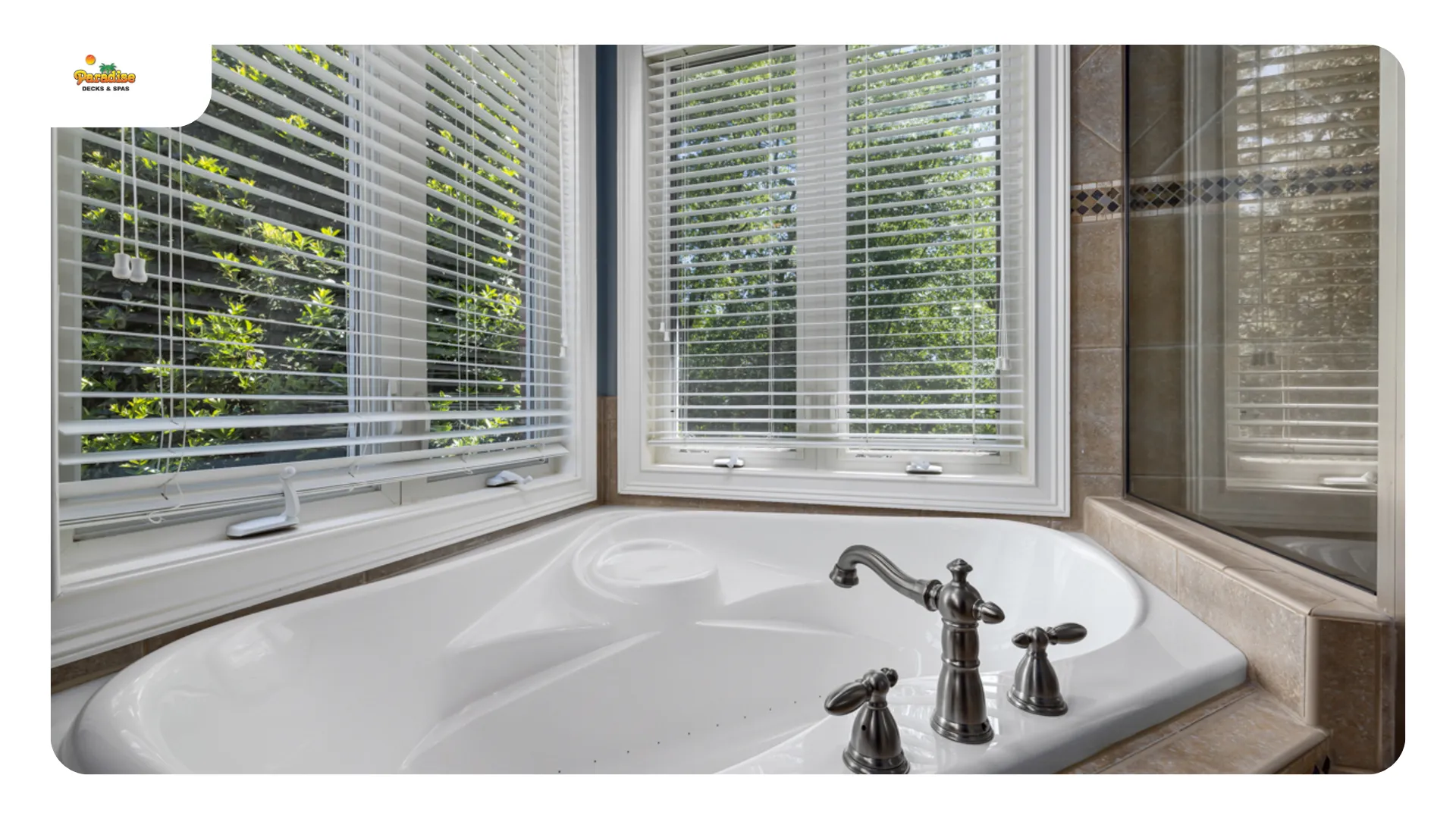
Market data from hottub.com (July 2026) puts entry-level plug-and-play tubs at $4,000 to $7,000 and mid-range hard-shell tubs at $7,000 to $13,000, with an overall average near $7,500. Big, feature-loaded or in-ground builds climb past $20,000. These are tub-only prices, before a single wire or board goes in.
| Type of tub | National price range (tub only) |
|---|---|
| Entry-level plug-and-play | $4,000 to $7,000 |
| Mid-range hard-shell | $7,000 to $13,000 |
| In-ground or custom | $8,000 to $25,000 |
Power matters more to the final bill than the shell does. A 110V plug-and-play model costs less to buy and often needs no electrician, but Jacuzzi’s own installation guide notes it has less heating power and fewer jets than a 220V tub. Decide how you’ll use the tub before you save money here.
Jacuzzi’s 2026 planning guide puts typical hot tub installation cost at $1,500 to $6,000 on top of the spa, depending on the site, the wiring and how hard the delivery is. Here’s how that breaks into pieces, using national figures.
| Install line | National range, 2026 |
|---|---|
| Delivery and placement | $200 to $500 |
| Crane delivery, if needed | $800 to $1,500 or more |
| Site prep and foundation | $600 to $3,000 or more |
| Electrical work | $600 to $2,200 or more |
| Steps and accessories | $200 to $1,500 or more |
| Permits, where required | $100 to $500 |
Add them up and you can see why a $9,000 tub can turn into a $14,000 project. Jacuzzi’s worked example for a mid-range model on a new concrete pad lands between $11,500 and $15,500. The same tub on an elevated deck, with reinforcement, a longer wire run and a crane, runs $13,700 to $17,700. Those are Jacuzzi’s illustrations, not San Antonio quotes.
Expect a hot tub electrical cost of roughly $600 to $2,200 nationally for a 240V circuit. Long runs, a subpanel or trenching push it higher. In San Antonio the work has to be done by a licensed electrical contractor, and the permit is pulled by that contractor, not by you or your deck builder.
A full-size tub needs a dedicated 40 to 60 amp GFCI circuit, a disconnect within sight of the spa and a hard-wired connection to its control box, per Jacuzzi. Three things move the price:
The city side is small money. San Antonio’s Development Services FAQ says all electrical work inside the city must go through a licensed, registered electrical contractor. The city’s FY 2027 fee schedule lists a $57.50 base fee for electrical permits on existing homes, plus per-item fees and 4% surcharges. Ask your electrician which permit class applies to your job.
The wire and the labor are the real cost. Get the circuit quoted in writing before the tub is ordered, because the electrician usually runs the circuit first and returns to hook up the tub once it’s delivered.
Jacuzzi prices a reinforced concrete slab at $600 to $2,000 or more, a prefab spa pad over gravel at $200 to $600, pavers at $800 to $2,500, and a reinforced wood or composite deck base at $800 to $3,000 or more. A filled tub with bathers can weigh 3,000 to 6,000 pounds, so the base is the worst place to save.
| Base under the tub | National range | What to know in San Antonio |
|---|---|---|
| Prefab pad on gravel | $200 to $600 | Cheapest, and the easiest to outgrow |
| Reinforced concrete slab | $600 to $2,000+ | Solid, but it’s a separate surface from your deck |
| Pavers on compacted base | $800 to $2,500+ | Looks good, can settle unevenly |
| Reinforced deck base | $800 to $3,000+ | Footings matter more on shrink-swell clay |
Much of the San Antonio area sits on expansive clay. The USDA’s description of Houston Black, the Texas state soil, calls out its shrink-swell behavior as a building problem, which is why footings under a spa get sized for that spa. Our post on how much a deck costs to build covers what drives price on the deck itself.
The hot tub deck cost depends on what you want around the tub. A small framed platform under one spa costs a fraction of an entertaining deck with seating, steps, rails and lighting. Jacuzzi’s elevated-deck example carried $2,200 for reinforcement alone. We don’t have a Paradise price to quote you here, because the number depends on the tub’s spec sheet and your yard. That’s why a free on-site consultation comes before a fixed-price written quote.
Surface choice shows up on your feet. Wet bare feet crossing a deck in July need a board that doesn’t bake. Our guide to how hot composite decking gets in a San Antonio summer is worth a read before you pick one.
A built-in hot tub set into a deck is still a portable acrylic spa. The extra cost is the framing, the surround and the access panel around it. A truly in-ground tub is different: hottub.com puts in-ground and custom builds at $8,000 to $25,000, and Jacuzzi says drains and make-up water plumbing add several hundred to a few thousand dollars.
Here’s how the three setups compare:
If you’re building a deck anyway, setting the tub into it is often the best value. Our custom decks team builds hot tub decks and spa integration as part of the same job, with one carpentry crew of our own and specialist trades for electrical work.
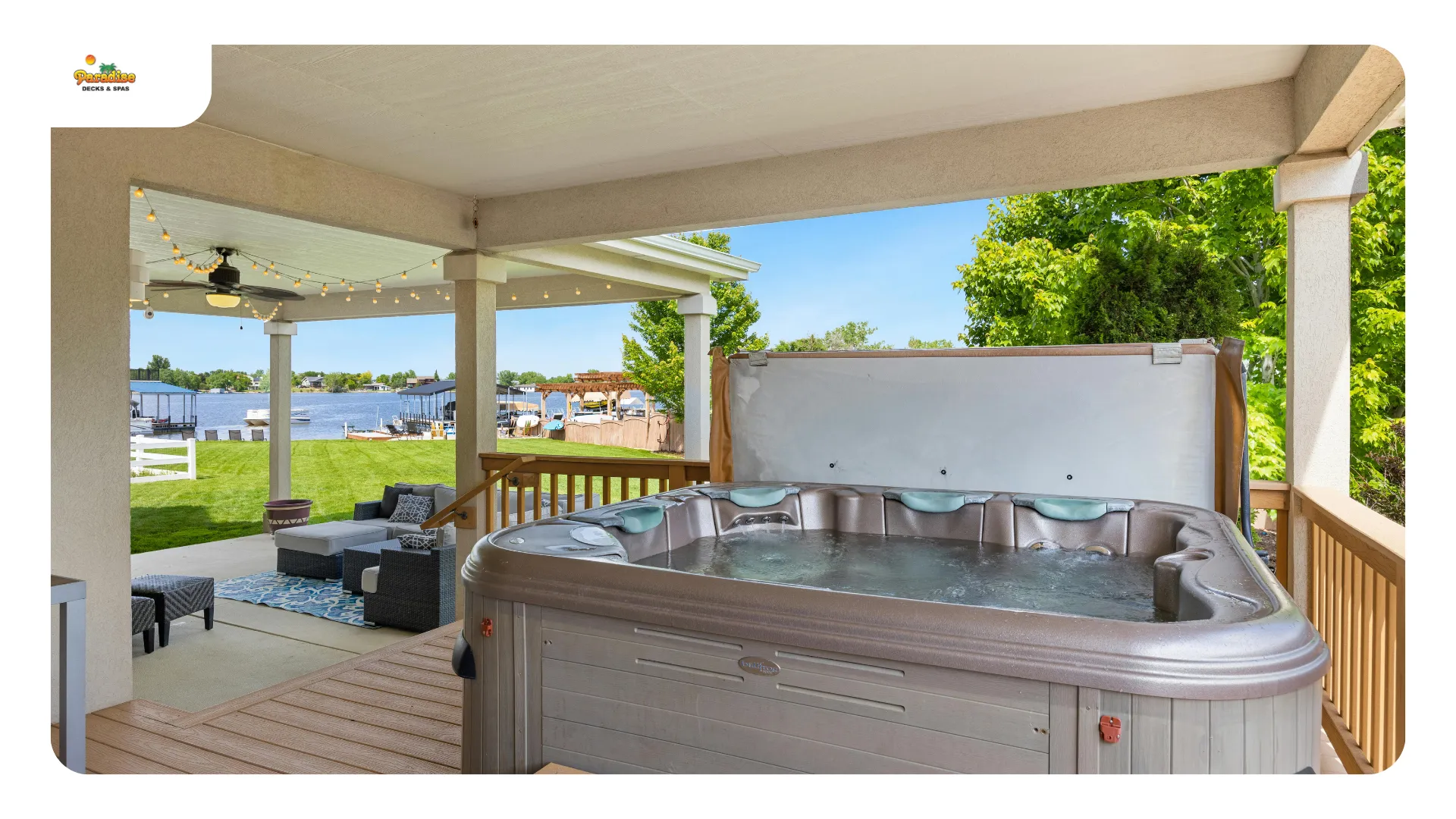
CPS Energy’s residential average is about 13.0 cents per kWh for November 2026. The U.S. Department of Energy estimated typical standby use for a portable spa at 1,699 kWh a year, which is about $220 a year at that rate. Jacuzzi says efficient tubs usually run $20 to $50 a month once heating and jet time are counted.
San Antonio adds a wrinkle. From June through September, CPS adds a peak capacity charge on every kWh above 600 in a month. If your house already crosses that line in summer, a tub’s kWh land in the pricier bracket. A tight cover and a lower set temperature help in any season.
Ownership costs more than power. Hottub.com puts yearly maintenance at $500 to $1,000. Jacuzzi suggests draining and refilling every 3 to 4 months, so plan where that water goes. Don’t aim it at deck posts or the foundation. Wet-dry swings are exactly what clay soil moves with.
A good quote names the tub, the load and the trades, so that “how much” has one answer instead of five. Ask every builder to list these lines, and compare quotes line by line rather than by total.
Paradise Decks & Spas puts the deck side in a fixed-price written quote, with labor and material warranties on top of Trex and TimberTech warranties. If the tub is part of a bigger backyard, our post on building the deck, cover and pool surround as one project explains how to phase it.
Often, yes. Jacuzzi says 110V models can use an existing GFCI-protected outdoor outlet on a dedicated 15 to 20 amp circuit, so the electrician cost may be minimal. The tradeoff is less heating power and fewer jets. If the right outlet isn’t already near the spot, you’re paying for a circuit anyway.
Most owners drain and refill every 3 to 4 months, according to Jacuzzi. Send the water to a yard area that can absorb it, away from posts, slabs and the house. Check local rules on discharging treated water first, and neutralize or dilute it before it leaves your property.
Most tubs arrive on their side, so the path needs to be at least as wide as the spa’s height when tilted, typically 36 to 42 inches. Measure every gate, corner and air-conditioner pad. A path that’s too narrow is how a crane ends up on the invoice.
Bring us the tub you’re leaning toward, or just a rough idea of where it should go, and we’ll tell you what the deck side costs. Paradise Decks & Spas offers free on-site consultations, fixed-price written quotes and financing through approved lenders across San Antonio and the surrounding area. Call (210) 496-3325, or start with our deck construction process.
—
Written by Rick Hogue, Founder & Lead Deck Specialist at Paradise Decks & Spas, building decks in San Antonio since 2006.
Sources for the national figures above: Jacuzzi’s 2026 hot tub installation guide, hottub.com’s 2026 cost statistics, CPS Energy’s rate page, the Department of Energy’s portable electric spa determination, the City of San Antonio fee schedule, the city’s electrical FAQ, its deck permit bulletin IB 151 and the USDA Houston Black soil profile.