
Repair while the damage is on the surface. Replace once it reaches the structure. Most San Antonio deck repairs run $300 to $3,000, and the rule we use is that once a repair estimate passes roughly half the cost of a rebuild, rebuilding is the better spend. Paradise Decks & Spas has repaired decks across San Antonio since 2006.
By Rick Hogue, Founder & Lead Deck Specialist · Last updated November 2026
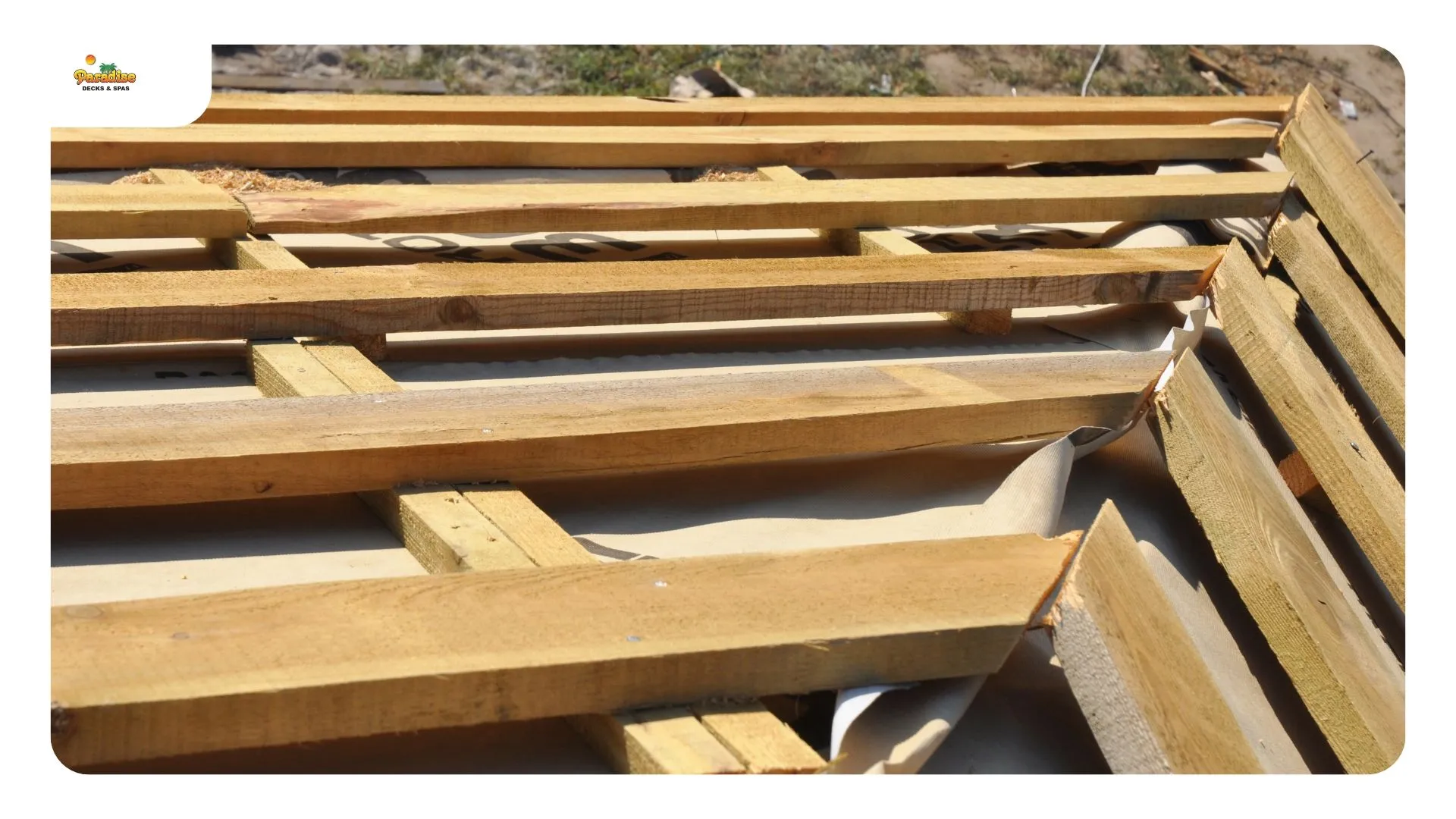
The surface, by a wide margin. That single fact is why so many tired-looking decks are worth repairing rather than tearing out.
The parts of a deck age at very different rates in this climate:
| Component | Service life in San Antonio | Why |
|---|---|---|
| Decking boards | 10 to 15 years | Full sun, UV, foot traffic, water |
| Railing | 10 to 15 years | Exposed on every side, takes weather first |
| Fasteners and hangers | 10 to 20 years | Corrosion, plus movement from thermal cycling |
| Framing, joists and beams | 15 to 25 years | Shaded by the decking above, so it stays drier |
| Posts | 15 to 25 years, less in ground contact | Depends almost entirely on the base detail |
| Concrete footings | 30 years and up | Below the weather, bearing on stable material |
A deck at year fifteen here typically needs everything above the joists and very little below them. The boards you are looking at have had a decade and a half of direct sun; the frame underneath has been in the shade the whole time.
Where your deck fails depends on which side of the city you are on. North of the escarpment, through Stone Oak and out toward Boerne, decks sit on footings drilled into limestone that barely move, so failures there are almost always surface and fastener failures. Through the central and eastern clay belt the ground swells and shrinks every year, and that movement shows up at the connections: a gap opening at the ledger, a stair that no longer meets its landing squarely, a post base that has worked loose. Any homeowner can check their own ground on the federal Web Soil Survey, and it genuinely changes what we look at first.
Four checks, ten minutes, no tools beyond a screwdriver:
Three of those four are repairable. The ledger is the one that decides whether you are having a repair conversation or a replacement conversation.
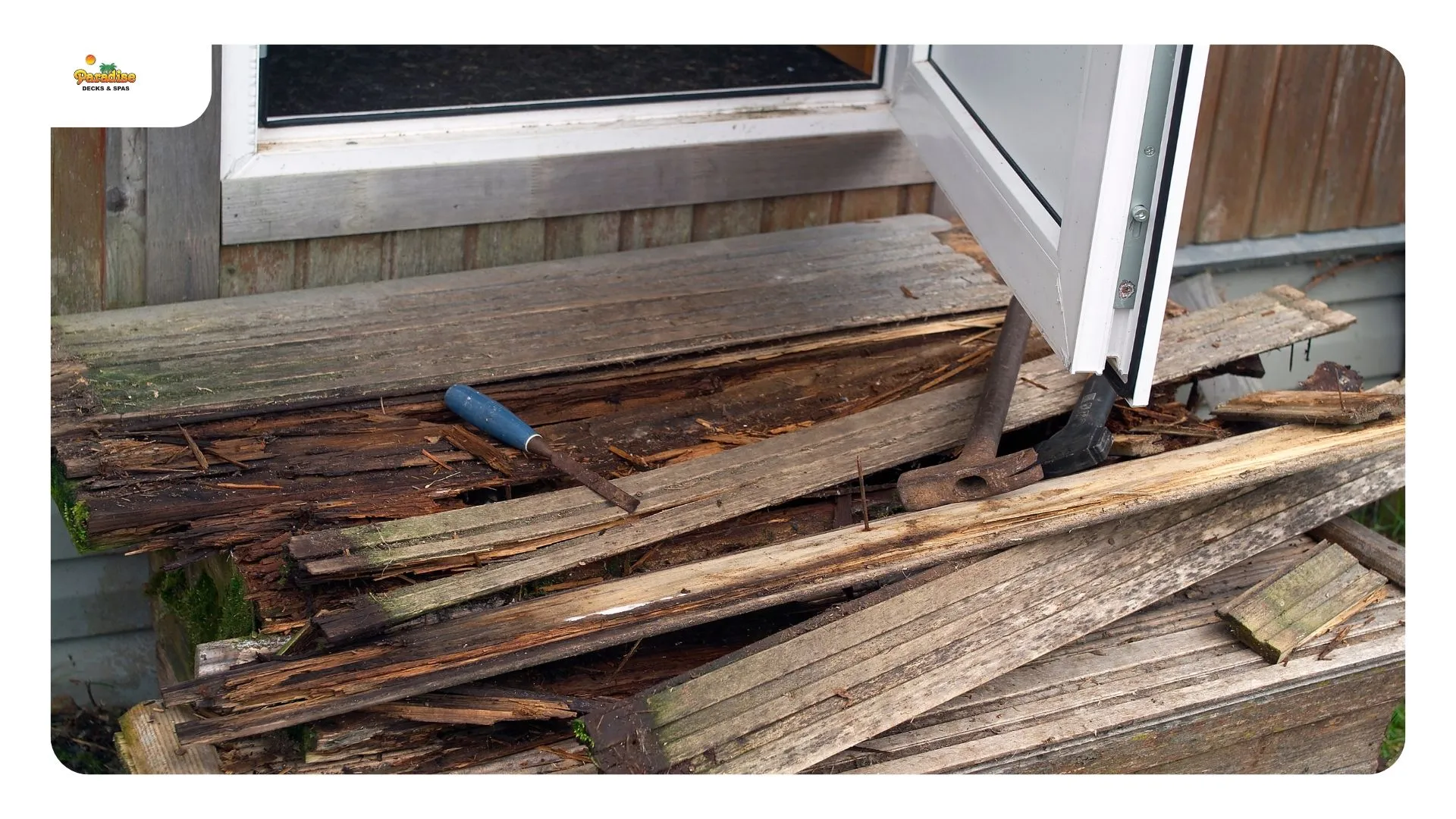
Yes, and it is the most common repair we do. Three things complicate it, and a good estimate will have accounted for all three.
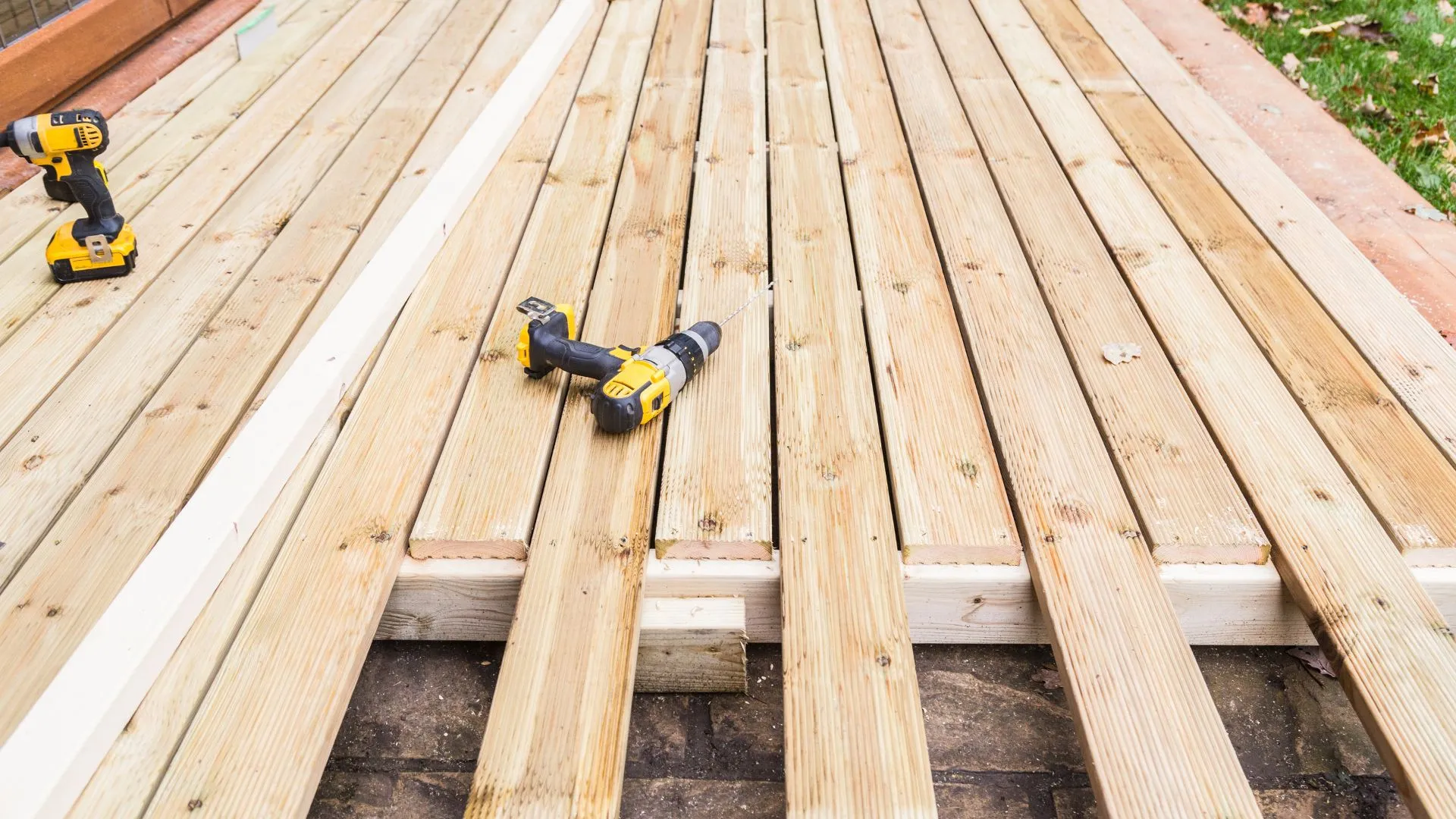
What is underneath comes first. A rotted board usually means water sat there, which means the joist below it got the same exposure. We lift the board and probe the joist before quoting, because replacing a board over a soft joist is money spent twice. Soft at one spot means sistering a new member alongside it. Soft along its length is a framing conversation.
Matching is the part people underestimate. A new pressure treated board beside boards that have weathered ten years will not match, and no stain fixes that immediately. It evens out over a season or two. On a prominent deck, the better answer is often to pull replacement boards from a hidden area and put the new ones there instead.
Composite has a sourcing problem. Manufacturers discontinue colours. If your composite deck is more than about eight years old, the exact colour may no longer exist, which turns a one-board repair into an availability exercise. We check before quoting rather than after. Sometimes the fix is a full row placed so the transition reads as deliberate.
One more: hidden fastener systems mean releasing clips, which usually requires lifting adjacent boards. A single-board repair becomes a three-board repair in labour terms.
Two things, and neither is the decking colour. The deck is framed to your lot and your house rather than to a standard rectangle, and features are built into the structure rather than placed on it afterwards.
On flat ground with a straight back wall, the gap between a standard build and a custom one is narrow. On a sloped north-side lot with mature oaks and a drop at the back, the gap is the whole project, because a standard rectangle only fits where the yard is already rectangular.
What custom adds, and what each addition costs structurally, is covered in our guide to custom decks and built-ins — built-in seating, planters, storage, screening and the framing each one needs underneath.
On price: custom runs higher per square foot, because angles, tiers and built-ins take labour a rectangle does not. The total gap is usually smaller than people expect, because a standard deck plus furniture plus a storage box plus a later shade structure often adds up to more than the custom build that included all of it. For real build numbers in this market, our Stone Oak deck construction guide has the cost picture.
Two to four weeks on site for most San Antonio builds, plus permit review before anything starts.
The stage that varies most is the one in the ground, which brings the soil question back round. Drilling footings into limestone on the north side is slow, loud work that can run one to three days depending on how many you need. On the clay side the excavation is faster but the footing design is more involved. Either way it is the first thing that happens and the thing most likely to move the schedule.
The full stage-by-stage sequence, including what happens on each day and what slows jobs down, is in our deck construction stages guide.
Permits sit in front of all of it. Which application applies depends on the deck’s size, height and story count, as San Antonio’s residential deck permit bulletin sets out. We prepare and submit rather than leaving that with the homeowner.
A quote is a scope document, not a number. At minimum it should name:
Two quotes are not comparable if one names the footing approach and the other does not. That is usually where the price difference lives, and it is also the part you cannot inspect once the deck is finished.
We work from our Perrin Beitel showroom and build across the metro, on both sides of the soil line. San Antonio is the core, with Stone Oak and Alamo Heights inside the city, Helotes, Boerne and Bulverde north and west, and Converse and Schertz east, with fourteen communities in total on the full service area list.
Every quote starts with a site visit, because nobody prices footings in this city from a satellite image. Projects run through deck design and deck construction, with the full range on the custom decks page.
How do you choose between deck builders?
Ask what the ground is like at your address and how it changes the footings. A builder who works this city will answer specifically, because the answer differs between the limestone north side and the clay belt. Beyond that: years trading under the same name, current city contractor registration, insurance confirmed by the insurer, a written workmanship warranty, and a reference on a job several years old.
How does soil change the footings from one side of the city to the other?
North of the escarpment the ground is thin soil over Edwards limestone and caliche, so footings are drilled into rock, bear well and barely move seasonally. Through the central clay belt the ground is deep expansive clay that swells and shrinks every year, so footings and post details have to tolerate movement. Transition zones on the northeast and south edges are mixed and should be checked rather than assumed.
How deep do deck footings go in Texas soil?
In San Antonio, depth is set by reaching competent bearing material rather than by a frost line, because there is no meaningful freeze depth here. On the limestone north side that often means shallower and wider than people expect. In the clay belt the design question is movement rather than depth.
What makes a build custom rather than standard, and what does it add?
The deck is framed to your lot and house rather than to a standard rectangle, and features are built into the structure rather than placed on it later. On flat ground the difference is modest. On a sloped lot with oaks and a drop at the back it is the whole project, because a rectangle only fits a rectangular yard.
What should a deck quote spell out before you sign?
Footing approach and count specific to your ground, framing material and joist spacing, decking by brand and line, hardware specification, railing type and height, who pulls the permit, milestone-based payments, stated exclusions, and both the manufacturer and workmanship warranties in writing. Two quotes are not comparable if only one names the footings.
Paradise Decks & Spas
Adress:10615 Perrin Beitel, Suite 604 San Antonio, TX 78217
Phone: (210) 496-3325
Email: info@paradisedecksandspas.com
Hours: Monday to Friday 9:00 AM to 5:00 PM · Saturday 9:00 AM to 4:00 PM · Sunday Closed
Building above ground pool decks across north San Antonio, including Stone Oak, Timberwood Park, Bulverde, Boerne, Helotes, Converse and Schertz.