
Paradise Decks & Spas has installed composite decking across San Antonio since 2006. We carry Trex, TimberTech, AZEK, and other capped composite and PVC lines rather than one brand, because the right board depends on your deck’s sun exposure and budget — not on which manufacturer a contractor signed an agreement with.
By Rick Hogue, Founder & Lead Deck Specialist · Last updated September 2026
Before brand, before color, before price — there’s one question that separates composite decking that lasts from composite decking that disappoints.
Uncapped composite is the original product: wood flour and plastic, extruded, with the core exposed on every surface. It absorbs moisture. It stains. It fades unevenly. In a humid climate it grows mold in the shaded sections. Most of composite’s bad reputation comes from uncapped boards sold in the 2000s.
Capped composite encases that core in a polymer shell. Everything we install is capped, and the number of sides matters:
If you’re comparing quotes and one is noticeably cheaper, this is the first place to look. “Composite” on a bid line doesn’t tell you whether it’s capped or on how many sides. Ask.
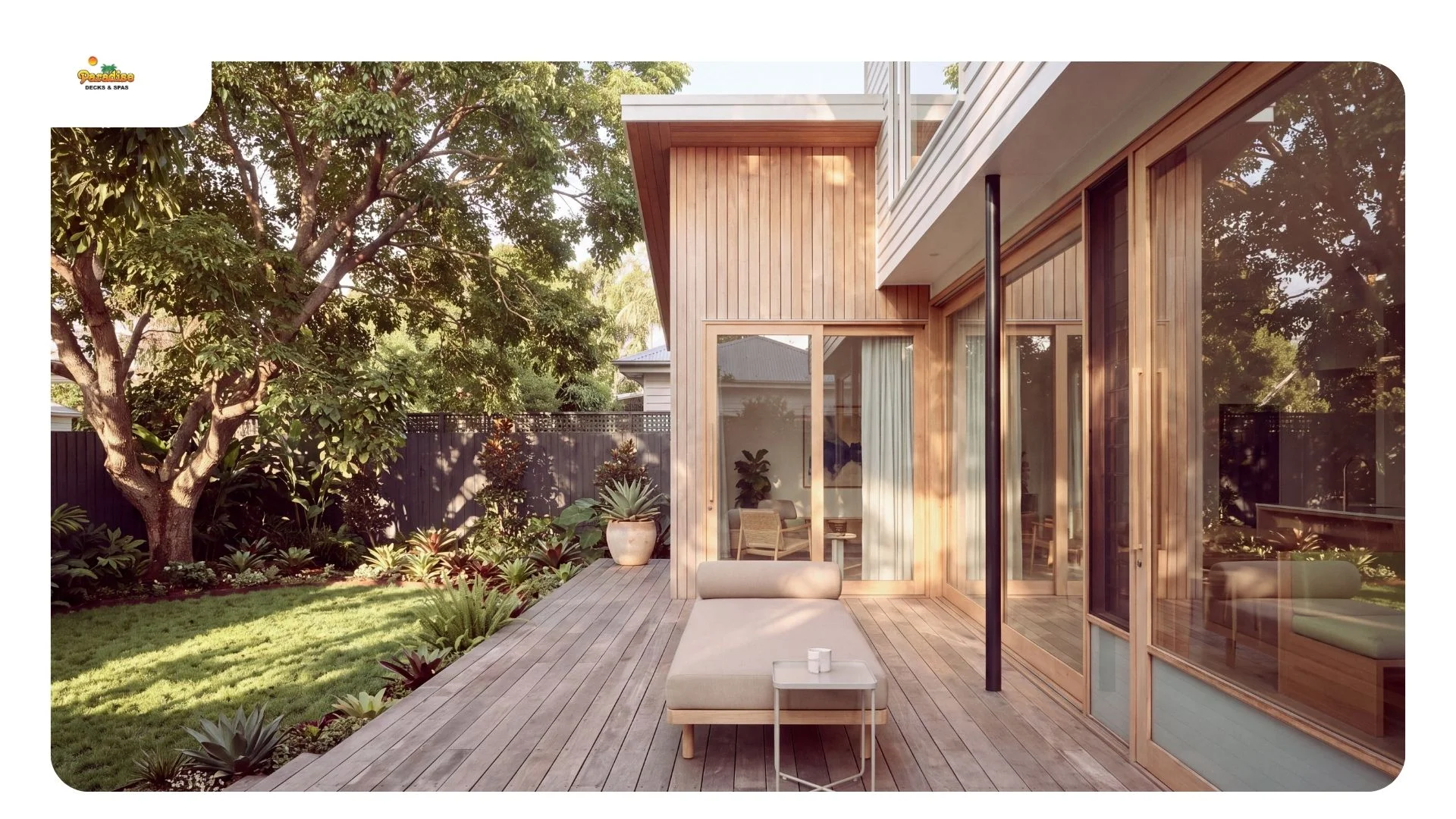
For most San Antonio homeowners, yes — but not for every reason people assume, and wood genuinely wins on two counts.
Where composite wins:
Where wood wins:
What composite maintenance actually involves, since “zero maintenance” is a marketing claim rather than a fact: soap and water twice a year, and a bit more attention in two San Antonio-specific situations. Live oak pollen and leaf tannins in spring will stain a light board if left sitting through a wet week. And north-facing sections that stay shaded through our humid summers can develop surface mildew — it washes off, but it does need washing. Compared with sanding and re-sealing a cedar deck every other spring, it isn’t close.
If you do go the wood route, we build in cedar and pressure-treated pine too, and we offer deck staining to maintain it.
Here’s the straight answer, because most contractor pages dodge this one.
On a 95 to 100°F San Antonio afternoon in full sun, expect roughly:
| Surface | Typical temperature in direct sun |
|---|---|
| Light composite (gray, driftwood, sand) | 120 – 140°F |
| Dark composite (espresso, walnut, dark brown) | 140 – 165°F |
| Heat-mitigating composite and PVC, light colors | 115 – 140°F |
| Bare pressure-treated pine | 110 – 130°F |
| Dark-stained cedar | 145 – 160°F |
Standard composite does run hotter than bare wood. Plastic holds heat; wood breathes. Any installer who tells you otherwise hasn’t measured it. What’s also true is that stained wood often runs hotter than composite — in one laser-thermometer field test, capped composite read 136–140°F while dark-stained cedar hit 157°F.
Color matters more than brand. The gap between a light gray board and a dark espresso board in the same product line is 20 to 30 degrees — larger than the gap between most brands. If your deck faces west or south, choose light. That single decision does more for barefoot comfort than any upgrade on the price list.
Two ways to go further:
Most composite decking contractors in San Antonio are certified with one manufacturer and recommend that manufacturer to every customer. We install multiple lines, so the recommendation comes from your deck rather than from a pricing agreement.
Trex — five collections across four tiers, 25 to 50-year warranties, the broadest color range in the market. We’re a listed Trex contractor. Best when you want maximum color choice or the heat-mitigating Lineage line.
TimberTech — split into Composite and Advanced PVC (formerly AZEK). The PVC half carries a Limited Lifetime product warranty, runs cooler, and offers significantly better wet slip resistance. Our default around pools and spas.
AZEK and other PVC — fully wood-free. The right answer for pool surrounds, dock-style applications, and elevated decks with dry space beneath.
For a direct head-to-head, see our Trex vs TimberTech comparison.
How we actually pick: sun exposure first (west or south-facing pushes toward heat-mitigating lines and light colors), water second (pool or spa adjacency pushes toward PVC for slip resistance), budget third, color last. Color is the fun part, but it’s the fourth question, not the first.
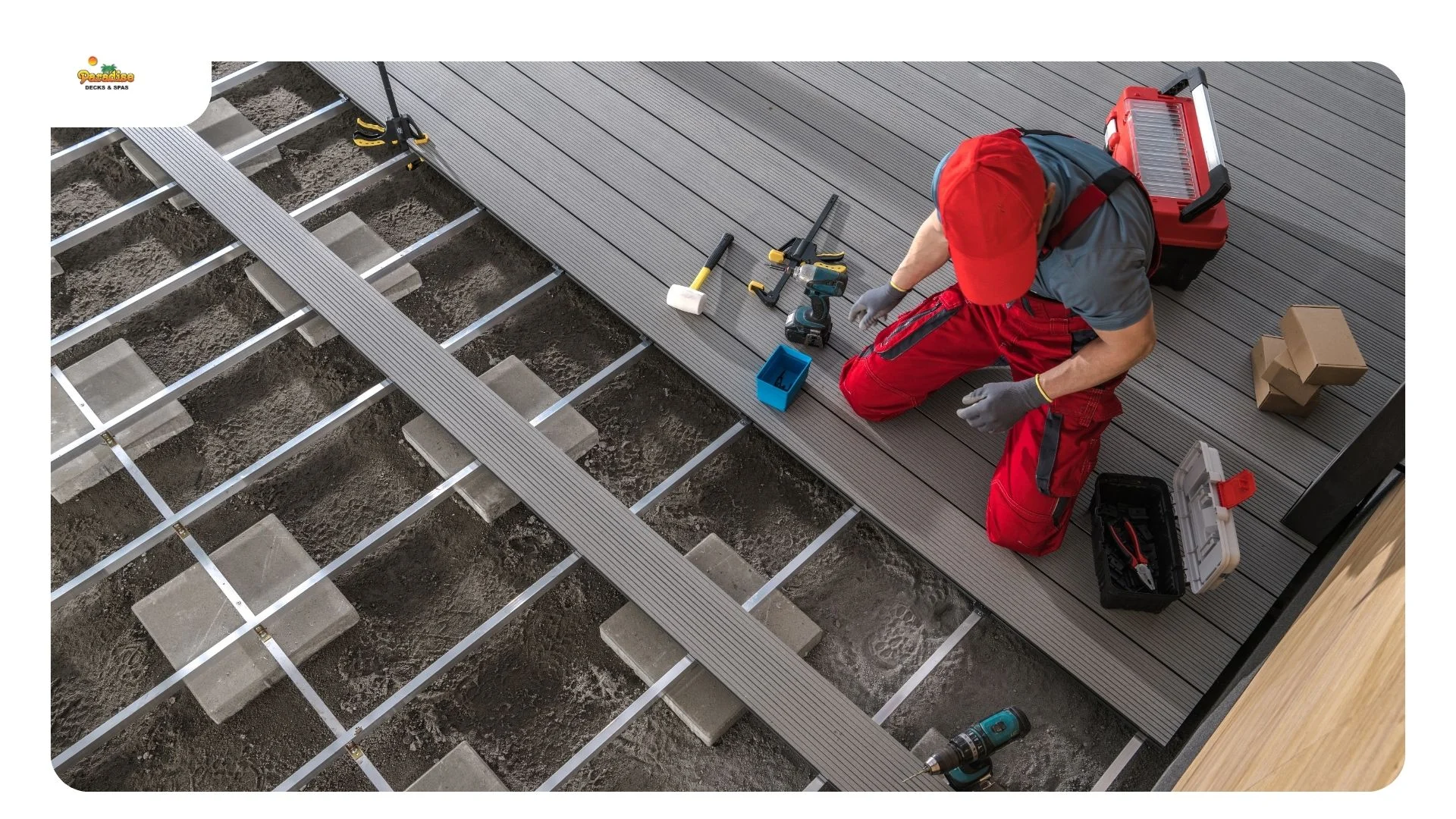
Composite deck installation in San Antonio generally runs $35 to $60 per square foot installed, putting a 300-square-foot composite deck between roughly $10,500 and $18,000. Full PVC runs higher, into the $70 range on premium lines.
| Tier | Typical installed cost per sq ft | 300 sq ft |
|---|---|---|
| Entry capped composite | $33 – $42 | $9,900 – $12,600 |
| Mid-range capped composite | $40 – $50 | $12,000 – $15,000 |
| Premium composite | $45 – $58 | $13,500 – $17,400 |
| Advanced PVC | $50 – $70 | $15,000 – $21,000 |
Planning figures for the San Antonio area as of 2026. Verify against current Paradise pricing before publishing.
Those cover substructure, fasteners, and a basic railing. Deck height over 30 inches, stair runs, and railing upgrades move them, and expansive clay lots needing deeper or helical piers typically add $500 to $1,500. The framing and footing work is detailed on our deck construction page.
The reliable saving: pressure-treated framing beneath a composite surface. Nobody sees the joists, and it takes real money off the total without touching the part you walk on.
Bexar County and inner metro: San Antonio · Stone Oak · Alamo Heights · Helotes · Converse · Universal City
Comal, Guadalupe, Kendall, and Bandera counties: Boerne · Bulverde · New Braunfels · Canyon Lake · Schertz · Cibolo · Bandera · Lake Medina
A local note on approvals: HOAs in Stone Oak, Timberwood Park, Fair Oaks Ranch, and the newer Bulverde subdivisions frequently review deck materials and colors before construction. Composite generally clears architectural review without difficulty, but premium colors are often special-order — so we confirm approval before placing the material order.
How much does a composite deck cost in San Antonio?
Composite deck installation in San Antonio typically runs $35 to $60 per square foot installed, putting a 300-square-foot deck between roughly $10,500 and $18,000. Entry-tier capped composite sits near the bottom of that range and Advanced PVC above it. Deck height, stairs, railing style, and clay-soil footing work move the final number.
Do you offer free composite deck estimates?
Yes. We come to your property at no cost, take measurements and grade readings, walk through the brands and colors with you, and leave a fixed written quote. No charge for the visit, no obligation, and the price you approve is the price you pay.
Does composite decking get hot underfoot in summer?
Yes. On a 95 to 100°F San Antonio afternoon in full sun, light composite typically reads 120 to 140°F and dark composite 140 to 165°F, which is hotter than bare pressure-treated wood. Color matters more than brand — light boards run 20 to 30 degrees cooler than dark ones in the same line. Heat-mitigating lines like Trex Transcend Lineage and TimberTech Advanced PVC reduce it further, and a pergola reduces it most of all.
Is composite decking better than wood for this climate?
For most San Antonio homeowners, yes. Composite never needs staining or sealing, won’t splinter or gray out under our UV, resists insects and rot, and carries 25 to 50-year warranties that lumber doesn’t. Wood wins on up-front cost, roughly half the installed price for pressure-treated pine, and bare wood runs cooler in direct sun. If budget is the constraint or the deck sits in full afternoon sun with no shade planned, wood remains a fair choice.
What maintenance does a composite deck actually need?
Soap and water twice a year, plus two San Antonio-specific items. Live oak pollen and leaf tannins can stain light boards if left through a wet spell, so sweep and rinse in spring. North-facing sections that stay shaded through our humid summers can develop surface mildew, which washes off with a deck cleaner. No sanding, no staining, no sealing — ever.
Paradise Decks & Spas
Adress:10615 Perrin Beitel, Suite 604 San Antonio, TX 78217
Phone: (210) 496-3325
Email: info@paradisedecksandspas.com
Hours: Monday – Friday 9:00 AM – 5:00 PM · Saturday 9:00 AM – 4:00 PM · Sunday Closed
Serving San Antonio and surrounding areas including Stone Oak, Alamo Heights, Helotes, Schertz, Cibolo, Converse, Universal City, Boerne, Bulverde, New Braunfels, Canyon Lake, Bandera, and Lake Medina.