
Sixteen inches on center for most wood decking, twelve inches for composite and for anything laid on a diagonal. The spacing is not a preference, it comes from what the decking manufacturer requires, and getting it wrong voids the warranty. Paradise Decks & Spas has been framing decks in Stone Oak since 2006, and the frame is where the money quietly goes.
By Rick Hogue, Founder & Lead Deck Specialist · Last updated October 2026
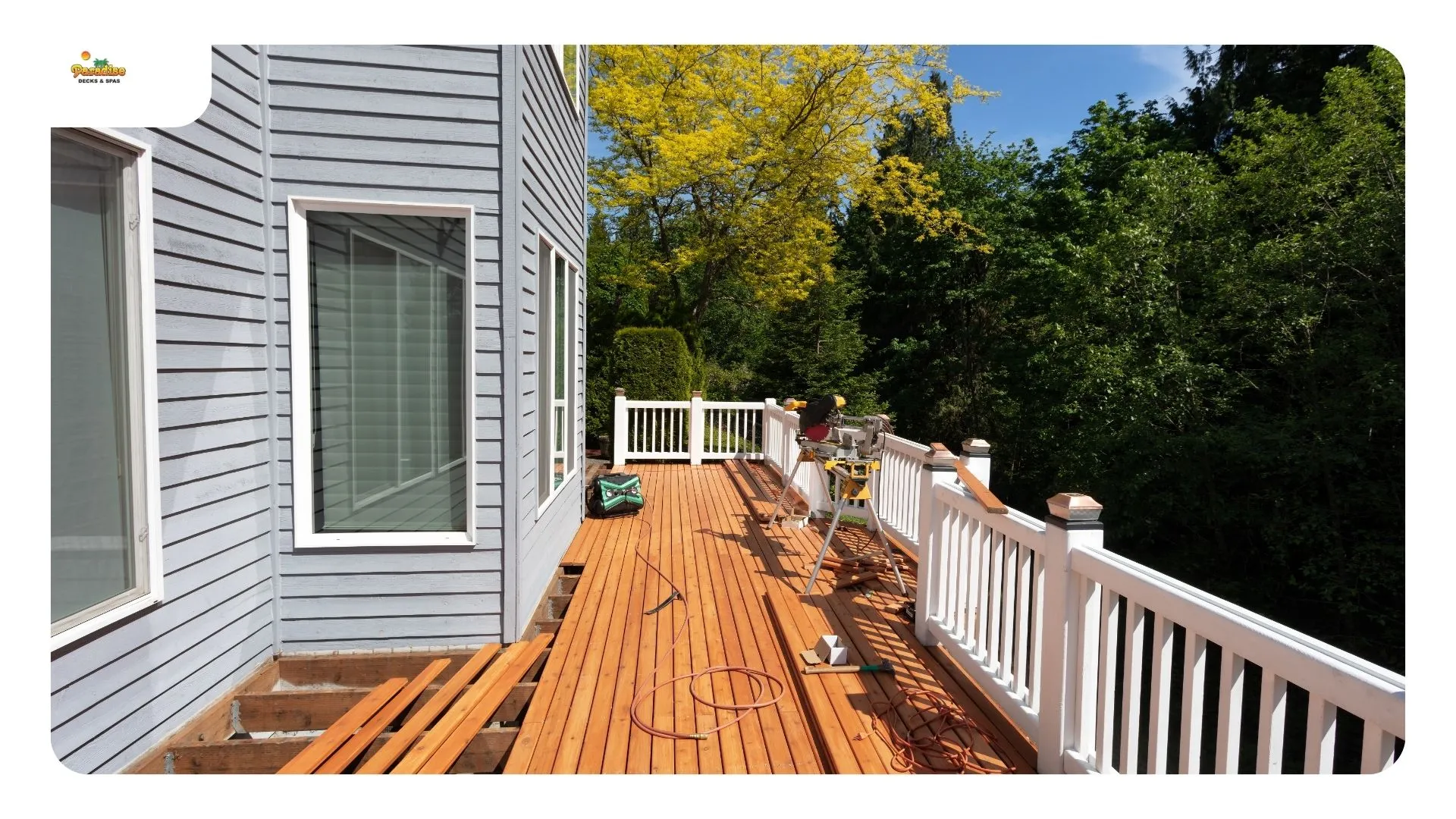
Spacing is driven by the decking material and the direction you lay it, not by the framer’s habit.
| Decking and pattern | Joist spacing | Why |
|---|---|---|
| Pressure treated or cedar, straight lay | 16 in on center | Standard, and what most older decks were built to |
| Pressure treated or cedar, diagonal lay | 12 in on center | A 45 degree lay increases the unsupported span |
| Capped composite, straight lay | 16 in on center, 12 in for some lines | Composite is less stiff than wood and sags between joists |
| Capped composite, diagonal lay | 12 in on center | Required by most manufacturers |
| Stair treads | 12 in or closer | Treads carry concentrated load |
| Under a hot tub or spa | Engineered, often 12 in with doubled members | Several thousand pounds over a small area |
Two consequences people do not expect. Going composite is a framing decision as well as a surface one, because tighter spacing means more joists, more hangers and more labour under the boards. And an older deck framed at 16 or 24 inches cannot simply be resurfaced in composite without checking what the chosen product requires.
The relevant standards here are the IRC and the American Wood Council’s prescriptive deck guide, both of which San Antonio’s residential deck permit bulletin points to for framing, spans and connections. Span tables are what determine joist size over a given distance, so the honest answer to “what size joists” is that it depends on the span, the species and the load.
Deep enough to reach sound bearing material, which here is usually shallower than people expect, because there is no frost line driving it.
In cold climates footings go below the frost depth so the ground cannot lift them. San Antonio has no meaningful frost depth, so footing depth is set by one thing: reaching competent material. On Stone Oak lots that is caliche or Edwards limestone, and once you are bearing on sound rock you are done.
What the crew is actually judging:
The upside of all this is durability. Decks here do not go out of level the way they do on the expansive clay south and east of the city, which is also why existing footings are so often reusable on a rebuild.
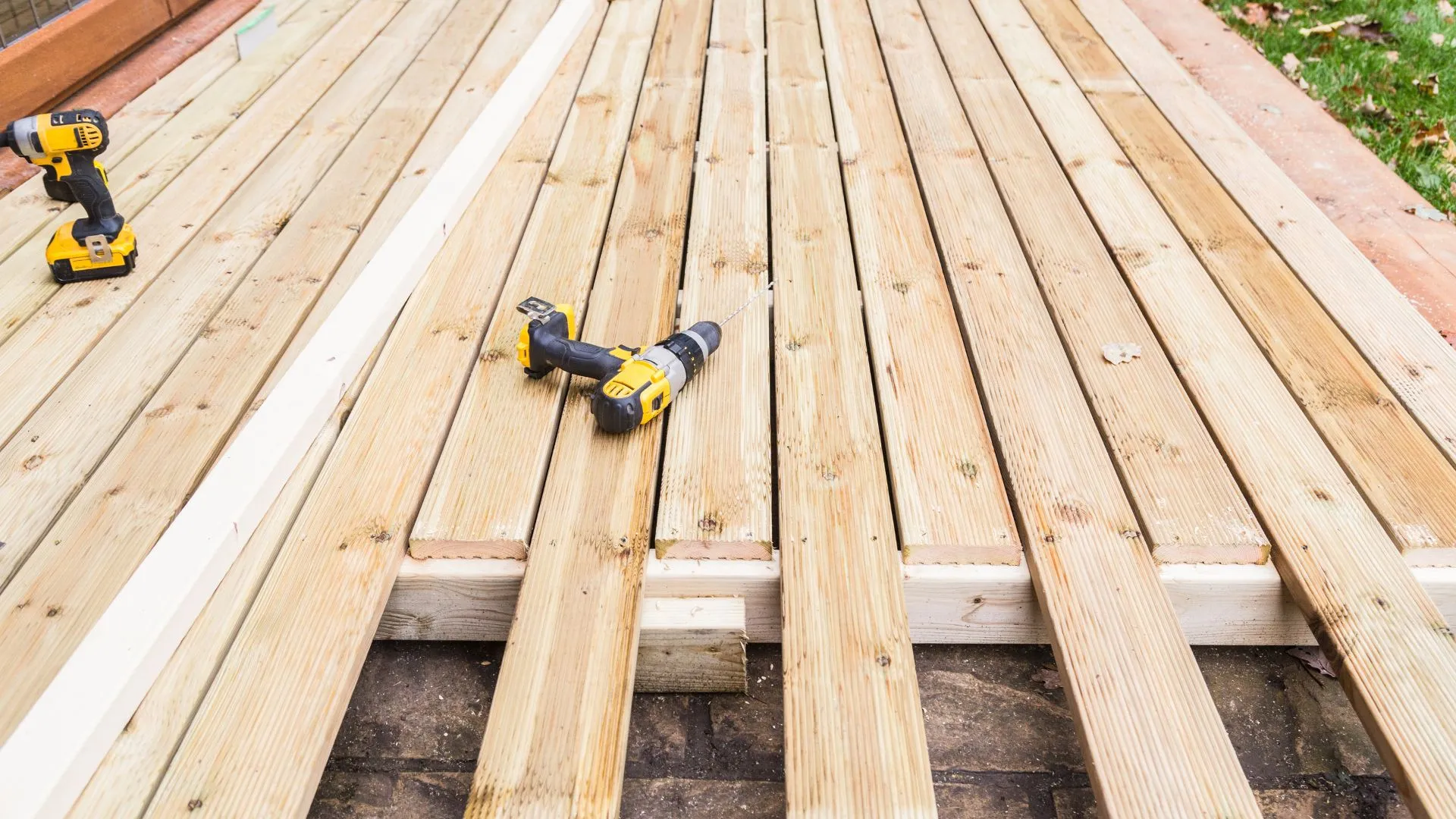
Deck joists spaced for composite decking during a Stone Oak deck build in San Antonio
Four things that cost very little during construction and a great deal afterwards.
Ledger flashing. The connection to the house is the most safety critical part of any attached deck, and water getting behind an unflashed ledger is what rots it. Proper flashing, correct fasteners into framing rather than sheathing, and no ledger bolted through stucco or brick veneer without a proper detail.
Hardware rated for the chemistry. Modern pressure treated lumber is corrosive to ordinary fasteners. Hangers, screws and post bases need to be hot dip galvanised to the right class, or stainless near a pool or spa where chlorine accelerates everything.
Lateral load connections. Older decks frequently have none. They resist downward load fine and sway under side to side movement. Current practice requires dedicated connections, and they are inexpensive to install during framing and awkward to retrofit.
Blocking where it is needed. Under railing posts, at joist mid span on longer runs, and anywhere a post or structure lands on the deck. A railing post fastened to decking rather than blocked framing is the single most common cause of wobbly rails.
Ask any builder quoting your deck what hardware class they are specifying and how the ledger will be flashed. Specific answers separate the quotes.
Different trade-offs rather than a clear winner, and the right answer depends on shade.
Cedar is naturally cooler underfoot than composite, which matters on an unshaded west facing deck. It looks and feels like wood because it is. The costs are upkeep and lifespan: it needs cleaning and resealing every two to three years in this UV, it weathers to grey if you let it, and it splinters as it ages. In San Antonio sun, expect noticeably shorter service life than in a milder climate.
Capped composite is a 25 to 30 year material with manufacturer fade and stain warranties, and it needs washing rather than refinishing. The trade is heat, particularly in dark colours, and a higher upfront cost that includes the tighter joist spacing discussed above.
The practical rule we use on Stone Oak lots: if the deck will be shaded, by live oaks or by a patio cover, composite is the easy answer because the heat objection disappears. If it is fully exposed and you will not add shade, cedar in a light finish is worth considering, as long as you will genuinely keep up the sealing. Our composite decking guide runs the longer comparison against pressure treated pine, including where the cost crossover sits.
Most Stone Oak builds run two to four weeks on site, plus permit review beforehand. Footing work on rock is the variable that moves the schedule most, along with tier count and whether a spa pad or shade structure is in scope.
On price, our Stone Oak deck construction guide carries the full cost picture for builds here, including what drives a project toward the top or bottom of the range. Rather than repeat it, the short version from a framing perspective: the structure under the boards is a larger share of the total than most homeowners assume, especially on sloped lots where height adds posts, beams and guardrail.
If what you actually have is an older deck rather than bare ground, our deck replacement guide covers what can be salvaged, because reusing sound footings and framing changes the number substantially.
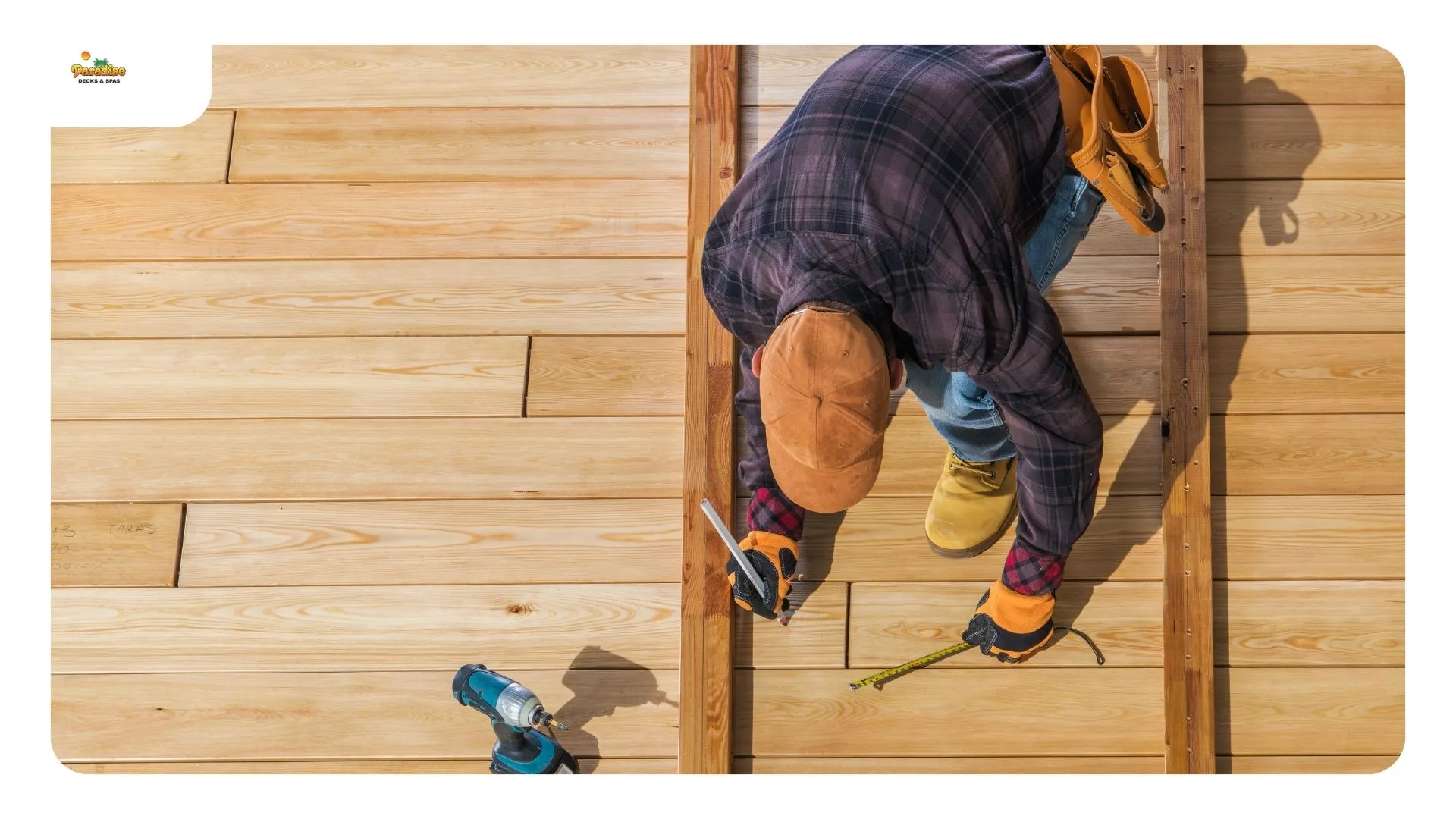
We work out of our Perrin Beitel showroom and build across Stone Oak on both sides of 281, including Sonterra, the TPC Parkway corridor, the neighborhoods near Stone Oak Park, and north toward Timberwood Park. Every build starts with the same three questions: what is under the ground, how far does the lot fall, and which decking is going down, because that last one sets the framing.
See the Stone Oak service area page for everything we handle locally. We also work in Bulverde, Boerne, Helotes and Alamo Heights, with fourteen communities on the full service area list. Layout work starts at deck design, the build itself sits on deck construction, and the full range is on the custom decks page.
Deck footing drilled into caliche and limestone on a Stone Oak property in north San Antonio
How far apart should deck joists be?
Sixteen inches on center for most pressure treated and cedar decking laid straight, and twelve inches for composite and for any decking laid on a diagonal. Stair treads need twelve inches or closer, and a spa needs engineered support. Spacing is set by the decking manufacturer’s requirement, and building wider than specified voids the warranty.
How deep do deck footings need to be in caliche and limestone?
Deep enough to reach sound bearing material, which is usually shallower here than people expect because San Antonio has no meaningful frost depth driving it. Caliche varies in hardness, so the crew bears on competent material rather than a fixed depth, and bearing area matters more than depth on rock. The fill side of a terraced lot is the exception and needs carrying deeper.
Composite or cedar for a Stone Oak home?
Depends on shade. Cedar runs cooler underfoot but needs resealing every two to three years in this UV and splinters as it ages. Capped composite lasts 25 to 30 years with washing rather than refinishing, at the cost of heat in dark colours and tighter joist spacing. If the deck will be shaded, composite is the straightforward answer.
How long does a deck build take in Stone Oak?
Two to four weeks on site for most builds, plus permit review beforehand. Footing work on rock is the biggest schedule variable, along with how many tiers the layout has and whether a spa pad or shade structure is included.
What makes a deck frame last in this climate?
Flashed ledger connections, hardware hot dip galvanised to the right class or stainless near a pool, dedicated lateral load connections, and blocking under every railing post. All four cost little during construction and are awkward and expensive to add later.
Paradise Decks & Spas
Adress:10615 Perrin Beitel, Suite 604 San Antonio, TX 78217
Phone: (210) 496-3325
Email: info@paradisedecksandspas.com
Hours: Monday to Friday 9:00 AM to 5:00 PM · Saturday 9:00 AM to 4:00 PM · Sunday Closed
Building above ground pool decks across north San Antonio, including Stone Oak, Timberwood Park, Bulverde, Boerne, Helotes, Converse and Schertz.