
Most Stone Oak deck repairs land between $400 and $2,500, with board replacement at the low end and structural work at the high end. Paradise Decks & Spas repairs decks across Stone Oak regardless of who built them, and the honest answer on price is that it depends on what is under the boards.
By Rick Hogue, Founder & Lead Deck Specialist · Last updated October 2026
Repairs price by the job, not by the square foot. Here is what the common ones run in this market.
| Repair | Typical installed cost |
|---|---|
| Deck board replacement, per board | $25 to $75 |
| Railing section, re-anchored and tightened | $150 to $450 |
| Railing section rebuilt | $400 to $1,200 |
| Stair tread replacement, per tread | $40 to $120 |
| Joist sistered or replaced, each | $150 to $450 |
| Post replaced, including temporary support | $350 to $900 |
| Ledger reflashed and re-fastened | $900 to $2,800 |
| Fastener and hardware replacement across a deck | $400 to $1,200 |
Most contractors here, ourselves included, carry a minimum charge for a repair visit, since a crew, a truck and a trip cost the same whether the job takes an hour or a day. If you have three small things wrong, grouping them into one visit is considerably cheaper than three separate calls.
Three things move a repair estimate more than anything else. Access underneath, because a deck with crawl space is far quicker to work on than one with sealed skirting. Whether the damage is where you can see it or extends into the frame, which is only knowable once a board comes up. And material matching, covered next.
One note specific to this brief: a ledger repair sits at the top of that table for a reason. It is the connection between the deck and your house, and it is the failure that causes collapses. It is not a line item to defer.
Yes, and it is the most common repair we do. The complications are matching and what is underneath.
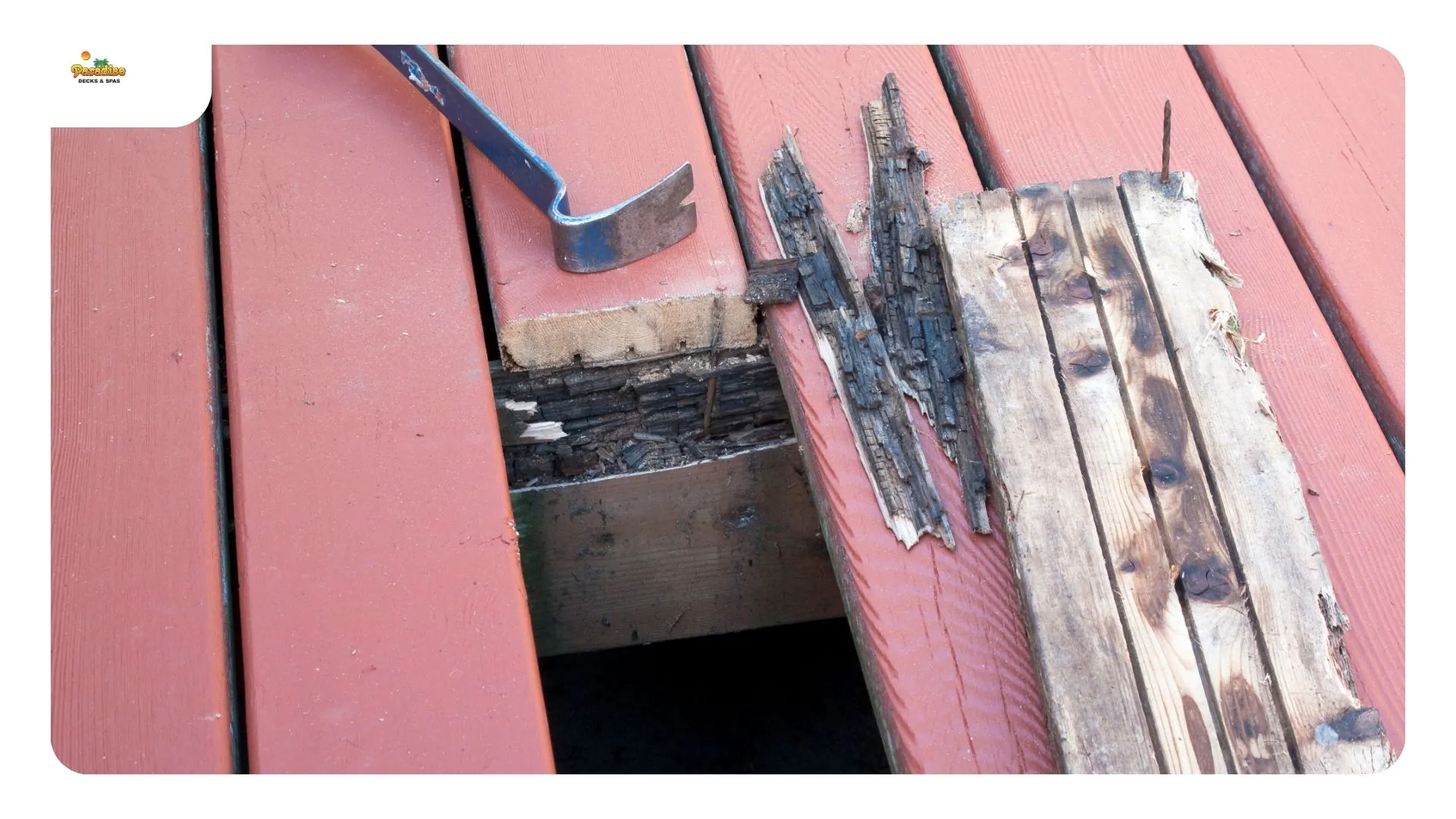
What is underneath comes first. A rotted board usually means water sat there, which means the joist below it probably got the same exposure. We lift the board and probe the joist before quoting the replacement, because swapping a board over a soft joist is money spent twice. If the joist is soft only at that spot, sistering a new member alongside it solves it. If it is soft along its length, that is a framing conversation rather than a board conversation.
Matching is the part homeowners underestimate. A new pressure treated board next to boards that have weathered for a decade will not match, and no stain fixes that immediately. It evens out over a season or two. On a prominent deck, pulling replacement boards from a less visible area and putting the new ones there instead is often the better answer.
Composite has a specific problem. Manufacturers discontinue colors. If your composite deck is more than about eight years old, the exact color may no longer be made, which turns a one board repair into a sourcing exercise. We check availability before quoting rather than after. Sometimes the fix is a full row rather than one board, placed so the transition reads as deliberate.
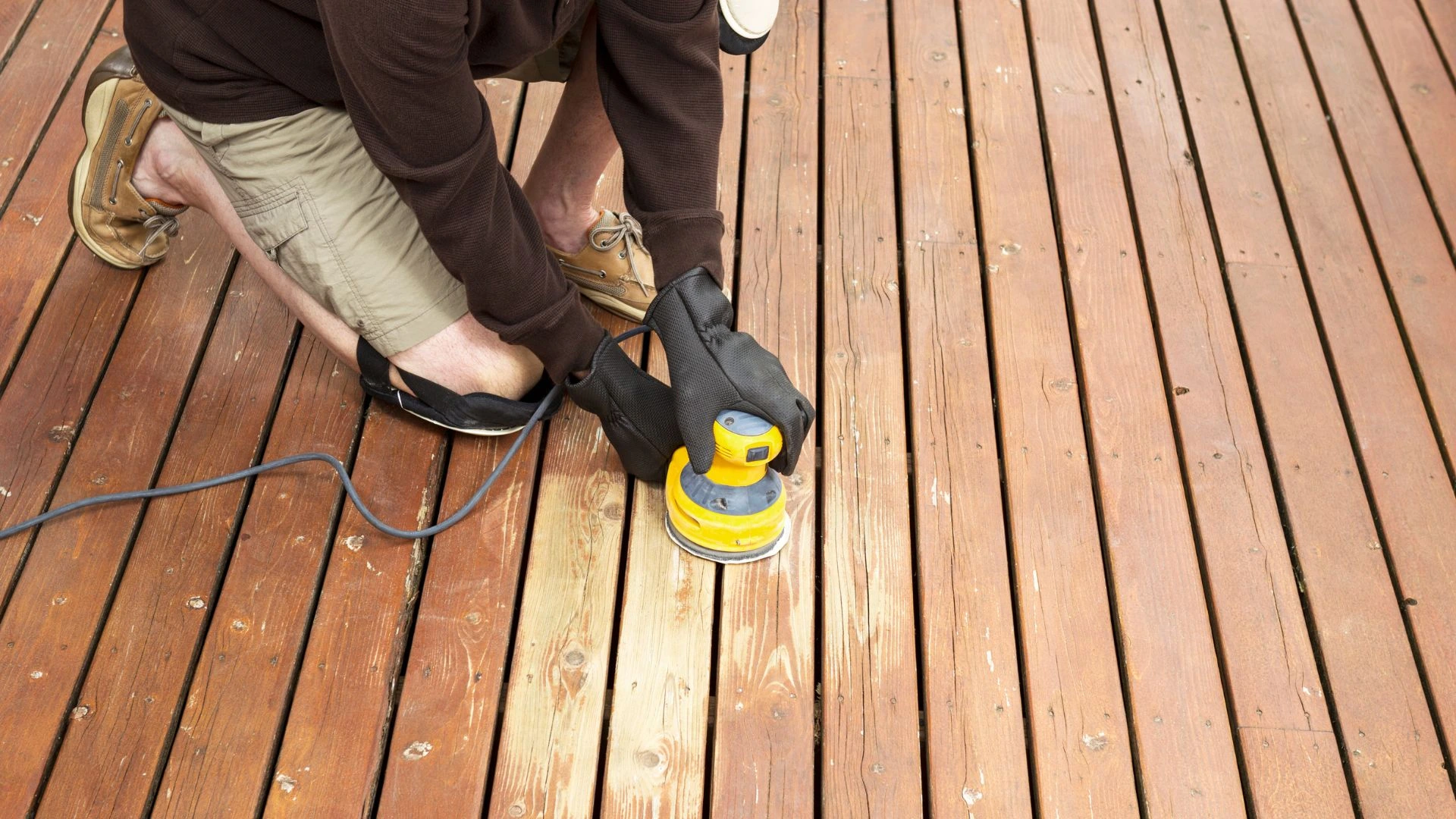
Fastener type matters. Face screwed boards come up easily. Hidden fastener systems mean releasing the clips, which usually requires lifting adjacent boards too, so a single board repair becomes a three board repair in labor terms.
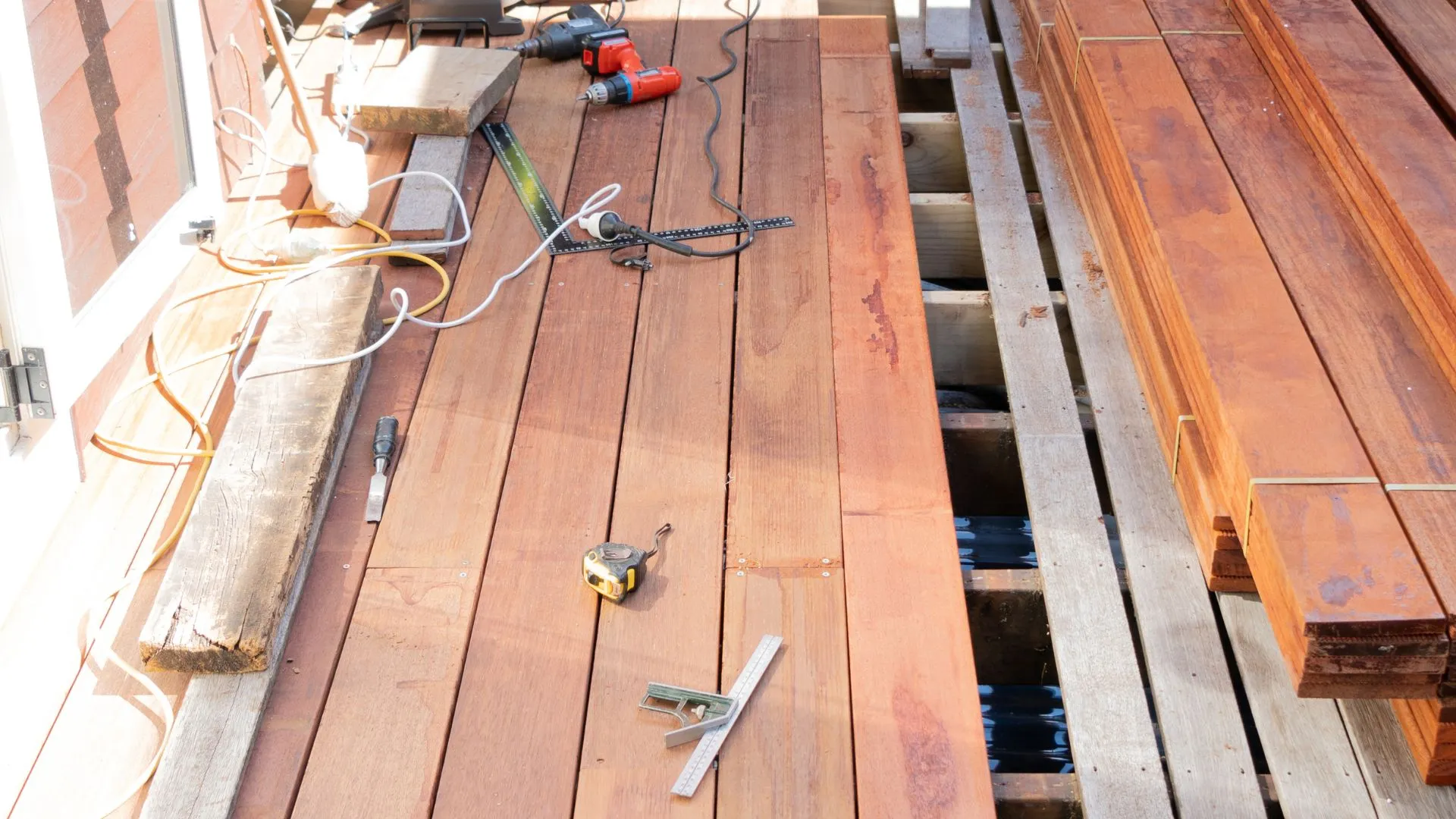
Rotted deck boards removed and replaced on a wood deck in north San Antonio
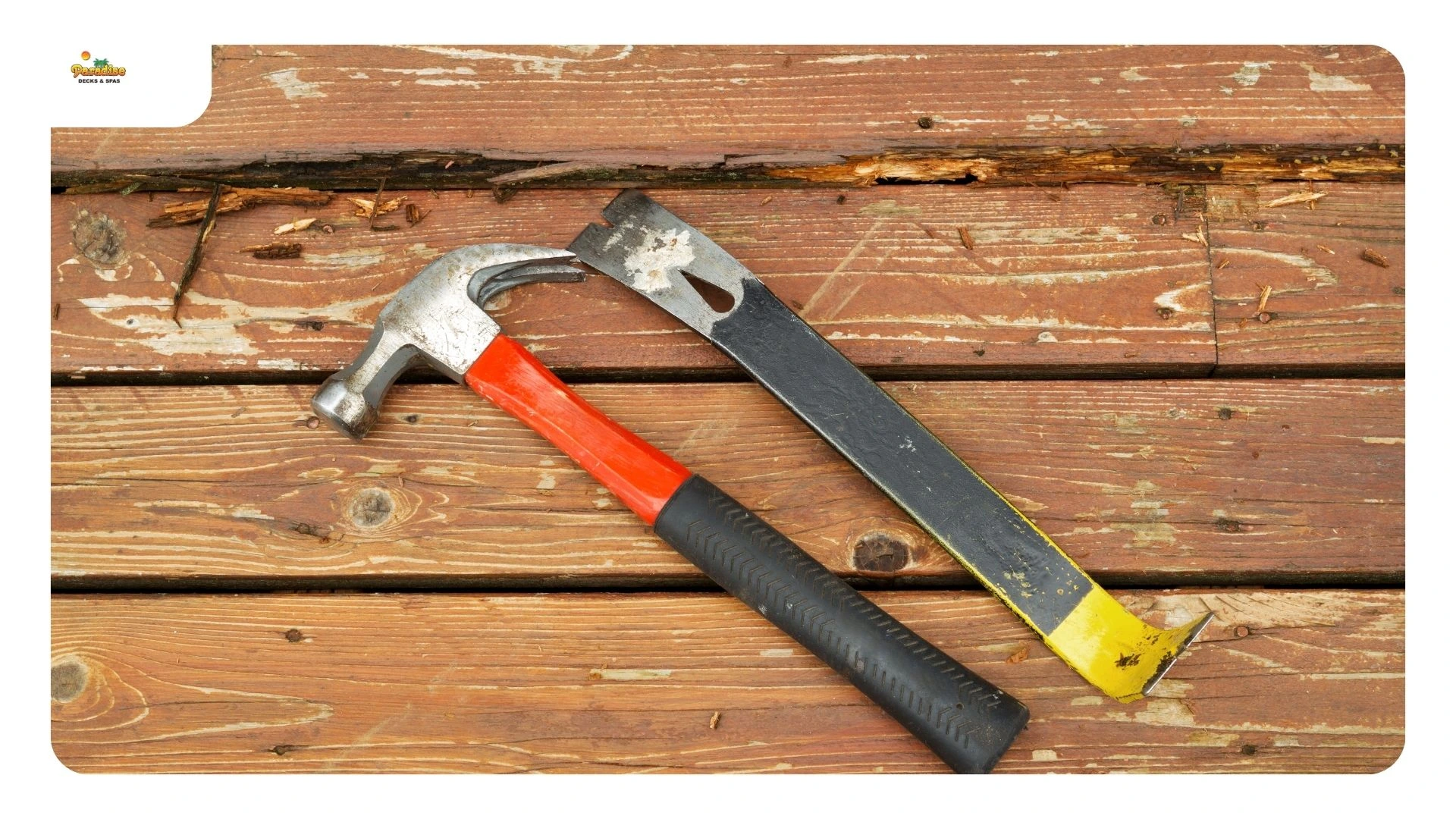
A wobbly railing is the most common call we get, and the cause is almost always the same. The posts were fastened to the decking surface rather than anchored into the structural framing beneath it. Decking boards are not structure. They were never going to hold a post that people lean on.
That is fixable without rebuilding the railing, as long as the posts and balusters themselves are sound. The post gets re-anchored into the frame with proper base hardware, and blocking gets added between joists where the post lands. Our deck construction page covers how railing posts should be anchored in the first place.
A railing section needs rebuilding rather than repairing when the posts are rotted at the base, when balusters have gaps wide enough to fail a safety check, or when the height falls short of what the deck’s elevation requires. Those are not adjustments, they are replacements.
Worth knowing: railing height requirements step up with deck height, and a railing that was adequate on a low deck is not automatically adequate if the grade beneath it has changed through erosion or landscaping work. On sloped Stone Oak lots that happens more than you would think.
Four checks you can do yourself in ten minutes:
Our guide to deck replacement in Stone Oak covers the full structural triage, what fails first on a Texas deck, and whether repair is still worth paying for once a deck passes fifteen years. The short version: the surface wears out long before the frame does, and once a repair estimate passes roughly half the cost of a rebuild, rebuilding is the better spend.
Usually not, and this is where a lot of money gets wasted on worry.
Like for like repair is generally maintenance. Swapping damaged boards, replacing balusters, re-fastening hardware, repairing stair treads. None of that changes the structure.
Permits enter the picture when the work becomes structural replacement or alteration: replacing posts or beams, rebuilding framing, changing the deck’s size, height or footprint, or reworking the ledger connection. Which application applies then depends on the deck’s size and story count, as the city’s residential deck permit bulletin sets out.
Separately, most Stone Oak HOAs do not review a repair that restores what was already approved, but they often do review anything that changes appearance, including a railing style change or a different decking color. We flag that at quoting rather than letting it surface halfway through.
We work out of our Perrin Beitel showroom, roughly twenty minutes from most of Stone Oak, and cover both sides of 281 including Sonterra, the TPC Parkway corridor, the neighborhoods near Stone Oak Park, and north toward Timberwood Park. We repair decks we did not build, which is most repair work, and we give you a written condition report rather than a verbal list.
See the Stone Oak service area page for everything we handle locally, and our Stone Oak decking company guide for how repair fits alongside design and build work. If the repair turns out to be a rebuild, deck construction and deck design pick it up.
We also work in Bulverde, Boerne, Helotes and Alamo Heights, with fourteen communities on the full service area list. The full range sits on the custom decks page.
What does deck repair cost in Stone Oak?
Most repairs land between $400 and $2,500. Board replacement runs $25 to $75 per board, railing re-anchoring $150 to $450, a post replacement $350 to $900, and a ledger repair $900 to $2,800. Most contractors carry a minimum visit charge, so grouping small jobs into one call costs considerably less than separate visits.
Can individual boards be swapped without redoing the deck?
Yes, and it is the most common repair we do. Two complications: the joist underneath a rotted board usually took the same water and needs probing first, and a new board will not match weathered neighbours for a season or two. On composite more than roughly eight years old, the original color may be discontinued, so availability gets checked before quoting.
How do you tell when a deck has become unsafe to use?
Probe posts and joist ends with a screwdriver for soft wood, push the railing firmly and watch for movement, check the ledger where the deck meets the house for any gap or rust streaking, and walk the deck feeling for bounce or sway. Ledger movement is the one to stop using the deck over.
What fails first on a Texas deck?
The surface, by a wide margin. Decking and railing run 10 to 15 years in full San Antonio sun, while framing sits shaded and drier underneath and lasts 15 to 25, and footings longer still. That is why so many repairs are surface repairs on a structurally sound deck.
Is repair worth paying for on a deck over fifteen years old?
It depends on where the damage is, not the age. Surface damage on a sound frame is worth repairing at any age. Structural damage at fifteen years usually is not, because you are spending real money to extend something near the end of its life with no new warranty. Once a repair estimate passes about half the cost of a rebuild, rebuild.
Paradise Decks & Spas
Adress:10615 Perrin Beitel, Suite 604 San Antonio, TX 78217
Phone: (210) 496-3325
Email: info@paradisedecksandspas.com
Hours: Monday to Friday 9:00 AM to 5:00 PM · Saturday 9:00 AM to 4:00 PM · Sunday Closed
Repairing decks across Stone Oak and north San Antonio, including Sonterra, the TPC Parkway corridor, Timberwood Park, Bulverde, Boerne, Helotes and Alamo Heights.