
Usually yes, and the crossover is around year eight to twelve. Composite decking costs roughly two to three times what pressure treated pine costs to install, then costs almost nothing to keep, while a wood deck in Stone Oak needs refinishing every two to three years. Paradise Decks & Spas installs both across Stone Oak and will tell you when wood is the better call.
By Rick Hogue, Founder & Lead Deck Specialist · Last updated October 2026
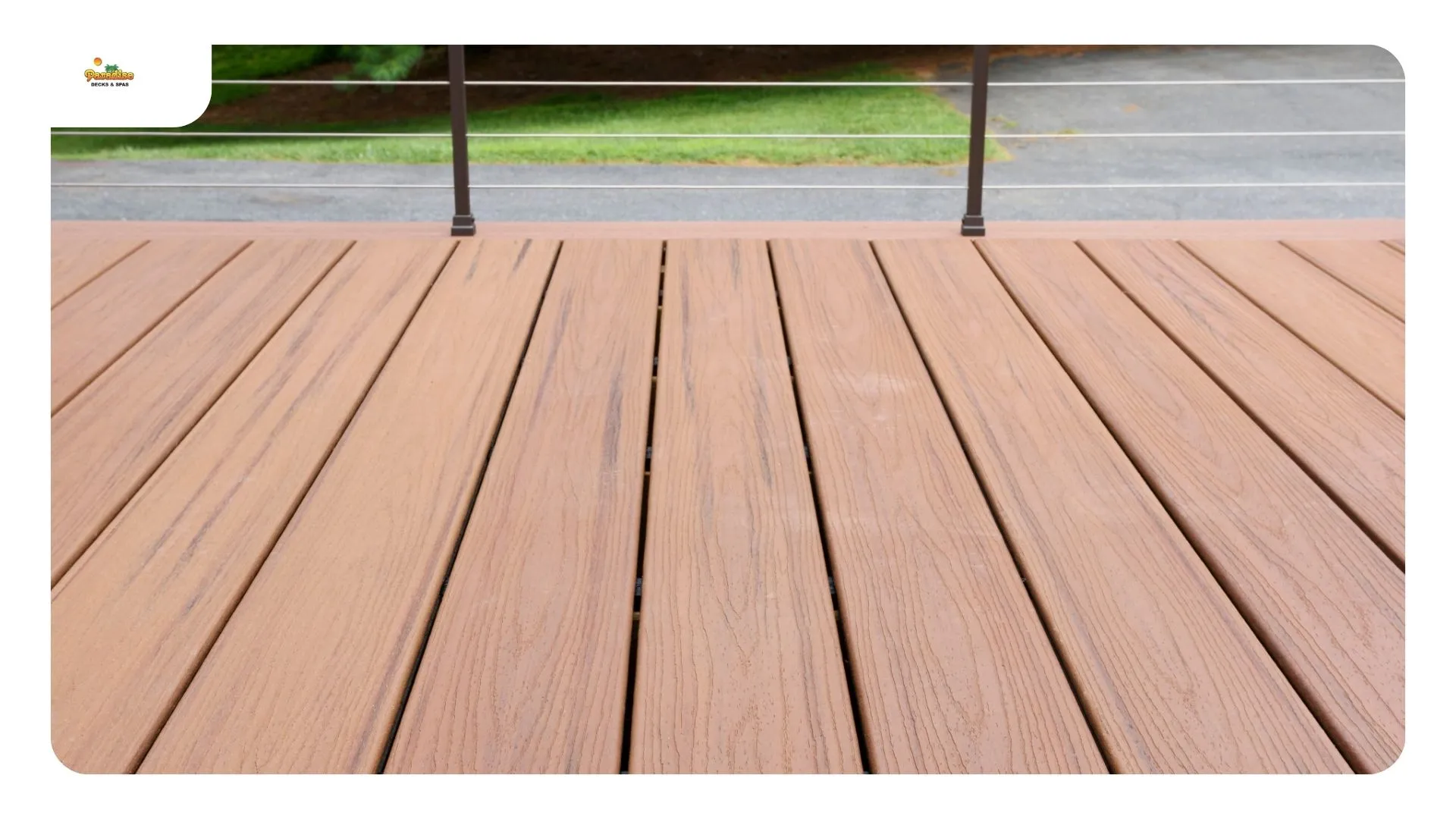
Comparing sticker prices gets this decision wrong, because the two materials spend money on opposite schedules. Wood is cheap to build and expensive to own. Composite is the reverse.
What a Stone Oak homeowner actually pays over time, as a comparison rather than a quote:
| Pressure treated pine | Capped composite | |
|---|---|---|
| Upfront material cost | Baseline | Roughly 2 to 3 times the baseline |
| Refinishing | Clean, sand and reseal every 2 to 3 years | None |
| Board replacement | Some boards by year 8 to 12, more after | Rare, and individually replaceable |
| Fastener maintenance | Popped screws reset periodically | Hidden fastener systems stay put |
| Annual care | Inspection plus seasonal cleaning | One wash |
| Realistic service life here | 10 to 15 years with upkeep | 25 to 30 years, warranty backed |
The pattern on a Stone Oak deck looks like this. Wood starts cheaper and stays cheaper for the first several years. Each refinishing cycle narrows the gap, and somewhere around year eight to twelve the cumulative spend crosses over. After that wood keeps costing money and composite mostly does not. If you are moving in four years, wood can be the rational choice. If this is the house you stay in, composite usually wins on arithmetic alone, before anything about appearance or comfort enters into it.
Two honest caveats. Refinishing is a cost you can defer, and plenty of people do, which is why so many San Antonio wood decks look grey and furry by year six. And composite framing still uses pressure treated lumber underneath, so the structure under either deck is the same and ages the same way.
For which specific composite product fits which deck, our composite deck installation guide covers brand selection, and the Trex versus TimberTech comparison runs the two main lines head to head. This page is about whether to go composite at all.
Yes, in dark colors, in full sun. This is the real limitation and no brand claim changes the physics.
A dark composite board in direct Stone Oak afternoon sun gets hot enough that barefoot is unpleasant, and the denser the board, the more heat it holds after the sun moves off. Three things move the number meaningfully:
Where composite is the wrong answer is a pool surround in full sun, because that is the one place people are guaranteed to be barefoot and wet. Our pool deck guide covers what we recommend there instead. For a raised deck off the back of the house, which is what most Stone Oak projects are, composite in a sensible color with shade over the dining zone is entirely comfortable.
Capped composite is a 25 to 30 year material here, and the cap is why.
Older uncapped composite deserved its reputation. The polymer and wood flour mix was exposed directly to UV, and it faded, stained and grew mildew. Capped composite wraps the board in a polymer shell that the weather never gets through, and that shell is what manufacturer fade and stain warranties cover, commonly for 25 to 50 years depending on the line. If anyone quotes you uncapped composite in 2026, that is the thing to question, not composite as a category.
On fading specifically: expect a modest, even lightening in the first several months as the finish settles, then stability. That initial shift is normal and it happens uniformly, so it does not read as damage. What manufacturers warrant against is significant color loss beyond a stated threshold, not zero change.
San Antonio does test it. We get strong UV for a long season, and surface temperatures swing widely between a July afternoon and a January morning. That thermal cycling is exactly why board gapping is not optional. Composite expands and contracts more than wood along its length, so end gaps and side spacing have to follow the manufacturer’s installation specification rather than a carpenter’s habit. Trex’s own installation guidance covers the gapping and fastening requirements, and getting them wrong is what causes buckling and voids the warranty. We install to spec for that reason, not out of caution.
More than the brochures suggest and far less than wood. Low maintenance is accurate. No maintenance is marketing.
What a composite deck in Stone Oak genuinely needs:
That is a morning of work a year. A wood deck of the same size is a weekend of sanding and sealing every two to three years, plus the cost of materials or a contractor.
Four local factors come up on nearly every project here.
Live oak canopy. It cuts the heat question down substantially, which widens the color options. It also means more organic debris on the deck year round, which is the upkeep note above.
Limestone subgrade. Thin soil over Edwards limestone means footings get drilled into rock. Good bearing and little settlement, but the excavation line is higher than it would be on clay. Our Stone Oak decking company guide covers the footing side.
Sloped lots and multi level layouts. A tiered deck means more stair treads and more fascia, and composite stair treads and fascia are a meaningful share of a composite material budget. Tier count drives cost more than deck area does, which is covered in our guide to sizing a Stone Oak deck.
HOA architectural review. Most Stone Oak subdivisions require submitting material and color before work starts. Composite color names are not always obvious to a review committee, so we submit physical samples rather than a product sheet.
Composite goes in alongside everything else we do, from deck construction and deck design through to deck lighting and outdoor living structures.
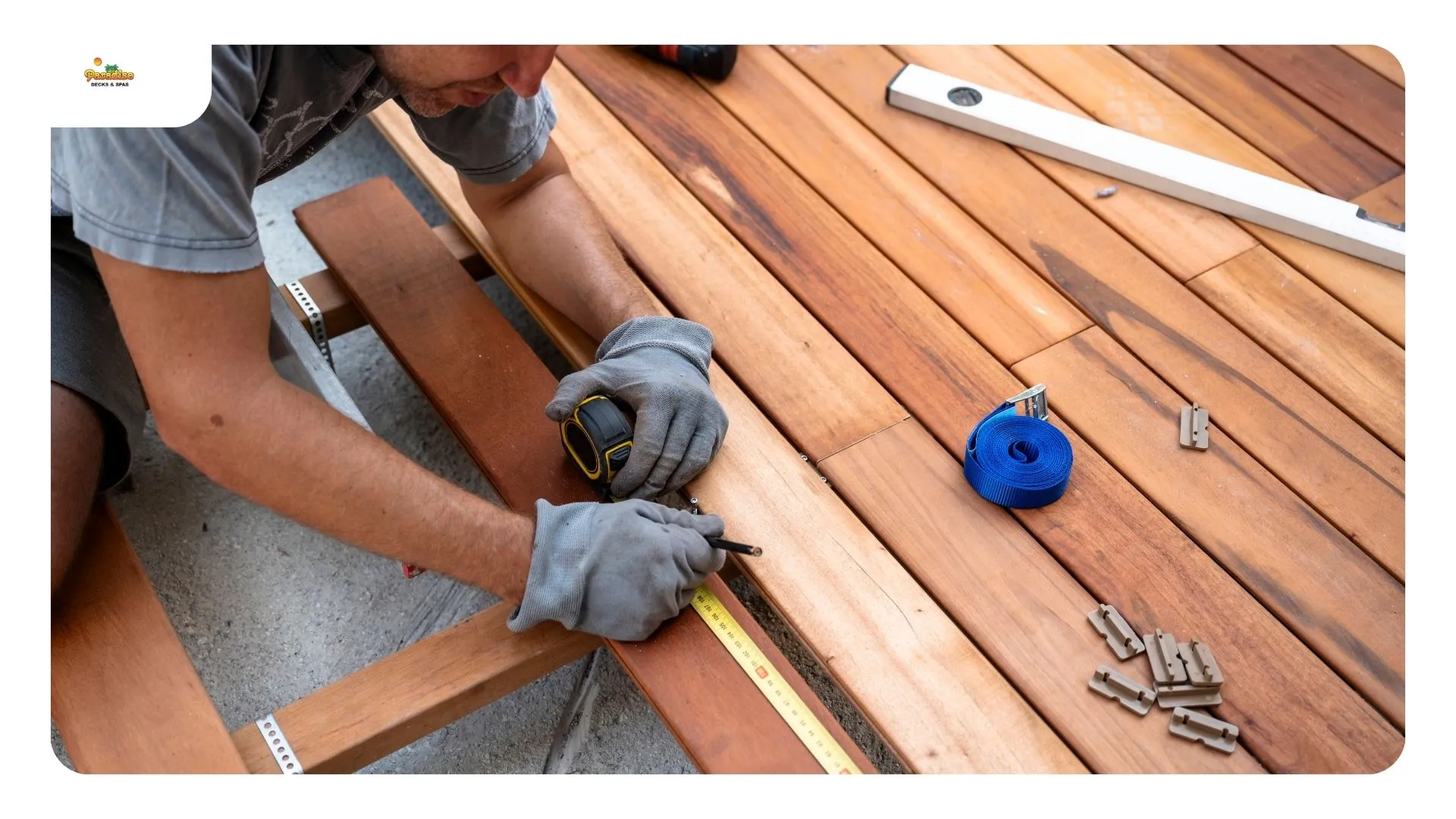
We work from the Perrin Beitel showroom across Stone Oak on both sides of 281, including Sonterra, the TPC Parkway corridor, the neighborhoods near Stone Oak Park, and north toward Timberwood Park. Composite selection starts with sun exposure on your specific deck, because a shaded north facing deck and a west facing deck with no cover are different problems with different right answers.
See the Stone Oak service area page for everything we handle locally. We also work in Bulverde, Boerne, Helotes and Alamo Heights, with fourteen communities on the full service area list. The complete range sits on the custom decks page.
Does composite decking get too hot to walk on in Texas?
In dark colors in full sun, yes. Color is the biggest and cheapest lever, heat mitigating product lines help measurably, and overhead shade beats both combined. For a covered or partly shaded raised deck, composite is comfortable. For a pool surround in full sun, we recommend a cooler hardscape surface instead.
How long does composite decking last in San Antonio sun?
Capped composite is a 25 to 30 year material here, with manufacturer fade and stain warranties commonly running 25 to 50 years by product line. The polymer cap is what delivers that, which is why uncapped composite is worth questioning. Pressure treated pine runs 10 to 15 years with consistent upkeep.
Is composite worth the extra spend over pressure treated wood?
If you are staying in the house, usually. Composite costs roughly two to three times as much to install, then needs almost nothing, while wood needs refinishing every two to three years in this climate. Cumulative spend typically crosses over around year eight to twelve. If you are selling within a few years, wood can be the better financial choice.
Does composite decking fade under intense sun?
Capped composite lightens modestly and evenly over the first several months, then holds. Because the change is uniform it reads as settling rather than damage. Manufacturer warranties cover significant color loss past a stated threshold, not zero change. Older uncapped composite faded badly, which is where the material’s reputation came from.
How much upkeep does composite decking actually need?
One wash a year, plus clearing leaf litter. In Stone Oak that last part matters, since live oaks drop year round and wet leaf mats are how mildew starts on any decking. Tannin marks from oak leaves clean off capped boards. Shaded north facing sections need watching. Total effort is about a morning a year.
Comparing materials for your deck? Book a free on site consultation and we will walk your yard, check the sun exposure, and give you a written quote in both materials so you can see the difference.
Paradise Decks & Spas
Adress:10615 Perrin Beitel, Suite 604 San Antonio, TX 78217
Phone: (210) 496-3325
Email: info@paradisedecksandspas.com
Hours: Monday to Friday 9:00 AM to 5:00 PM · Saturday 9:00 AM to 4:00 PM · Sunday Closed
Installing composite decking across Stone Oak and north San Antonio, including Sonterra, the TPC Parkway corridor, Timberwood Park, Bulverde, Boerne, Helotes and Alamo Heights.