
Light colored travertine, shellstone and acrylic cool deck coatings run coolest underfoot in San Antonio sun, often 30 to 40 degrees below dark concrete or dark composite. Paradise Decks & Spas handles pool deck installation across Stone Oak, and surface temperature is the decision that determines whether the deck gets used in July.
By Rick Hogue, Founder & Lead Deck Specialist · Last updated October 2026
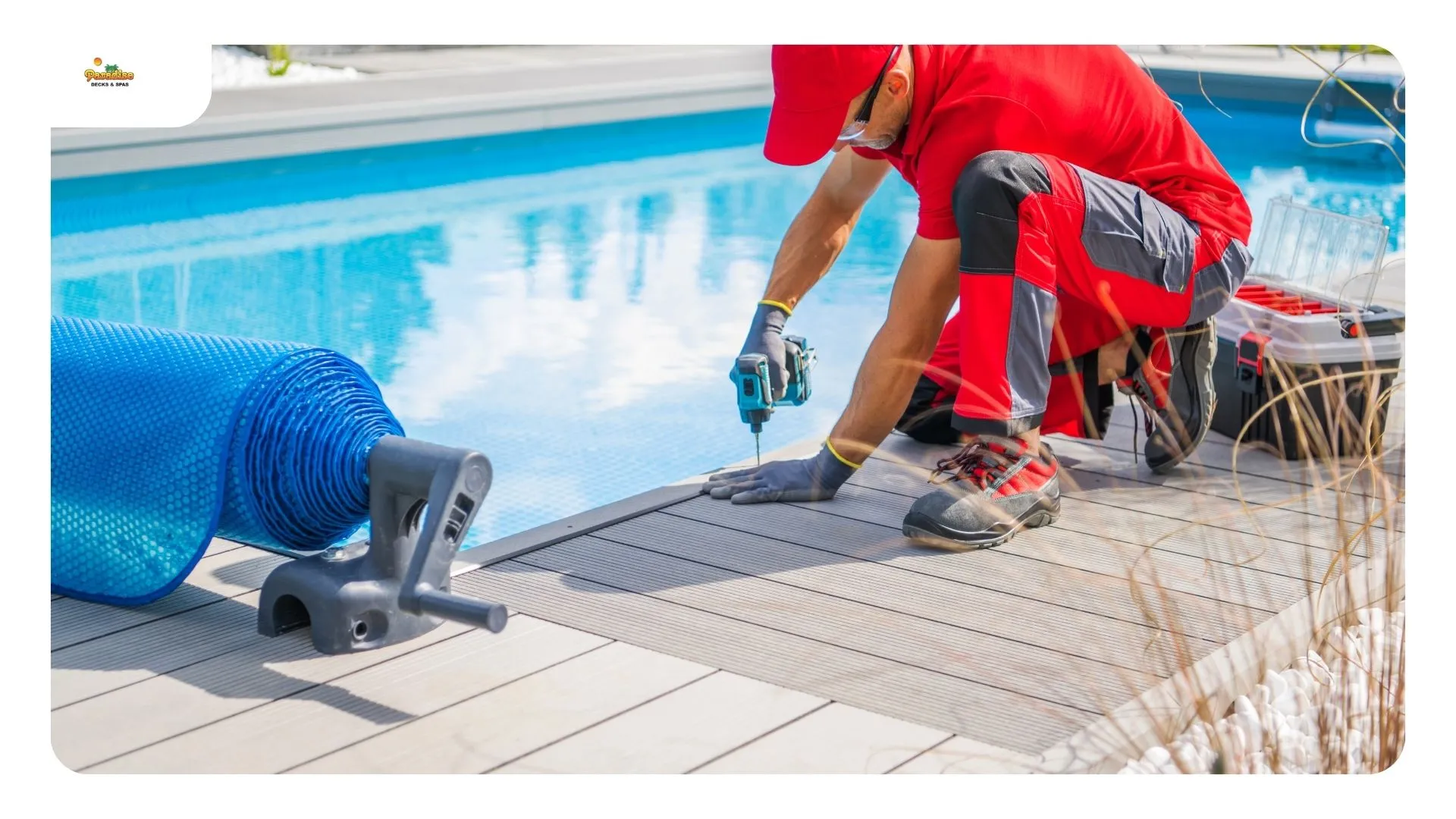
Hot enough to end the afternoon. On a 100 degree day with full sun, a dark surface in a Stone Oak backyard can reach 140 to 160 degrees. Skin starts to burn on contact well below that, which is why people hop from towel to towel instead of walking.
Air temperature is not the variable that matters. Color and material are. Two decks side by side in the same yard, same sun, can differ by 40 degrees purely on how much light the surface reflects and how fast the material sheds heat. Light surfaces reflect more and store less. Dense dark surfaces absorb and hold.
This is the part worth being straight about. We install a lot of composite decking, and composite is excellent material for a raised deck. Around a pool, dark composite is one of the hottest surfaces you can choose, because the same density that makes it durable makes it hold heat. If the pool surround is going to be composite, the color selection stops being a style decision and becomes a comfort decision.
For most Stone Oak pools, a light colored travertine or shellstone paver, or a broom finished concrete slab in a light tone. Here is how the realistic options compare on the three things that actually matter around water.
| Material | Heat underfoot | Wet traction | Installed cost per sq ft | Notes |
|---|---|---|---|---|
| Travertine pavers | Coolest | Excellent, naturally porous | $18 to $30 | The default premium choice here |
| Shellstone / limestone | Coolest | Very good | $16 to $28 | Reads as hill country, light tone |
| Acrylic lath cool deck coating | Cool | Good, textured by design | $6 to $12 over sound concrete | Resurfacing option, not structural |
| Broom finished concrete, light | Moderate | Good if broomed across traffic | $8 to $15 | Best value, color matters a lot |
| Concrete pavers | Moderate | Good | $14 to $24 | Individually replaceable |
| Stamped and sealed concrete | Warm to hot | Poor if glossy sealed | $12 to $22 | Only with a grit additive in the sealer |
| Capped composite | Hot in dark tones | Good, embossed grain | $30 to $60 | Right for raised decks, risky as a surround |
Two notes on that table. Travertine costs more per square foot and pays it back every summer afternoon, which is why it dominates pool surrounds in this market. And stamped concrete is where most pool decks go wrong, because the sealer that makes the pattern look good is usually what makes the surface slick.
Which pool deck material is safest underfoot when wet? Texture beats material. A broom finished slab brooms perpendicular to the direction people walk. Travertine and shellstone bring their own texture because they are porous. Composite brings an embossed grain. What ruins any of them is a glossy film sealer, so if a sealer goes down, it needs a grit additive mixed in. We would rather leave a surround unsealed than seal it slick.
Plan on 3 to 4 feet minimum on all sides, 4 to 6 feet anywhere two people pass, and 8 to 12 feet on whichever side holds loungers or a table. Below 3 feet a surround stops being usable and becomes a ledge.
Before any of that, there is a hard local limit. The City of San Antonio sets residential swimming pool and spa setbacks at 5 feet to the side and 5 feet to the rear property line, and requires the work to conform to the adopted International Swimming Pool and Spa Code, as the residential pool and spa permit application sets out. On the typical Stone Oak lot, where the house sits deep on the pad and the rear yard is 25 to 40 feet, that setback is frequently what decides the surround width, not preference.
Three more things that get missed:
If the pool is part of a larger backyard plan, our guide to sizing and shaping a Stone Oak deck covers how a surround interacts with the rest of the layout. A pool deck is a perimeter, not an open field, and it gets measured differently.
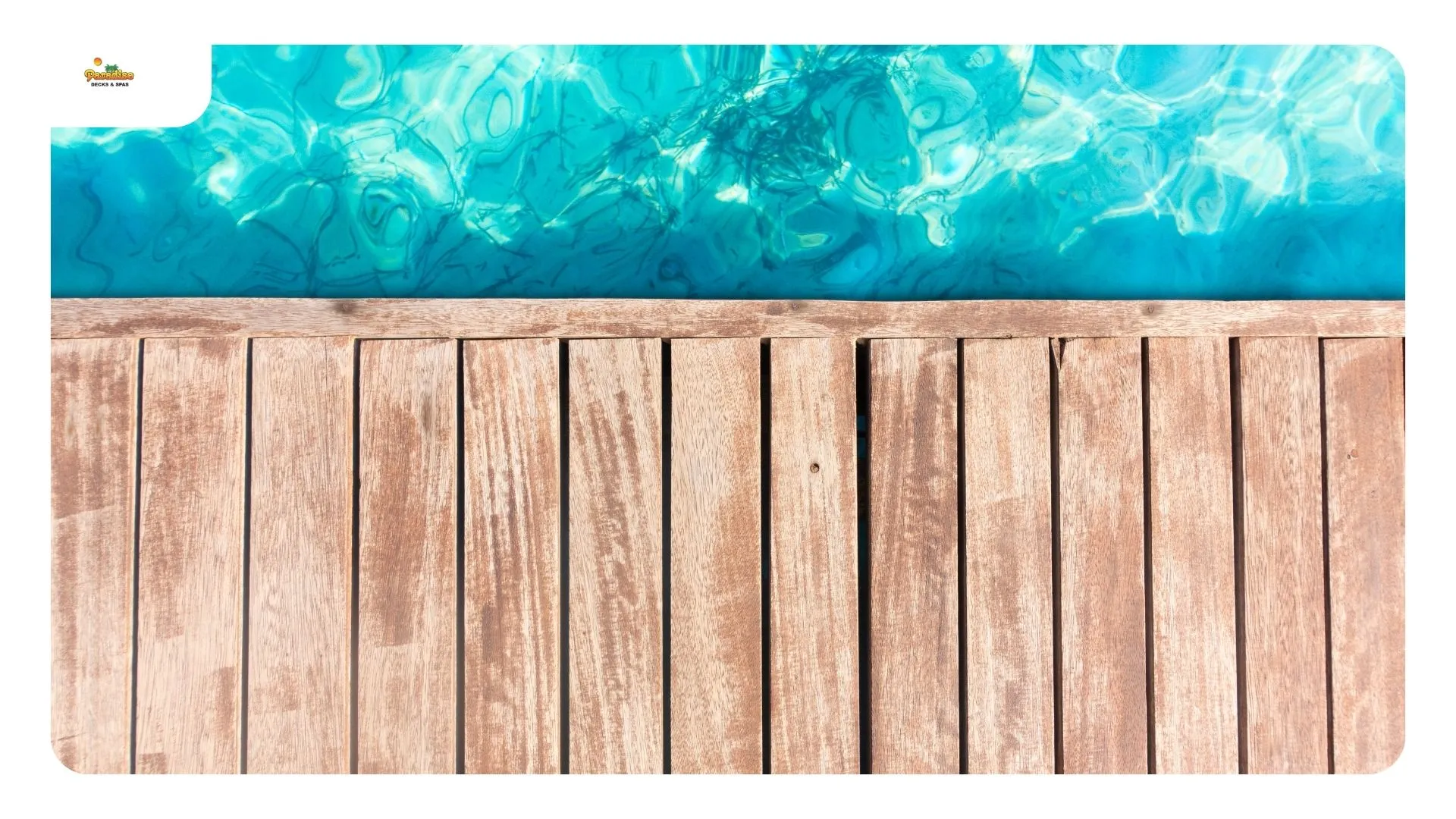
Most Stone Oak pool surrounds land between $7,000 and $22,000, driven by square footage and material.
A standard surround around an average residential pool runs 600 to 900 square feet. At that size:
Add for demolition of an old surround, for drainage work, and for any retaining where the lot falls away. These are typical north San Antonio ranges rather than a quote, and the only real number comes from measuring your surround and checking what is under it.
Yes, and most of our pool deck installation work is exactly that: a pool that was installed with a minimal surround, or a 20 year old slab that has cracked and heaved.
The things we look at first are the coping and the bond beam. If the existing coping is sound, new decking can be brought up to it cleanly. If the coping is failing, it gets replaced as part of the job, because tying new work to a bad edge just moves the problem. Expansion joints matter more here than almost anywhere, since the joint between the pool structure and the deck has to be free to move independently. Pouring tight to a pool shell is how decks crack.
On timeline:
Permit review time sits on top of that where a permit applies, which is one reason we handle the filing rather than leaving it with the homeowner.
Four local factors move the scope on these properties.
Impervious cover. This is the one that surprises people. Stone Oak sits inside the Edwards Aquifer Recharge Zone overlay, and a solid poured pool deck counts fully toward impervious cover in a way an open joint wood deck on piers does not. On a lot already near its allowance, that can push the design toward pavers set with permeable joints, or toward a smaller surround than planned. Our Stone Oak decking company guide covers how the overlay works during permitting.
Limestone subgrade. Good news and bad news. Thin soil over Edwards limestone gives excellent bearing, so properly prepared pool decks here settle far less than they do on the clay heavy ground south and east of the city. The cost is excavation, because removing material means breaking rock rather than digging soil.
Terraced lots. Many Stone Oak pools sit on cut and fill pads with the yard falling away beyond. Extending a surround on the downhill side often means a retaining element, which is a structural line item rather than a decking one.
HOA architectural review. Most Stone Oak subdivisions run an approval process for exterior work. Material and color submittals are routine but they take time, so they go in early rather than the week before we mobilize.
Pool decking is part of the wider outdoor living work we do, and if the surround is going in alongside a raised deck or a shade structure, deck construction and the hardscape run on one schedule.
We work out of our Perrin Beitel showroom and cover Stone Oak on both sides of 281, including the Sonterra area, the TPC Parkway corridor, the neighborhoods near Stone Oak Park, and north toward Timberwood Park. A pool deck quote starts with measuring the existing surround, checking coping and joint condition, and confirming where the lot sits on setbacks and cover.
The Stone Oak service area page lists everything we do locally. Nearby we also work in Bulverde, Boerne, Helotes and Alamo Heights, with the full service area list covering fourteen communities. The rest of what we build sits on the custom decks page, and layout work starts at deck design.
Which pool deck surface stays coolest in San Antonio sun?
Light colored travertine and shellstone, followed by acrylic lath cool deck coatings. These commonly run 30 to 40 degrees cooler underfoot than dark concrete or dark composite on a 100 degree afternoon. Color matters as much as material, so a light concrete slab outperforms a dark premium paver.
How much space should surround a pool?
Three to four feet minimum on every side, four to six feet where people pass each other, and eight to twelve feet on the side holding loungers or a table. San Antonio also sets residential pool and spa setbacks at five feet to side and rear property lines, which on a typical Stone Oak lot often decides the width before preference does.
Can a pool deck be added to a pool that is already in?
Yes, and it is the majority of our pool deck installation work. The first checks are coping condition and the bond beam edge. Failing coping gets replaced rather than built against, and the expansion joint between pool structure and deck has to stay free to move, since pouring tight to a pool shell is what cracks decks.
Which pool deck material is safest underfoot when wet?
Texture matters more than material. Broom finished concrete brooms across the direction of travel, travertine and shellstone are naturally porous, and composite carries an embossed grain. The usual failure is a glossy film sealer over stamped concrete, which makes a good surface slick. Any sealer around a pool needs a grit additive.
How long does pool deck installation take?
Poured concrete runs two to three weeks including cure before furniture returns. Pavers and travertine take four to seven working days and are walkable on completion, which is usually the better choice if the pool stays in use. Cool deck resurfacing takes two to four days plus cure. Permit review sits on top where it applies.
Paradise Decks & Spas
Adress:10615 Perrin Beitel, Suite 604 San Antonio, TX 78217
Phone: (210) 496-3325
Email: info@paradisedecksandspas.com
Hours: Monday to Friday 9:00 AM to 5:00 PM · Saturday 9:00 AM to 4:00 PM ·Sunday Closed
Installing pool decks across Stone Oak and north San Antonio, including Sonterra, the TPC Parkway corridor, Timberwood Park, Bulverde, Boerne, Helotes and Alamo Heights.