
Most Stone Oak deck lighting projects run $1,200 to $5,000 installed, which works out to roughly $100 to $250 per fixture for a professional low voltage system. Paradise Decks & Spas designs and installs deck lighting across Stone Oak, and the number that matters is fixture count, not deck size.
By Rick Hogue, Founder & Lead Deck Specialist · Last updated October 2026
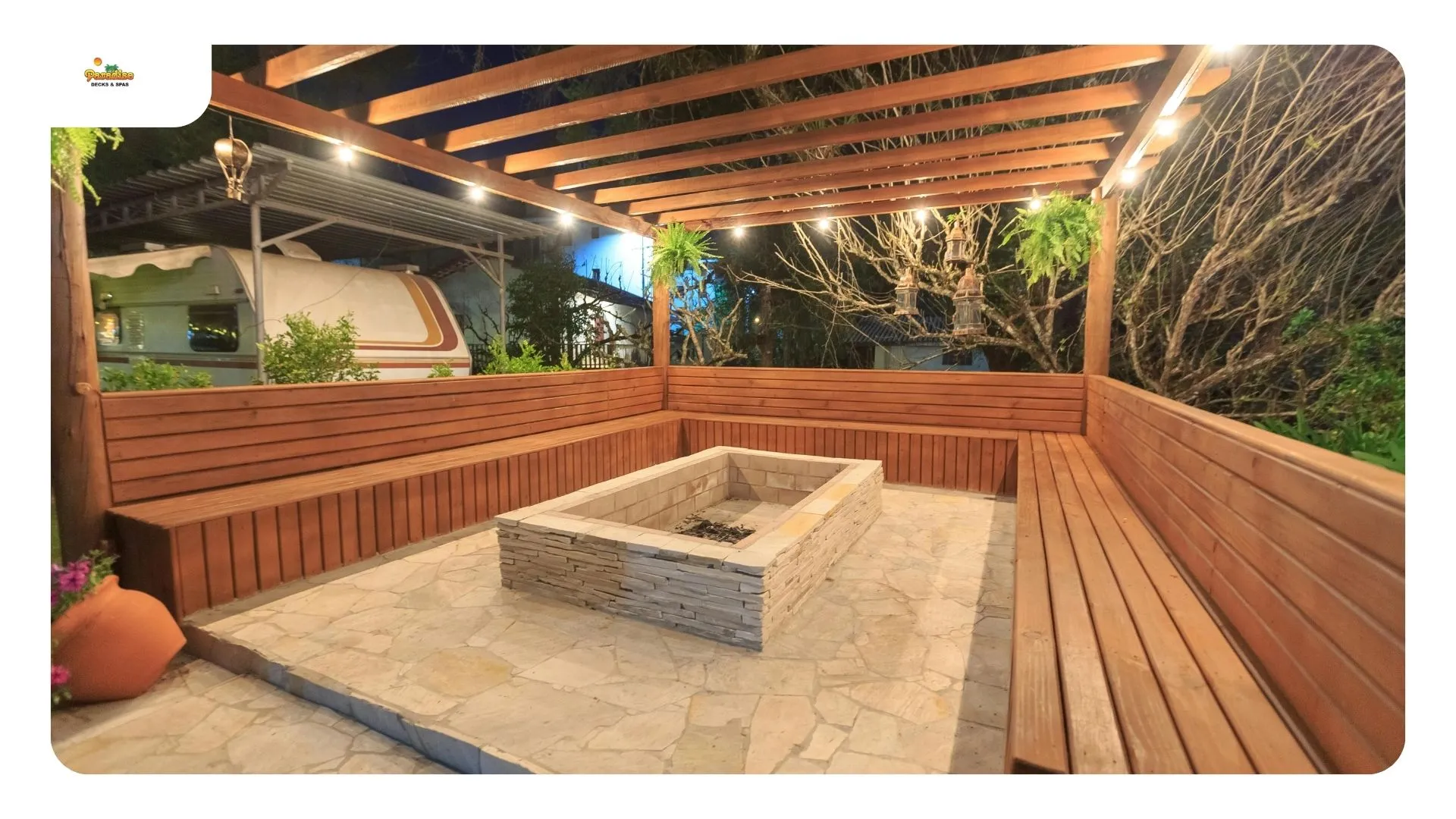
Deck lighting is priced per fixture, not per square foot. A 300 square foot deck with two sets of stairs and a long rail run can easily carry more fixtures than a 600 square foot deck with one step and open edges, so square footage pricing would be meaningless.
Here is what a professionally installed low voltage fixture includes in this market:
| Line item | What it covers |
|---|---|
| The fixture | Riser light, under rail strip section, post cap or recessed floor light |
| Low voltage wire | 12 volt cable run from the transformer, sized to limit voltage drop |
| Sealed connectors | Gel filled or silicone, direct burial rated, at every junction |
| Share of the transformer | Sized to total wattage with headroom for later additions |
| Labor | Layout, routing through or under the frame, mounting, aiming, testing |
| Controls | Timer, photocell, dimmer or app controller, depending on specification |
Typical installed system budgets for Stone Oak decks:
Stair lighting sits at the higher end per fixture, commonly $175 to $600 each installed, because each riser needs its own hole, its own wire run and its own weatherproof termination. Rail and perimeter fixtures are faster per unit.
These are typical ranges for the north San Antonio market. The only accurate number is a written quote against your actual stair count, rail length and access conditions.
On a new build, plan on lighting adding roughly 5 to 12 percent of the deck budget, depending on how many stairs and tiers the layout has.
The important part is when it gets decided. Wire chases, fixture blocking and transformer location cost almost nothing while the frame is open. Everything is accessible, the electrician coordinates once, and routing is a few minutes per run. Add the same fixture count to a finished deck and the identical system costs noticeably more, because the labor shifts from routing wire through open framing to working around finished surfaces.
This is why we settle lighting during deck design rather than treating it as a later upgrade. It also interacts with layout directly. A two tier deck of the kind common on sloped Stone Oak lots has two step banks rather than one, which can mean six to ten more riser fixtures than a single level deck of the same area. Our guide to sizing and shaping a Stone Oak deck covers how tier count gets decided, and the lighting budget follows from it.
If the deck itself is still being built, deck construction and the lighting plan run on the same schedule rather than one waiting on the other.
For anything permanent in Stone Oak, low voltage. Solar has a real place, but it is a short list, and canopy is the reason.
| Solar | Low voltage, 12V | Line voltage, 120V | |
|---|---|---|---|
| Upfront cost | Lowest, $15 to $60 per light | $100 to $250 per fixture installed | Highest, licensed electrician required |
| Wiring | None | 12V cable, no trenching depth required | Conduit and permitted circuits |
| Output consistency | Varies by day and season | Constant | Constant |
| Dimming and zoning | Rarely | Yes, through transformer and controller | Yes |
| Typical lifespan | 1 to 3 years, battery limited | 10 years plus with quality housings | Longest |
| Best for | Renters, temporary layouts, no wire access | Risers, rails, perimeter, accent | Pergola downlights, fans, outlets |
The canopy point matters more here than almost anywhere. Stone Oak backyards are full of mature live oaks, and a solar fixture under a live oak never reaches a full charge, because the canopy does not drop its leaves in winter the way a deciduous tree does. The light that most needs to work in December is the one charging least. Add Texas summer heat, which shortens lithium battery life, and solar fixtures on a shaded Stone Oak deck commonly need replacing within two seasons. Three replacement cycles costs more than doing it once in low voltage.
Line voltage comes up whenever the plan includes a pergola downlight, a ceiling fan or a new exterior outlet. In Texas, anyone performing electrical work must be licensed, with limited statutory exemptions, as the state’s electrical licensing rules set out. That is a real line on the estimate, and it is a reason to settle the overhead plan early rather than discovering mid project that a circuit is needed.
These two categories account for most of the fixture count on a typical Stone Oak deck, and they price very differently.
Deck stair lighting. Cost scales with riser count, not stair width. The decisions that move the number:
Outdoor railing lights. Three approaches, roughly in order of cost per linear foot: a continuous strip hidden in a rail channel, recessed side mount lights spaced along the rail, and post cap lights. Strip gives the most even wash and prices by the foot. Post caps price per post and are the cheapest way to cover a long perimeter, though they need to be low output and frosted to stay comfortable.
For where each of these should physically go, our guide to lighting a deck without glare covers placement, layering and color temperature in detail. This page is about what those choices cost.
Five local factors move the estimate on these lots.
Tier count. Multi level decks need riser lighting at every step bank and usually a separate control zone per tier. More tiers, more fixtures, more wire.
Distance to power. The transformer has to land on a suitable exterior GFCI outlet. On greenbelt and canyon lots where the deck sits well off the back of the house, longer runs mean more cable and heavier gauge wire to hold voltage at the far fixtures. If there is no usable outlet near the deck, add the electrician.
Oak canopy. Moonlighting mounted high in a live oak is the single biggest visual payoff available on these lots, and also the most labor per fixture, because it is ladder work with careful aiming. Budget it as a feature, not a filler.
Fixture housing material. Die cast aluminum, brass and copper cost more than plastic upfront and considerably less over ten years, because heat dissipation is what determines whether an LED reaches its rated life on a deck surface sitting at 100 degrees. Replacing a cheap system twice costs more than buying the good one once.
Fixture selection constraints on the far north side. Parts of north San Antonio near Camp Bullis fall under the city’s military lighting overlay, which narrows fixture choice to shielded, downward aimed types. That rarely raises the price much, since good deck lighting is shielded and downward aimed anyway, but it does remove some catalog options. The glare free lighting guide explains the overlay zones.
Yes, and retrofits are a large share of what we do. The cost question is the one worth answering here: expect a retrofit to run roughly 20 to 40 percent more than the identical system installed during the original build.
The swing factor is access underneath. An open frame deck with crawl space is close to the low end of that range, because wire runs along the joists the same way it would during construction. A deck with sealed skirting and no access is at the high end, since wire has to be surface routed along the frame and concealed carefully.
Rail and riser lighting retrofit most cleanly. Recessed floor lights mean drilling installed decking, which is possible but exposes cut edges on composite, so we usually steer retrofits away from them.
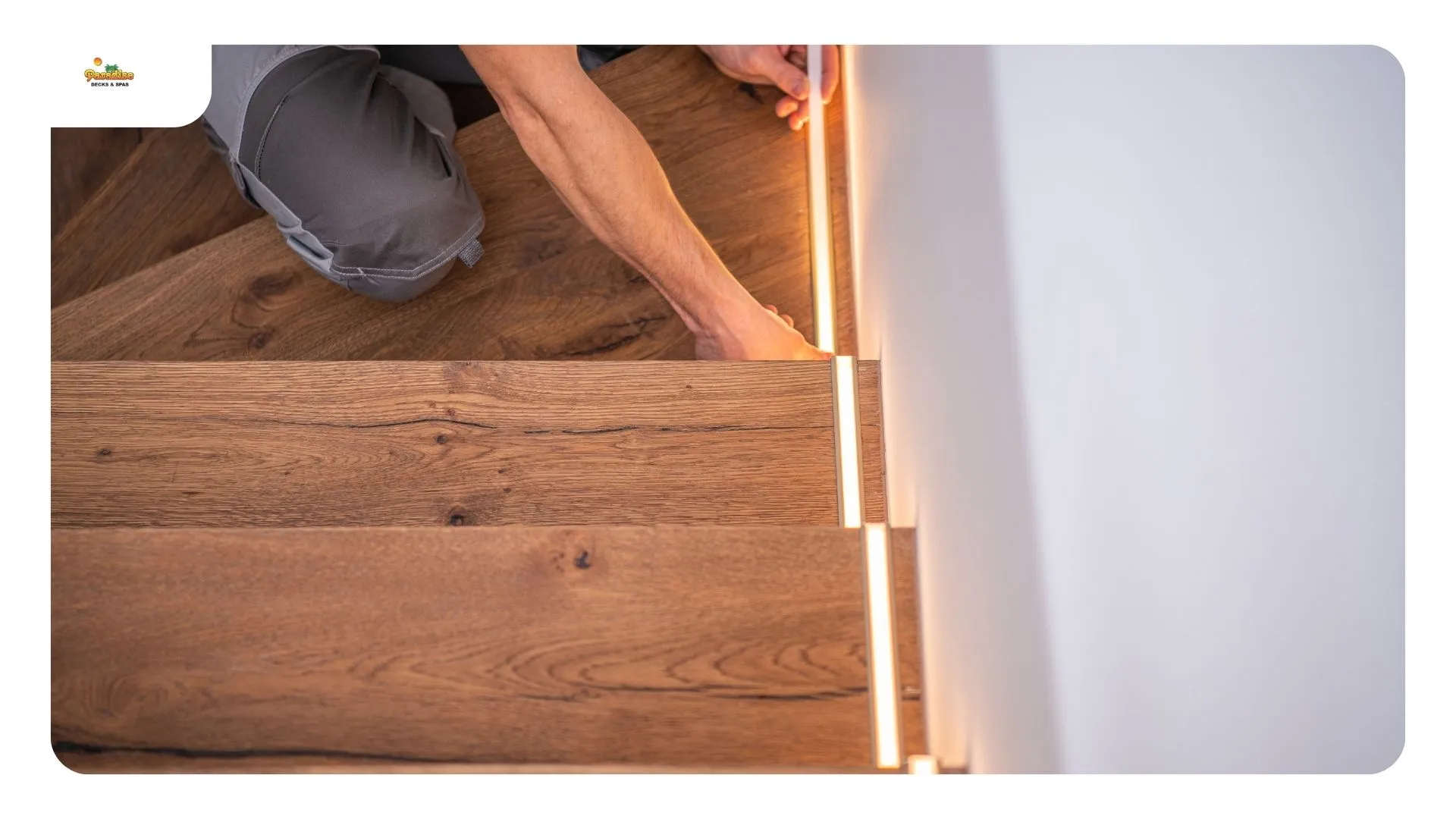
We design and install from our Perrin Beitel showroom and cover Stone Oak on both sides of 281, including the Sonterra area, the TPC Parkway corridor, the neighborhoods around Stone Oak Park, and north toward Timberwood Park. A lighting quote starts with a walk of the deck after dark where possible, counting risers and rail feet and finding the nearest usable outlet, because those three numbers are the estimate.
The Stone Oak service area page covers everything we do in the neighborhood. Nearby communities we work in include Bulverde, Boerne, Helotes and Alamo Heights, and the full service area list runs to fourteen communities. Lighting sits alongside the rest of what we build on the custom decks and outdoor living pages.
Can lighting be added to a deck that is already built?
Yes. Low voltage wire runs along the underside of the joists and up into fixtures without disturbing the deck surface. Expect a retrofit to cost roughly 20 to 40 percent more than the same system installed during the original build, with access underneath being the main variable. Rail and riser lighting retrofit most cleanly.
What deck lighting holds up to Texas heat and storms?
Die cast aluminum, brass or copper housings rather than plastic, because heat dissipation determines whether an LED reaches its rated life on a deck sitting at 100 degrees. Every connection should be a sealed, gel filled or silicone connector rated for direct burial, since humidity and irrigation overspray corrode ordinary splices within a couple of seasons.
Where should lights go for deck stairs and railings?
Stairs need light on the tread edge, from a recessed riser light or a shielded strip under the nosing, and this is the one layer that should run every night. Railings take a hidden channel strip, recessed side mount lights, or low output frosted post caps. Everything aims down at a surface rather than out toward seated eye level.
Is low voltage or solar better for deck lighting?
Low voltage for anything permanent. Stone Oak backyards sit under mature live oaks that hold their leaves through winter, so solar fixtures never reach a full charge exactly when they are needed most, and Texas heat shortens battery life to a season or two. Solar makes sense for renters, temporary layouts, or decks with no route for wire.
How much does lighting add to a deck build?
Roughly 5 to 12 percent of the deck budget, depending on stair and tier count. Deciding it during design rather than afterward is what keeps it at the low end, because wire chases and fixture locations cost almost nothing while the frame is still open.
Paradise Decks & Spas
Adress:10615 Perrin Beitel, Suite 604 San Antonio, TX 78217
Phone: (210) 496-3325
Email: info@paradisedecksandspas.com
Hours: Monday to Friday 9:00 AM to 5:00 PM · Saturday 9:00 AM to 4:00 PM ·
Sunday Closed
Designing and installing deck lighting across Stone Oak and north San Antonio, including Sonterra, the TPC Parkway corridor, Timberwood Park, Bulverde, Boerne, Helotes and Alamo Heights.