
Deck construction in Stone Oak, TX typically costs $45–$95 per square foot installed. However, it often lands at the higher end of that range, or above it. In addition, composite decking acts as the default material rather than an upgrade in Stone Oak.
By Rick Hogue, Founder & Lead Deck Specialist · Last updated 13th August 2026
The cost to construct a backyard deck near San Antonio TX varies a lot by neighborhood. In fact, a single citywide number rarely tells you much. So, Stone Oak specifically pushes costs upward for three reasons. We see all three on almost every project.
First, lot size. Homes along the 1604 corridor sit on larger footprints than older San Antonio neighborhoods. Communities like Sonterra and Promontory Pointe are good examples. As a result, a “standard” Stone Oak deck often runs 350–500 square feet, instead of 250–300. Our deck building Stone Oak crews have quoted projects on lots from quarter-acre interior lots to half-acre, greenbelt-backing properties. Overall, square footage tracks lot size closely.
Second, HOA documentation matters too. Every custom deck construction Stone Oak TX project needs an architectural submittal package first. This package includes drawings, material specs, and color samples. Only then can a permit application go in.
Third, material expectations run higher here. Composite decking, cable railing, and integrated lighting are close to the default in Stone Oak. In other words, they’re not really upgrades. Pressure-treated ground-level decks, by contrast, are the exception rather than the rule.
When homeowners type deck construction Stone Oak TX into a search bar, they often land on a generic citywide number. In fact, that number is almost always lower than what an actual Stone Oak project costs. This isn’t because of markup, though. Instead, it comes down to what a Stone Oak build actually includes.
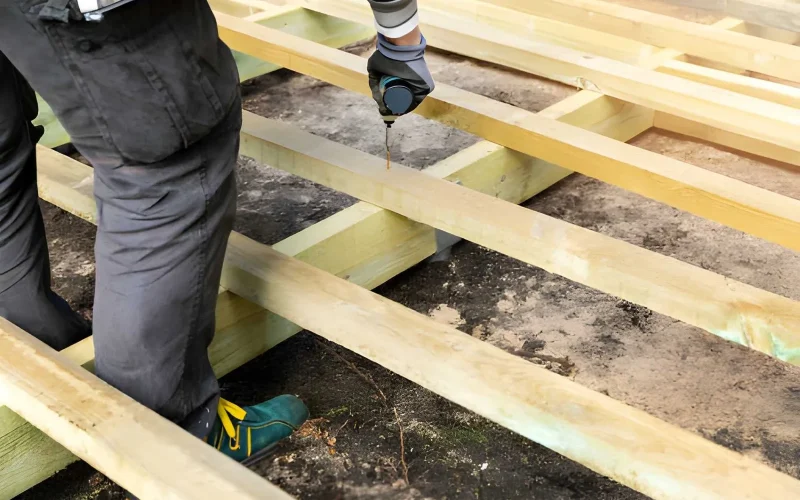
Planning to build a custom deck for a Stone Oak Hill Country home? Then the ground matters just as much as the material on top. Stone Oak sits near the edge of the Hill Country. In fact, shallow limestone and caliche often sit much closer to the surface there. Compare that to the deeper Blackland Prairie clay found in central and south San Antonio.
That changes the footing plan. Clay-heavy lots need deep concrete piers. These have to reach below the zone of seasonal soil movement. Stone Oak footings, by contrast, often hit rock or dense caliche within a couple of feet. Sometimes that calls for core-drilling instead of a standard auger. Other times, it allows for a shallower, engineered pad instead. Neither approach is better on paper. However, the wrong one for your lot causes real problems. These include heaving, cracked stair stringers, or a railing post that works loose within two summers.
We evaluate soil and grade on the initial site visit. This happens before any drawing gets made. That’s because the footing spec, not the decking color, determines how long a deck lasts. In short, on Stone Oak’s terrain, that’s the difference between 20 years and 8.
Composite or wood for Texas heat? For most Stone Oak homeowners, composite wins. However, it’s not for the reason most people assume.
Finding the best deck materials for Texas heat in Stone Oak comes down to one simple test. How does a board perform at 3 PM in August? In fact, that matters far more than how it looks on a showroom floor. Trex Transcend and TimberTech PRO are the two composites most Stone Oak HOAs pre-approve. Both resist the cupping, splitting, and graying that pressure-treated pine develops here. As a result, this happens under sustained UV and heat cycling, often within just a few years. In addition, both composites hold color consistency well. That matters to HOA architectural committees more than most homeowners expect.
Wood still has a place, though. Western red cedar looks right against Stone Oak’s stucco-and-stone exteriors. It also costs less upfront. However, it needs resealing every 2–3 years to survive the heat. That’s a real maintenance commitment, not a one-time choice. Pressure-treated pine works fine for budget-conscious framing. That said, we rarely recommend it as a Stone Oak decking surface. Most homeowners change their mind once they’ve felt what a dark PT board does underfoot in July.
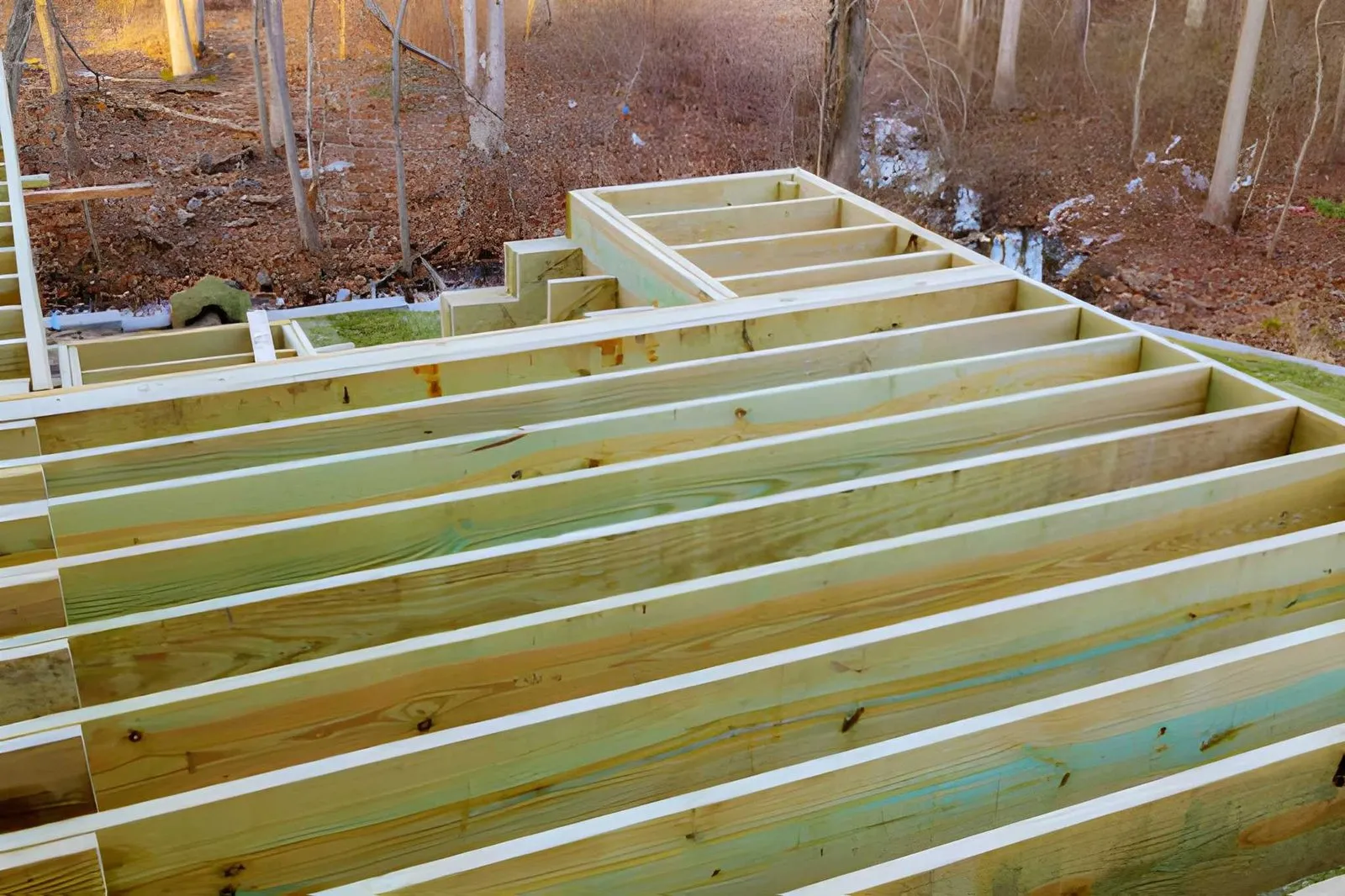
Yes. Multi-level and pool deck construction make up a meaningful share of our Stone Oak projects. The reason is simple. In fact, Stone Oak’s newer subdivisions sit on larger, often sloped lots. On top of that, a growing number of them were built with a pool already in the plan.
Grade change is the main driver for multi-level builds. Instead of forcing a single flat platform onto a sloped yard, we step the deck down in levels. This usually needs less excavation. It also looks more intentional than one large retaining wall. For pool decks, we use PVC or composite decking exclusively. We never use pressure-treated wood there. That’s because constant splash and pool chemicals warp and discolor wood far faster than heat alone.
First, our Stone Oak deck construction work covers the full 1604 corridor. This includes Champions Ridge, The Vineyard, Sonterra, Promontory Pointe, and the TPC Parkway neighborhoods. In addition, we serve adjacent communities. These include Bulverde, Helotes, and Alamo Heights, inside the loop.
Still deciding on layout and shade before committing to a build? If so, our Stone Oak deck design guide covers sun orientation in more depth. On the other hand, some homeowners are planning new deck construction San Antonio wide, outside the Stone Oak corridor. For them, our San Antonio construction timeline guide is more directly useful. Soil and permit thresholds shift slightly across the metro. Meanwhile, the Stone Oak service area page has the community list.
Composite — specifically Trex Transcend or TimberTech PRO — for most Stone Oak builds. It resists the cupping and fading pressure-treated pine develops under sustained heat, and it’s what most Stone Oak HOAs pre-approve.
Yes. Multi-level builds are common on Stone Oak’s sloped, larger lots, and pool decks use PVC or composite exclusively, engineered for spa or pool-adjacent water weight from the design phase forward.
Paradise Decks & Spas 10615 Perrin Beitel, Suite 604 San Antonio, TX 78217 Phone: (210) 496-3325 Hours: Monday–Friday, 9:00 AM – 5:00 PM · Saturday, 9:00 AM – 4:00 PM
Serving Stone Oak and surrounding areas including The Vineyard, Champions Ridge, Sonterra, Promontory Pointe, Bulverde, Helotes, and Alamo Heights.