
San Antonio homeowners can realistically use a well-designed outdoor living space for nine to ten months of the year. The city sees more than 250 days of sunshine annually, and mild winters rarely dip below freezing for long. So the question isn’t whether to invest in outdoor living. Rather, it’s which structure delivers the most comfort for your yard and budget. Patio covers, pergolas, screened enclosures, and outdoor kitchens each solve different problems and carry different price tags.
Paradise Decks & Spas designs and builds custom outdoor living spaces across San Antonio and surrounding communities. That includes Stone Oak, Alamo Heights, Boerne, and Helotes. This guide breaks down your real options, what each costs in 2026, and how to pick the right structure for San Antonio’s climate.
By Rick Hogue, Founder & Lead Deck Specialist · Last updated 29 May 2026
Most San Antonio outdoor living projects run $8,000 to $60,000+, depending on which structures you combine. A basic attached patio cover is the most affordable entry point. At the other end, a full outdoor kitchen under an insulated cover with a screened enclosure represents the high end.
Structure | Typical Cost Range in San Antonio |
Attached patio cover (aluminum or wood) | $8,000 – $25,000 |
Pergola (cedar or aluminum) | $5,000 – $18,000 |
Screened patio enclosure | $4,000 – $15,000 |
Outdoor kitchen (basic to mid-range) | $5,000 – $25,000 |
Combined deck + cover + outdoor kitchen | $25,000 – $60,000+ |
Three factors drive most of that variation.
A 12×20 attached patio cover costs a fraction of a fully enclosed screen room with the same footprint. That’s because materials, framing complexity, and roofing all scale with what you’re building.
Insulated aluminum panels run 20% to 40% more than standard wood or flat-pan aluminum. In return, they deliver noticeably better heat performance through San Antonio summers.
Recessed lighting, ceiling fans, outdoor kitchen rough-ins, and electrical outlets each add $500 to $3,000, depending on the upgrade. However, they also extend how many hours per day the space is actually usable.
Want a quote for your backyard? Call Paradise Decks & Spas at (210) 496-3325 or request a free estimate. We’ll walk your yard and give you a written number before we leave.
San Antonio’s climate is demanding. Summers bring intense UV exposure and triple-digit heat, and south-facing backyards take the full force of the afternoon sun. For those conditions, insulated aluminum panels are the top-performing patio cover material. They block radiant heat, they don’t warp or crack in extreme temperatures, and they require essentially no maintenance.
Here’s how the main options compare.
The foam-core construction blocks radiant heat transfer. As a result, the space under the cover stays noticeably cooler than under single-skin alternatives. These panels also resist corrosion, insects, and warping, and they need no painting or sealing. So they’re the best pick for south- and west-facing patios that take direct afternoon sun.
Flat-pan aluminum is budget-friendly and durable. It provides full shade. However, it doesn’t block radiant heat as effectively as insulated panels. Accordingly, it works best for smaller, shaded yards or north-facing patios.
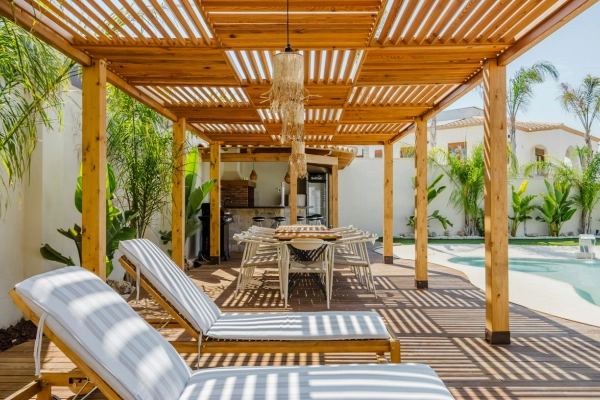
Cedar offers natural warmth, architectural character, and a cooler underfoot feel than metal. It also resists insects and decay naturally. Even so, it requires periodic sealing. Therefore it suits filtered-sun designs like pergolas better than solid covers.
PT pine is the lowest upfront cost option for wood structures. However, it requires more maintenance than cedar in San Antonio’s humidity and heat swings. So it’s best reserved for pergola lattice work rather than solid roof panels.
For most homeowners using their patio through mid-day and into the evening, insulated aluminum is the clear lifecycle winner. It costs more upfront, but it eliminates ongoing maintenance and performs far better during July and August.
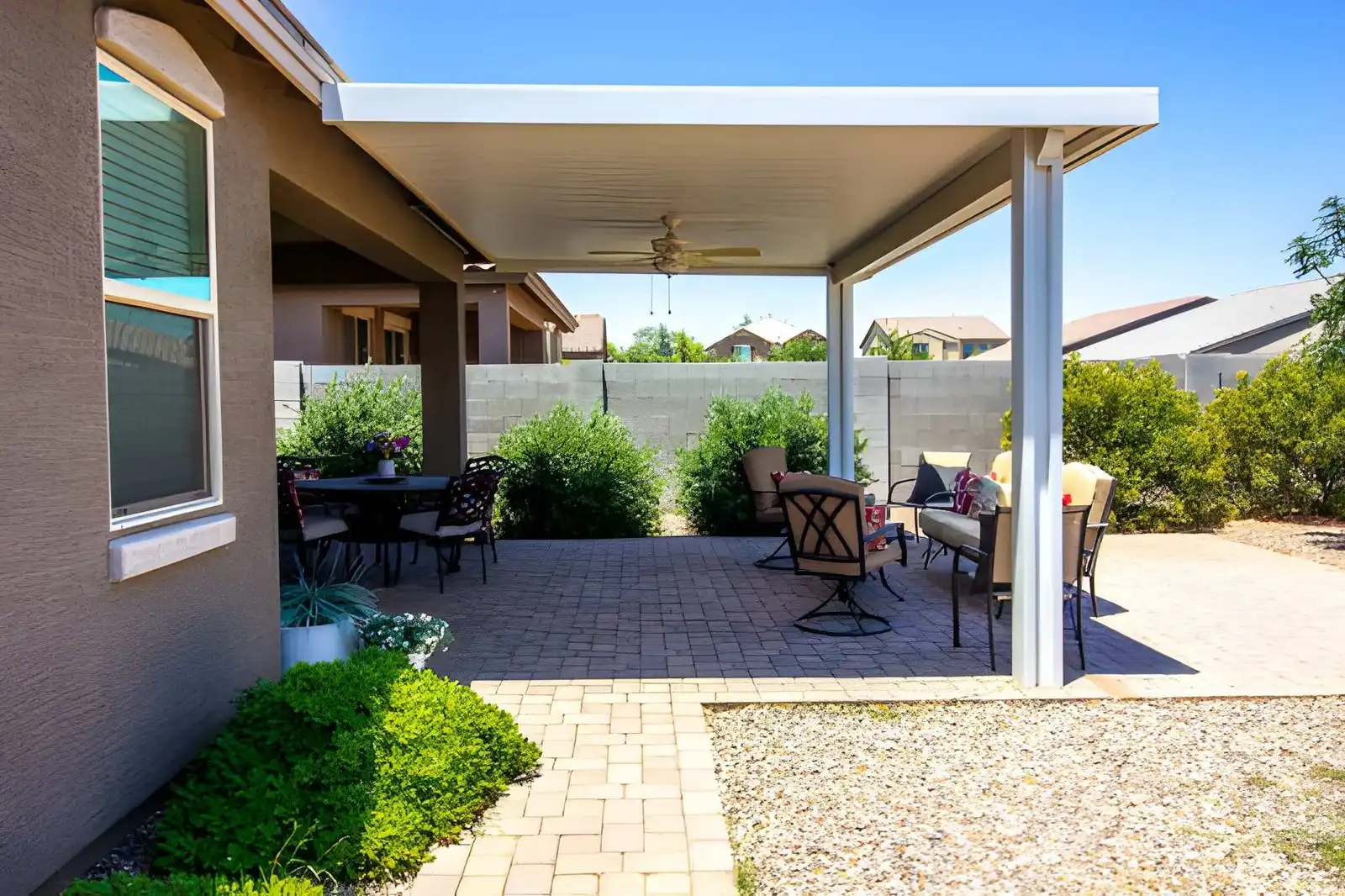
It depends on what problem you’re trying to solve. A solid patio cover, especially insulated aluminum, provides full weather protection and significantly better heat reduction. A pergola delivers filtered shade, airflow, and architectural character instead. However, it leaves you exposed to rain and offers less relief from direct afternoon sun.
Feature | Solid Patio Cover | Pergola |
Rain protection | Full | None |
Heat reduction | High (especially insulated) | Moderate (filtered shade only) |
Airflow | Moderate | Excellent |
Maintenance | Very low (aluminum) | Low to moderate (cedar) |
Aesthetic | Clean, modern or traditional | Open, architectural, natural |
Best use | Entertaining, outdoor kitchen, daily use | Dining area, garden focal point, pool surround |
For homeowners who want to use their outdoor space in rain and during the hottest part of the day, a solid patio cover with a ceiling fan and recessed lighting delivers more usable hours. Meanwhile, a pergola is the stronger choice when airflow, filtered light, or visual character is the priority, particularly where the yard sees less intense direct sun. Many homeowners combine both. A solid covered section near the house handles cooking and dining, while a pergola further out defines a seating or garden zone.
Paradise Decks & Spas builds both through our outdoor living services. We can also help you determine which layout works best for your specific yard orientation and sun exposure.
Yes. With the right structure, San Antonio’s climate allows genuine year-round outdoor use. The city averages more than 250 days of sunshine annually. Winters stay mild, with daytime highs typically in the 60s, and freezing temperatures are brief and infrequent.
Here’s the practical breakdown by season.
These are the best outdoor living months. Temperatures stay mild, humidity is low, and mosquito pressure is minimal. So any structure is comfortable with minimal additions.
Intense heat and UV require both shade and airflow. An insulated patio cover with ceiling fans makes a mid-day space usable. Additionally, screened enclosures help manage mosquitoes during warm evenings.
Fall is the second-best season. Comfortable temperatures, light breezes, and long evenings make this prime entertaining time.
Winter stays mild enough for outdoor use most days. An outdoor heater or fire pit extends usability during the occasional cold snap. Snow is rare, and hard freezes are brief.
Overall, a screened enclosure is the single biggest upgrade for year-round usability here. It eliminates bugs in spring and fall, provides a windbreak in winter, and keeps the space comfortable for far more hours per day than an open structure alone.
In most San Antonio HOA communities, yes. A patio cover, pergola, screened enclosure, or outdoor kitchen requires HOA approval before construction begins, in addition to the City building permit. Note that the City of San Antonio enforces its own zoning and building codes but does not enforce CC&Rs. So HOA compliance is entirely separate, and it’s your responsibility as the homeowner.
Here’s what HOA approval typically involves in communities like Stone Oak, Alamo Heights, and Boerne.
Common HOA requirements include restrictions on structure height and roof material color, which usually must complement the home’s exterior. Screening of mechanical equipment and maximum lot coverage percentages also come up frequently. Notably, aluminum covers are generally well-received by HOAs, since they present a clean, finished appearance and stay color-stable over time.
Paradise Decks & Spas prepares HOA documentation as part of every outdoor living project. That covers site plans, material specs, and renderings. So if you’re in a community with HOA requirements, we handle the submission process rather than leaving you to navigate it alone.
Outdoor living space projects in San Antonio range from $5,000 for a basic pergola to $60,000+ for a combined deck, insulated patio cover, screened enclosure, and outdoor kitchen. A standard attached patio cover runs $8,000 to $25,000; an outdoor kitchen adds $5,000 to $25,000 depending on size and appliances. Final cost depends on structure type, materials, size, and feature add-ons.
Insulated aluminum panels are the best-performing patio cover material for San Antonio’s climate. The foam-core construction blocks radiant heat transfer, keeping the space underneath significantly cooler than wood or flat-pan aluminum options. Aluminum also resists warping, insects, and corrosion with no maintenance required. Cedar is the best wood option for pergola structures where filtered light and airflow matter more than full heat blocking.
A solid patio cover — particularly insulated aluminum — is better for full weather protection, heat reduction, and daily use during San Antonio summers. A pergola is better when airflow, filtered shade, and architectural character are the priority. Many homeowners combine both: a covered structure near the house for cooking and dining, and a pergola further out as a seating or garden focal point.
Yes. San Antonio averages more than 250 days of sunshine annually with mild winters that rarely see extended freezes. Spring and fall offer the most comfortable outdoor living conditions, while summer requires shade and ceiling fans to manage heat. A screened enclosure adds bug protection in warmer months and a windbreak in winter, meaningfully extending daily usability across all four seasons.
In most San Antonio HOA communities, yes. A patio cover, pergola, screened enclosure, or outdoor kitchen typically requires Architectural Review Committee approval before construction, separate from the City building permit. The City of San Antonio enforces building codes but does not enforce HOA CC&Rs. Submit an ARC application with site plans and material specs, and obtain written approval before work begins.
San Antonio’s climate makes outdoor living one of the highest-value investments a homeowner can make — but the structure has to match the heat. Whether you’re looking at a shaded patio cover, a cedar pergola, a screened enclosure, or a full outdoor kitchen build, Paradise Decks & Spas designs and installs custom outdoor living spaces across San Antonio and surrounding communities.
Call (210) 496-3325 or schedule your free on-site consultation — we’ll assess your yard, sun exposure, and HOA requirements and deliver a written plan before we leave.