
The right composite deck materials San Antonio TX homeowners choose have to handle three things. First, surface temperatures that can exceed 150°F in direct July sun. Second, UV exposure intense enough to degrade inferior materials within years. Third, the clay soil movement that stresses any structure over time. Paradise Decks and Spas is a licensed and insured San Antonio deck contractor. We help homeowners select and install composite materials built for South Texas conditions.
By Rick Hogue, Founder & Lead Deck Specialist · Last updated 12 June 2026
Composite decking has become the dominant material for San Antonio decks, and it’s easy to understand why. Also it outlasts wood without the annual staining and sealing cycle. It also resists the rot and insect damage wood is vulnerable to in our humid summers, and it never splinters. However, not all composite is the same. In our heat, the grade, color, and brand you choose determine how the deck performs and looks after five years under Texas sun.
For how we build with these materials, see our deck construction page and our deck design page.
Homeowners often ask what is composite decking and is it good for Texas heat. The short answer is yes, with caveats about color and grade.
Composite decking is a manufactured material, typically a blend of wood fiber and recycled plastic. On capped boards, a protective polymer shell encapsulates that core. Additionally, that shell is what makes composite work in Texas, since it resists moisture absorption, UV degradation, and the expansion and contraction our extreme temperature swings cause.
Composite surface temperature in direct Texas sun is a real consideration. Dark boards can reach 150°F or higher on a hot July afternoon, which is much hotter underfoot than lighter colors. So this is a Texas-specific factor worth weighing during selection. Lighter tones, grays, and lighter natural wood looks stay meaningfully cooler in our sun. Additionally, premium boards tend to retain less heat than entry-level grades, because their cap layer is denser.
For most San Antonio homeowners, quality capped composite in a lighter color is genuinely good for Texas heat. Also it outperforms both wood and PVC on balance, as long as color is part of the selection conversation.
The composite decking options San Antonio homeowners choose from are dominated by three major brands, each with multiple product lines.
Trex is the most recognized name in composite and the most widely installed in the country. Locally, Trex composite materials Bexar County TX builders and homeowners use most often come from the Enhance and Transcend lines. Also transcend is the premium tier, with the best heat and fade resistance. Fade and stain warranty terms vary by line, so confirm the specific coverage for the product you select. Meanwhile, the color range is wide, including lighter shades that perform well in Texas sun.
TimberTech, including the AZEK PVC line, is another premium brand with strong performance in hot climates. The PRO and EDGE lines feature dense cap layers with good UV resistance. AZEK is different, though. Basically, it’s fully cellular PVC rather than wood-fiber composite, so it stays cooler, but it sits at a higher price point.
Fiberon is a reliable mid-tier option. It offers good fade warranties and competitive pricing in the composite boards Bexar County TX market.
Uncapped or lightly capped boards are generally not recommended for San Antonio. Without a quality polymer cap, wood fiber in the board absorbs moisture during our humid summers. Additionally, UV degrades the surface faster in our intense sun.
How much do composite deck materials cost in San Antonio? That depends on the brand tier, and on whether you’re pricing materials only or installed. Also here’s a 2026 guide.
Composite line | Material cost (per sq ft) | Installed cost (per sq ft) |
Entry-level composite | $3 – $6 | $18 – $28 |
Mid-range (Trex Enhance, Fiberon) | $5 – $10 | $25 – $40 |
Premium (Trex Transcend, TimberTech PRO) | $8 – $15 | $35 – $60 |
AZEK PVC | $10 – $18 | $40 – $65 |
For a typical 300-square-foot deck, the premium composite deck boards San Antonio Texas homeowners choose for a mid-to-high-end build commonly add $10,500–$18,000 in materials and installation. Compared to pressure-treated wood, composite costs more upfront. However, it eliminates the annual staining and sealing cost. So in San Antonio, where intensive UV and humidity wear wood faster, the break-even point against wood arrives sooner than in milder climates.
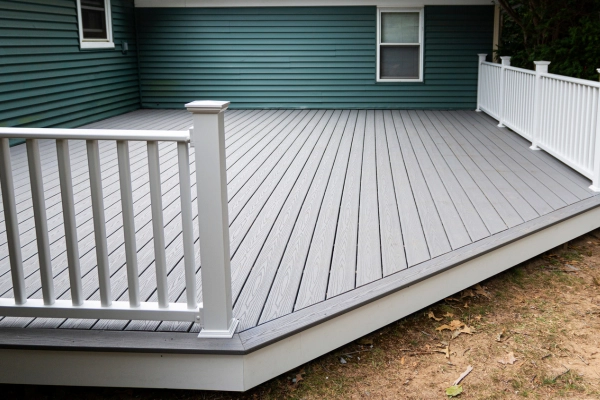
Also the composite vs wood deck materials for San Antonio TX question is one we answer for almost every homeowner. Here’s the honest comparison for our specific climate.
For a deck in full South Texas sun that you want looking good in 10 years without a major maintenance commitment, composite wins. Wood still makes sense for framing and structural lumber, though. In fact, composite is the surface board choice.
This is one of the most common questions about composite decking in Texas, and the answer is nuanced.
Cheaper, uncapped, or low-grade composite will fade noticeably under San Antonio’s intense UV over several years. That’s a real limitation worth taking seriously.
By contrast, quality capped composite from major brands is engineered with UV inhibitors in the cap layer and typically carries a multi-decade fade and stain warranty. That includes Trex Transcend, TimberTech PRO, and AZEK. Real-world performance in high-UV markets like ours shows premium composite holds its color well against lower-grade options or unstained wood.
Here’s the practical guidance if fading concerns you. First, choose a lighter color, since lighter boards show less fading even when it occurs. Next, select a premium-tier line with a strong fade warranty. Finally, avoid very dark or highly saturated colors, because they make any fading more visible. Accordingly, Trex decking materials Schertz TX and other Bexar County homeowners install in direct sun should lean toward the Transcend or Select lines.
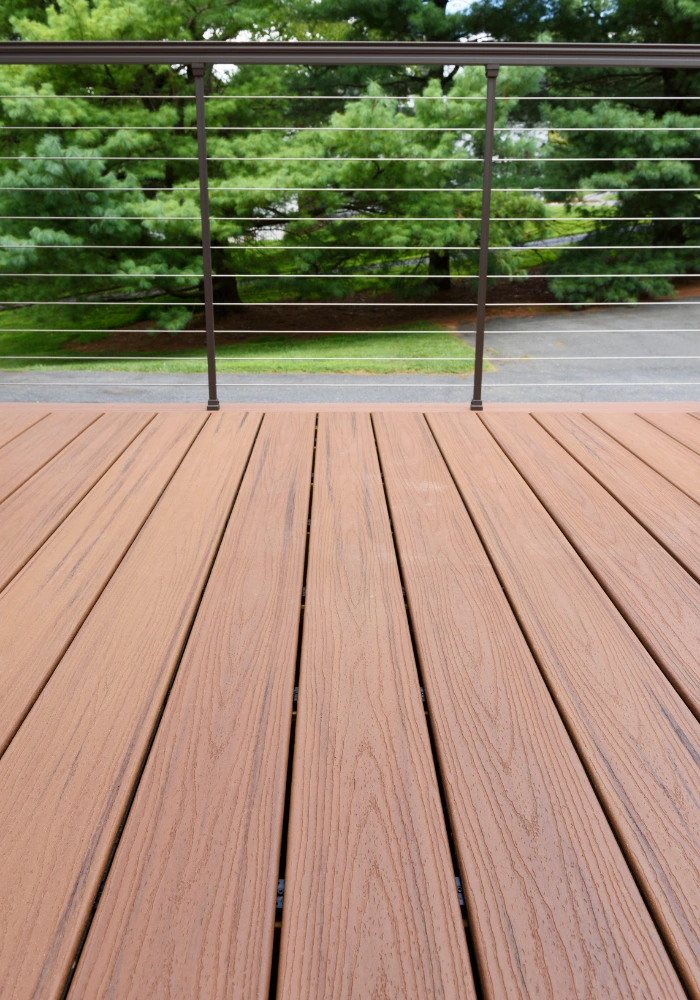
Quality composite deck materials last 25 to 30+ years in San Antonio conditions. That’s significantly longer than pressure-treated wood here, because composite is immune to the rot, insects, and UV degradation that shorten wood life in our climate. Entry-level or uncapped composite is shorter-lived, though. Typically it reaches 15–20 years in intense sun and humidity.
The warranty is a reliable proxy for grade. Also premium lines carry long-term residential coverage on fade, stain, and structural integrity. So composite boards without that kind of warranty probably don’t belong on a San Antonio deck.
Paradise Decks and Spas provides composite deck materials selection, design, and installation across San Antonio and the surrounding area. That includes the following.
We’re licensed and insured. Additionally, we help every homeowner select the right composite grade, color, and brand for their yard, sun exposure, and budget.
In 2026, composite deck material costs in San Antonio range from $3 to $6 per square foot for entry-level composite to $8 to $15 for premium lines like Trex Transcend and TimberTech PRO. Installed costs including labor and framing run $18 to $28 per square foot for entry-level and $35 to $60 for premium. For a 300-square-foot deck, a mid-to-high-end composite build typically runs $10,500 to $18,000.
Yes, for most San Antonio homeowners. Quality capped composite resists moisture, rot, insects, and UV degradation that shorten wood’s life in our humid summers and intense sun. Wood requires annual or biennial sealing to hold up here, while composite needs only periodic cleaning. Composite lasts 25 to 30+ years versus 10 to 20 for maintained wood. The main tradeoff is higher upfront cost.
Trex Transcend and TimberTech PRO are the top performers for San Antonio’s UV and heat conditions — both feature dense UV-inhibiting cap layers and carry 25-year fade and stain warranties. Trex Enhance and Fiberon are solid mid-range choices. Azek PVC (not wood-fiber composite) stays cooler and resists moisture completely but costs more. Avoid uncapped or entry-level composite in direct Texas sun.
Premium capped composite lasts 25 to 30 years or more in Texas conditions — significantly longer than wood because it’s immune to the rot, insects, and UV degradation that accelerate in San Antonio’s climate. Entry-level or uncapped composite is typically shorter-lived. A 25-year or lifetime residential warranty on fade, stain, and structural integrity is the mark of a composite grade appropriate for our conditions.
Entry-level or uncapped composite will fade noticeably under San Antonio’s intense UV. Premium capped composite from major brands like Trex Transcend and TimberTech PRO is engineered with UV inhibitors and carries 25-year fade warranties — real-world performance in high-UV markets shows these lines hold color well. Choosing lighter colors and premium-tier boards minimizes visible fading in Texas sun.
Paradise Decks and Spas San Antonio, TX Phone: (210) 496-3325 Email: info@paradisedecksandspas.com
Serving San Antonio and the surrounding Bexar County area, including Schertz, Helotes, Converse, Universal City, Alamo Heights, and Boerne.
Request a free composite deck consultation or call (210) 496-3325.