
Paradise Decks & Spas builds solid-roof and insulated patio covers across San Antonio, tied into your existing roofline or standing on their own posts. Since 2006. We handle the permit, the electrical for fans and lighting, and the gutter work — which on our clay soil is not an optional extra.
By Rick Hogue, Founder & Lead Deck Specialist · Last updated October 2026
For full shade in San Antonio, yes — and the reason is the time of day you actually use the space.
A fixed-slat pergola gives roughly 40 to 60% shade at midday, when the sun here sits nearly overhead. By late afternoon the sun has dropped low in the west and comes in sideways, under the slats entirely. Between four and seven in the evening — prime patio hours from April through October — an open pergola is doing very little.
A solid roof doesn’t care about sun angle. It shades the full footprint from the moment it’s up, it keeps the furniture dry through a thunderstorm, and it lets you hang a ceiling fan, which an open structure can’t support in any useful way.
What you give up: the open, airy feel, climbing plants, and evening sky. And light into the room behind it, which is the next section because it’s the thing people regret.
If you want both, the usual answer is a solid cover over the seating area and an open pergola extending past it. We build them as one structure.
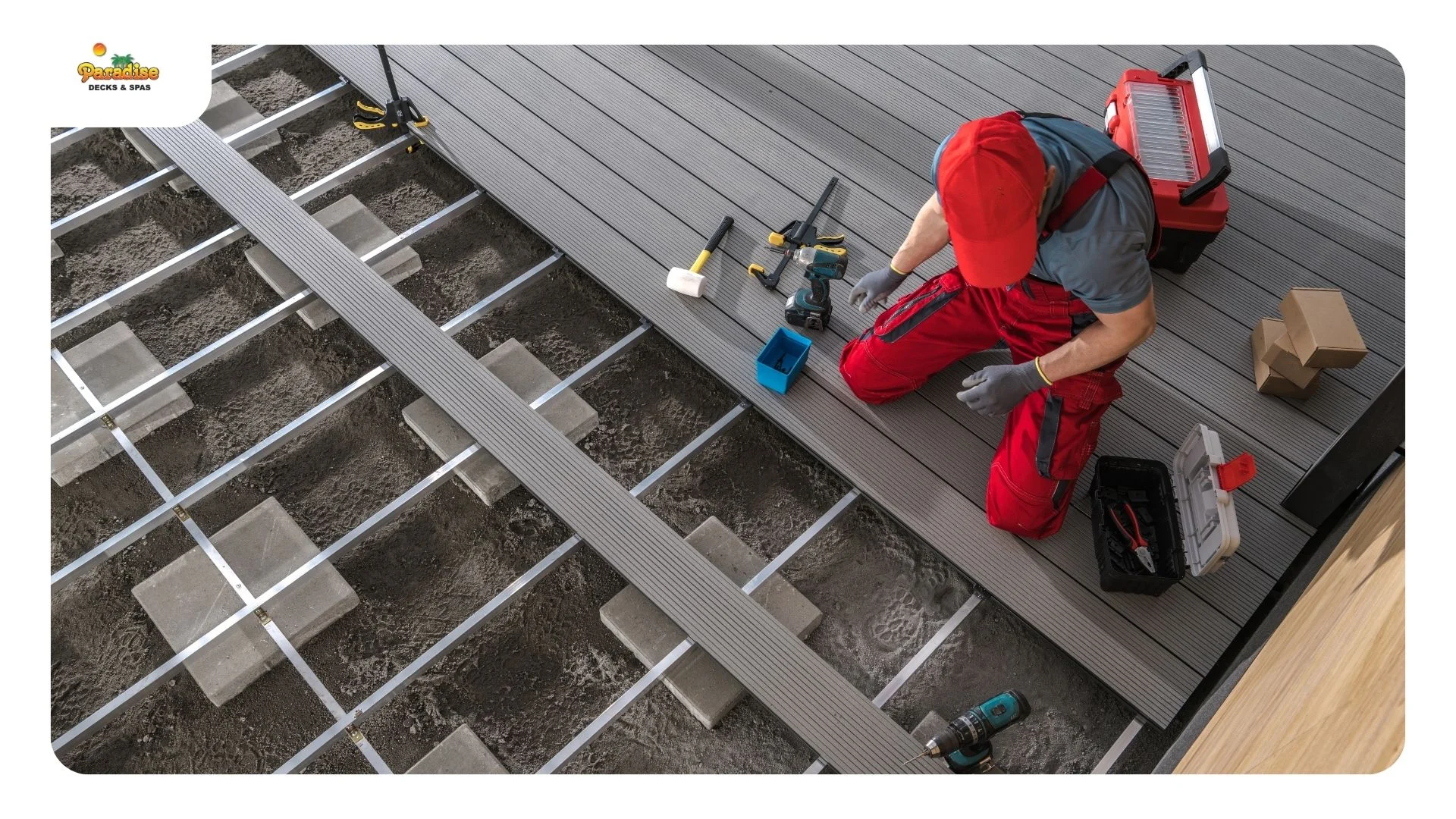
Yes, usually. This is the single most common complaint we hear about patio covers someone else installed, and it is entirely preventable at design stage.
A solid roof attached above a window or sliding door blocks the sky that was lighting that room. On a south or west-facing wall, where San Antonio homes get their strongest daylight, a 12-foot-deep cover can turn a bright living room noticeably dim. Nobody notices in the brochure photo, because the brochure photo is taken from outside.
Five things that fix it, in rough order of effectiveness:
We’ll walk inside and look at the room before we finalize a depth. It takes two minutes and it’s the difference between a cover you love and one you resent every winter.
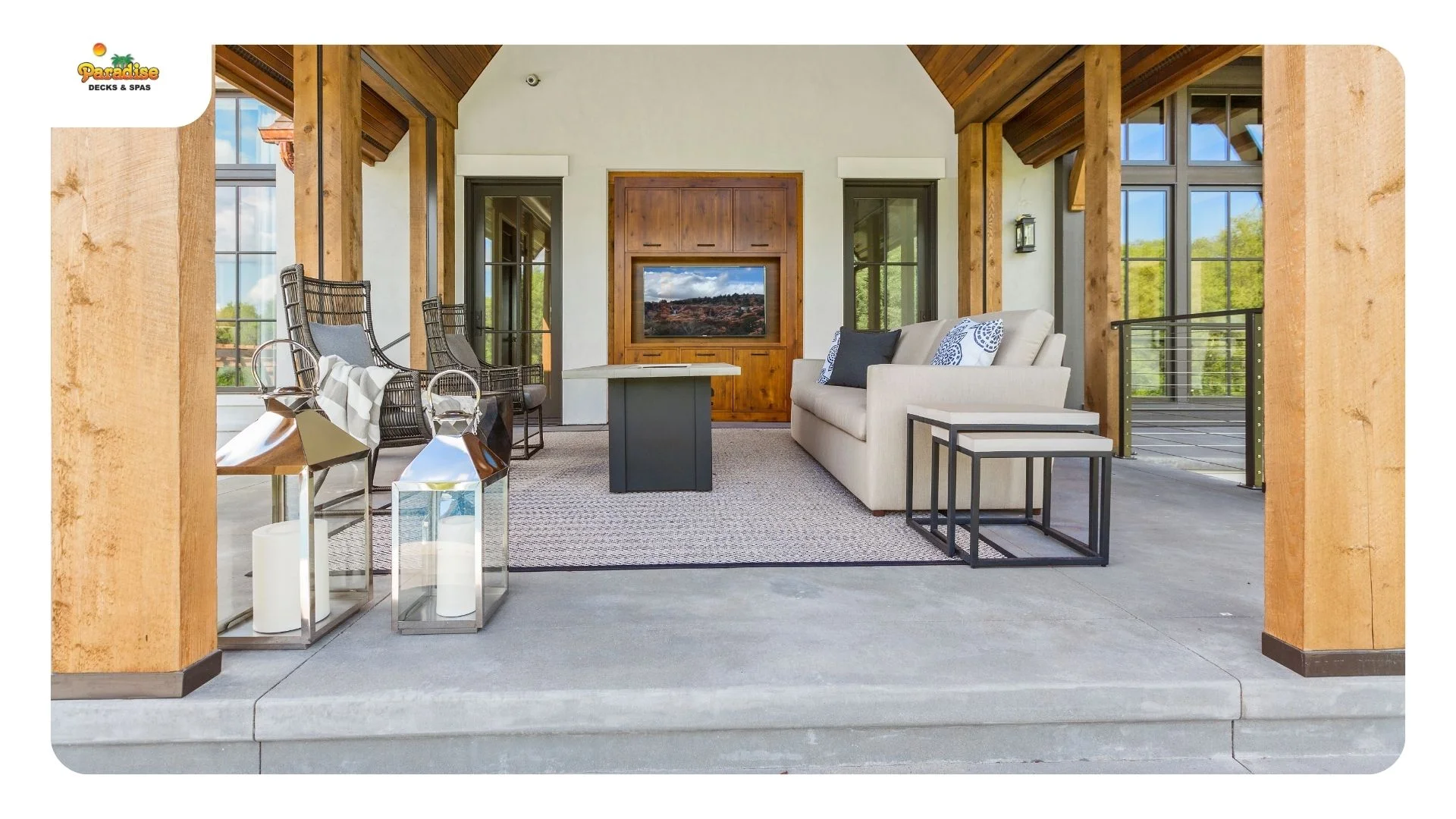
How it attaches determines headroom, drainage, and how the finished structure looks from the street.
Fascia hanger. The cover hangs off the existing fascia board, under the eave. Simplest and cheapest. The catch on a single-story San Antonio ranch: start under an eave that’s already at eight feet, slope away for drainage, and the outer edge can end up near seven feet. That’s low, and you feel it.
Roof-mount riser. The cover ties in above the roofline on risers, clearing the eave. More headroom, more daylight, a cleaner match to the house, and a better slope for runoff. Adds roughly $500 to $1,500.
Full structural tie-in. Wood framing, decking, and matching shingles so the cover reads as original construction. The most expensive route and the best resale result.
What goes on the roof:
For attached structures, a permit is required at any size under City of San Antonio rules — the thresholds and setbacks are covered on our pergola page. We pull it.
Shade alone doesn’t make a San Antonio patio comfortable in August. Moving air does, and a solid roof is what makes a ceiling fan possible.
A fan under a cover drops the perceived temperature by several degrees through evaporative cooling — it isn’t lowering the air temperature, it’s making your own sweat work. In our humidity, that’s the difference between sitting outside in July and not.
What’s involved:
Plan the electrical before framing. Running conduit through a finished aluminum cover means surface-mounted boxes.
This is the part almost nobody mentions on a patio cover quote, and in San Antonio it’s the one that can cost you the most.
A 12×20 cover is 240 square feet of new roof. In a two-inch rain event that’s roughly 300 gallons of water, and without gutters it all comes off one edge and lands in a concentrated line — usually a few feet from your foundation.
South and east of the city, that foundation is sitting on expansive clay. Clay swells when it’s wet and shrinks when it’s dry, and the damage comes from the difference between wet and dry zones, not from moisture itself. Dumping several hundred gallons into one strip of soil while the rest of the perimeter stays dry is exactly the condition that moves a slab.
So: gutters and downspouts, carried well away from the house. We quote them as part of the cover rather than as an upgrade, and we extend the discharge rather than ending it at the corner of the slab. If a competing bid doesn’t list gutters, ask what the plan is for the runoff.
Footings get the same treatment as a deck — on heavy clay lots, piers go below the active zone. That work is detailed on our deck construction page.
Patio cover installation in San Antonio generally runs $20 to $60 per square foot installed, putting a typical 12×20 cover between roughly $5,000 and $14,000. Wood-framed covers tied fully into the roofline run higher.
| Roof type | Typical installed cost per sq ft | 12×20 (240 sq ft) |
|---|---|---|
| Flat-pan / W-pan aluminum | $18 – $32 | $4,300 – $7,700 |
| Insulated panel, 3-inch | $25 – $45 | $6,000 – $10,800 |
| Insulated panel, 6-inch | $35 – $60 | $8,400 – $14,400 |
| Wood framed with shingles | $45 – $85 | $10,800 – $20,400 |
Planning figures for the San Antonio area as of 2026. Verify against current Paradise pricing before publishing.
What moves it: attachment method (the riser adds $500–$1,500), panel thickness, span and post count, electrical scope, gutters and downspouts, footings on clay, and the city permit at around $160 plus the engineer’s letter.
One piece of advice that applies whoever you hire: a complete quote that includes permit, electrical, and gutters usually beats a cheaper bare quote that adds all three later. Ask every bidder whether those three are in the number.
Bexar County and inner metro: San Antonio · Stone Oak · Alamo Heights · Helotes · Converse · Universal City
Comal, Guadalupe, Kendall, and Bandera counties: Boerne · Bulverde · New Braunfels · Canyon Lake · Schertz · Cibolo · Bandera · Lake Medina
Patio covers attract more HOA review than almost anything else we build, because a solid roof changes the house’s profile from the street. Stone Oak, Timberwood Park, and Fair Oaks Ranch commonly require that roof color and pitch match the existing home. We confirm approval before ordering.
How much does a patio cover cost installed in San Antonio?
Patio cover installation in San Antonio typically runs $20 to $60 per square foot installed, putting a 12×20 cover between roughly $5,000 and $14,000. Flat-pan aluminum sits at the bottom of that range, insulated panels in the middle, and wood framing with matching shingles above it. Attachment method, electrical, gutters, and clay-soil footings all move the number.
Will a patio cover make the adjoining room darker?
Usually yes, unless it’s designed around. A solid roof above a window or sliding door blocks the sky that lit that room, and the effect is strongest on south and west-facing walls. Mounting the cover on risers above the roofline rather than hanging it under the eave, adding skylights or polycarbonate panels over the window line, reducing the projection depth, and using a light-colored underside all recover most of the lost daylight.
Is a patio cover better than a pergola for full shade?
For full shade, yes. A fixed-slat pergola gives roughly 40 to 60% shade at midday and very little after four in the afternoon, when San Antonio’s low western sun passes underneath it. A solid roof shades the whole footprint regardless of sun angle, keeps the space dry in rain, and supports a ceiling fan. The trade-off is a more enclosed feel and less daylight into the room behind.
Can a patio cover be tied into the existing roofline?
Yes, three ways. A fascia hanger attaches under the existing eave and is cheapest but often leaves low headroom on a single-story home. A roof-mount riser ties in above the roofline for more height and daylight, adding roughly $500 to $1,500. A full structural tie-in uses wood framing and matching shingles so the cover reads as original construction, which costs most and gives the best resale result.
Can lighting and fans be built into a patio cover?
Yes, and a solid roof is what makes a ceiling fan practical — air movement does more for comfort in San Antonio humidity than shade alone. Fans need rated mounting and blocking built into the framing, roughly seven feet of clearance above the floor, and damp or wet-rated fixtures. Any 120V work needs a separate electrical permit pulled by a licensed electrical contractor registered with the city, so it’s planned before framing rather than added after.
Paradise Decks & Spas
Adress: 10615 Perrin Beitel, Suite 604 San Antonio, TX 78217
Phone: (210) 496-3325
Email: info@paradisedecksandspas.com
Hours: Monday – Friday 9:00 AM – 5:00 PM · Saturday 9:00 AM – 4:00 PM · Sunday Closed
Serving San Antonio and surrounding areas including Stone Oak, Alamo Heights, Helotes, Schertz, Cibolo, Converse, Universal City, Boerne, Bulverde, New Braunfels, Canyon Lake, Bandera, and Lake Medina.