
(210) 496-3325
Choosing the best deck material in San Antonio in 2026 depends on your budget, maintenance goals, backyard layout, sun exposure, and long-term outdoor living plans when deciding what is the best material for a deck. Composite decking is often the best choice for homeowners who want lower maintenance in South Texas heat, while wood remains a practical option for homeowners who prefer natural texture and lower upfront cost.
San Antonio decks face intense UV exposure, hot summers, humidity, stormwater, and occasional freeze events. The right material should be durable, comfortable, attractive, and suited for how your family uses the backyard.
The best deck material for San Antonio should handle heat, sunlight, humidity, and sudden weather changes. A material that works well in a cooler climate may need more care in South Texas.
San Antonio homeowners should think about:
For many San Antonio homes, composite decking is a strong option because it needs less sealing and staining than wood. However, not every composite board performs the same in direct Texas sun.
San Antonio Note: Lighter deck colors are usually more comfortable underfoot than darker boards in full afternoon sun.
Paradise Decks and Spas can help homeowners compare deck materials and answer questions like what is the best material for a deck during a free consultation before the final design is selected.
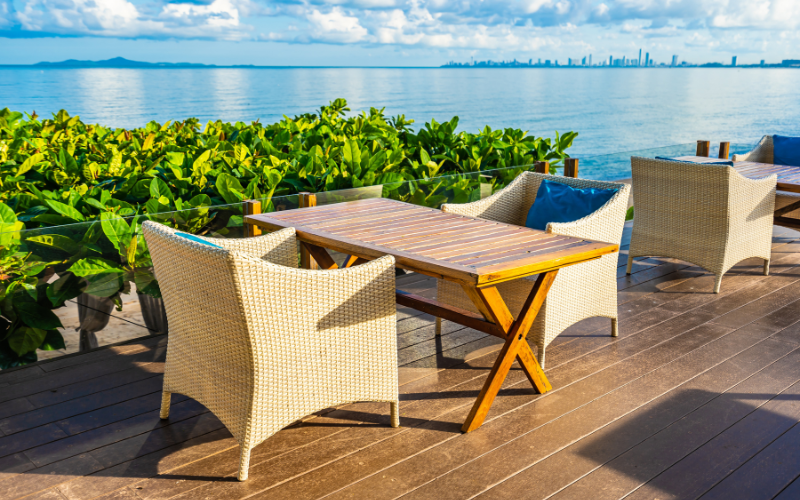
San Antonio homeowners should compare deck materials by cost, maintenance, heat comfort, appearance, and lifespan. The best material is not always the cheapest option, especially when long-term upkeep is included.
Here is a simple comparison of common deck materials:
Deck Material | Upfront Cost | Maintenance | Best For |
Pressure-treated wood | Lower | Higher | Budget-friendly deck builds |
Cedar or premium wood | Medium to high | Higher | Natural wood appearance |
Composite decking | Higher | Lower | Low-maintenance outdoor living |
PVC decking | Higher | Lower | Moisture-prone or poolside areas |
Aluminum railing | Medium to high | Lower | Modern rail systems and durability |
Each option has a different purpose:
For San Antonio homeowners who want a balance of durability and easy care, composite decking is often the best long-term choice.
Wood and composite decking are the two most common choices for San Antonio deck projects. Wood offers natural beauty and a lower starting price, while composite offers lower maintenance and stronger resistance to routine wear.
Wood may be the right choice if:
Composite may be the right choice if:
In San Antonio, composite decking often makes sense for busy homeowners who want outdoor living space without frequent sanding, sealing, or staining.
Material Note: Wood decks in San Antonio need regular surface care because heat and humidity can affect appearance and board condition over time.
Heat comfort is one of the most important deck material decisions for San Antonio homeowners. A beautiful deck can feel uncomfortable if the boards absorb too much heat during the summer.
Deck color can affect comfort:
Shade also changes how the deck feels. A shaded composite deck can be much more usable than a full-sun deck with the same material.
Good shade options include:
Pro Tip: Choose deck color and shade features together, especially for west-facing San Antonio backyards.
Paradise Decks and Spas can help compare board colors, shade placement, and layout options during the planning stage.
The best deck material depends on how you use your outdoor space. Composite deck builders San Antonio Texas homeowners hire for composite deck installation near me projects often recommend different materials based on the project type. A deck for quiet seating does not need the same features as a poolside deck, grilling deck, or hot tub deck.
For outdoor dining, consider:
For poolside spaces, consider:
For hot tub decks, consider:
For family gathering spaces, consider:
Homes in Alamo Heights, Leon Valley, Live Oak, and New Braunfels may have different yard sizes and layouts, so the best material should match the actual space.
Working with local composite deck builders in San Antonio Texas helps homeowners choose materials that match the area’s heat, humidity, soil conditions, HOA rules, and outdoor lifestyle. Local experience matters because San Antonio decks are used differently than decks in cooler regions.
A local deck builder should help with:
Paradise Decks and Spas serves San Antonio, Boerne, Helotes, Converse, Universal City, Schertz, New Braunfels, Live Oak, Leon Valley, Alamo Heights, and Stone Oak. The company provides custom deck design, deck construction, deck lighting, outdoor living spaces, and hot tub and spa installation.
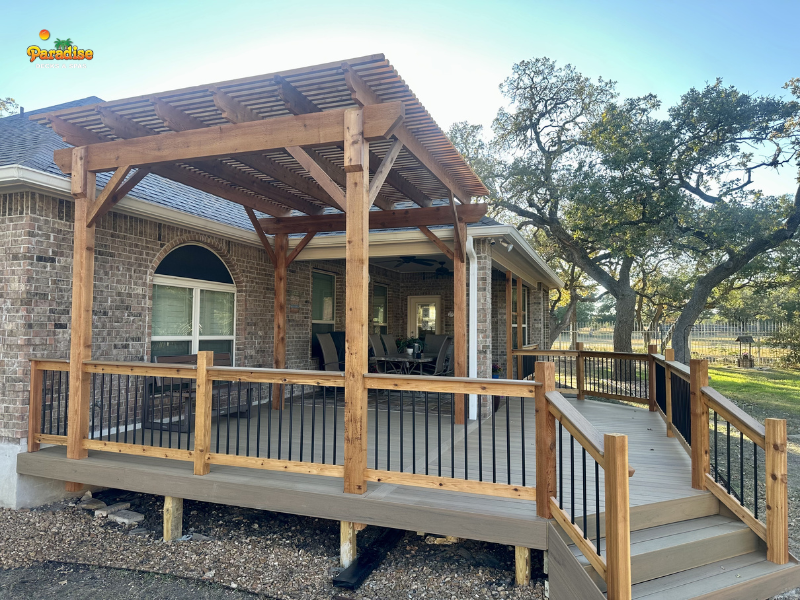
Maintenance should be part of the material decision because deck care affects long-term cost and appearance best composite deck builders in texas. A lower upfront price may not always mean better value if the deck needs frequent upkeep.
Wood deck maintenance may include:
Composite deck maintenance may include:
PVC deck maintenance may include:
For San Antonio homeowners who want simple care, composite or PVC decking is often easier to manage than wood.
HOA Tip: Stone Oak, The Dominion, and other master-planned communities may require approval for deck color, railing style, and visible outdoor structures.
Composite decking is usually better for San Antonio homeowners who want lower maintenance, while wood is better for homeowners who want a lower upfront cost and natural appearance. Composite does not need regular staining or sealing. Wood can still perform well when it is cleaned, sealed, and inspected consistently.
Composite decking is usually better for San Antonio homeowners who want lower maintenance, while wood is better for homeowners who want a lower upfront cost and natural appearance. Composite does not need regular staining or sealing. Wood can still perform well when it is cleaned, sealed, and inspected consistently.
Yes, composite decking can get hot in Texas, especially in direct afternoon sun. Board color, shade, airflow, and surface texture all affect heat comfort. San Antonio homeowners should compare lighter board colors and shade options before choosing materials for a full-sun deck.
A wood deck in San Antonio usually needs cleaning, sealing, staining, fastener checks, railing checks, and board inspections. Full-sun exposure can dry the boards, while humidity and rain can increase moisture concerns. Regular maintenance helps protect the deck’s appearance, comfort, and safety.
Composite decking is often worth the extra cost for San Antonio homeowners who want lower maintenance and better long-term surface performance. It costs more upfront than pressure-treated wood, but it reduces staining and sealing needs. The value depends on your budget, sun exposure, and how often you use the deck.
The best composite decking for Texas heat is usually a lighter-colored board with strong UV resistance, durable surface protection, and proper ventilation underneath. San Antonio homeowners should avoid choosing by color alone. Shade, airflow, board texture, and deck direction all affect comfort.
You can buy composite decking in San Antonio through home improvement stores, lumber yards, building supply companies, and contractor material suppliers. Many homeowners choose materials with help from a deck builder because board type, color, fasteners, railing, framing, and warranty details should match the full installation plan.
Wood decking is cheaper upfront and offers a natural look, but it requires regular maintenance like staining and sealing.
Composite decking costs more initially but lasts longer, needs less maintenance, and resists rot, fading, and insects.
Paradise Decks and Spas helps San Antonio homeowners choose deck materials that fit South Texas heat, outdoor living needs, maintenance goals, and long-term value. The team can help you compare wood, composite, PVC, railing, lighting, shade, and hot tub-ready deck options.
Call Paradise Decks and Spas at (210) 496-3325 or contact us to schedule a free consultation. A local deck specialist can review your backyard, explain material choices, and help you choose the best deck material for your San Antonio home in 2026.